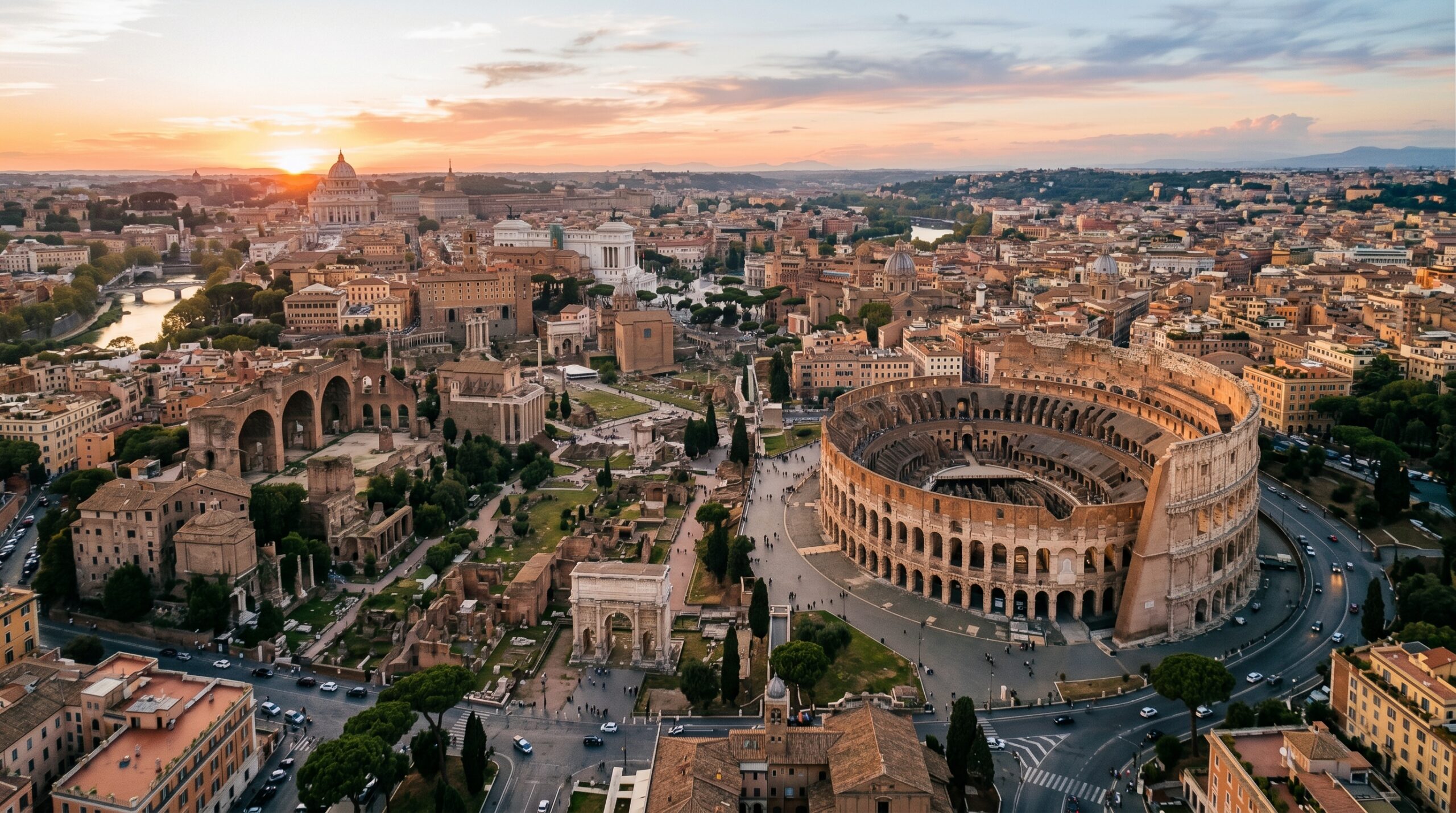

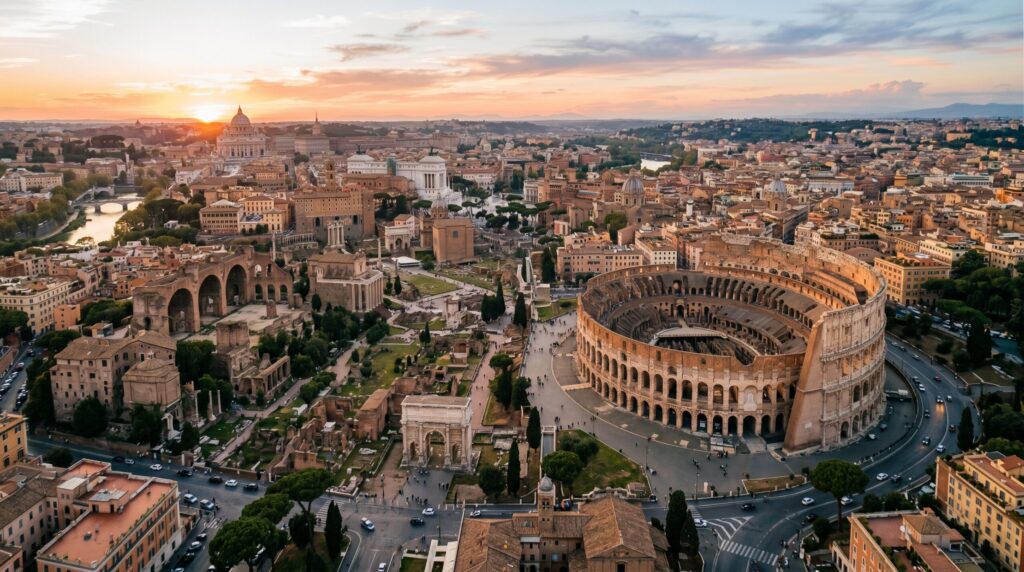
Rome, the Eternal City, is a dream destination for millions of travelers worldwide. Imagine walking through ancient ruins that have stood for over two millennia, savoring authentic Italian pizza in a cozy trattoria, and soaking in the rich history of one of the world’s most influential civilizations. The only problem? Many people assume that experiencing Rome requires a hefty budget.
But here’s the truth: exploring Rome doesn’t have to drain your wallet. With smart planning and insider knowledge, you can experience the best this iconic city has to offer without breaking the bank. In this comprehensive guide, we’ll show you exactly how to explore Rome on a budget while creating memories that will last a lifetime.
Smart Accommodation Choices: Where to Stay Without Overspending
Let’s address the elephant in the room first: accommodation. Staying in the heart of Rome, particularly near major attractions like the Spanish Steps or Piazza Navona, can be prohibitively expensive. However, there are plenty of budget-friendly options just a short distance away that offer authentic Roman experiences at a fraction of the cost.
Best Budget-Friendly Neighborhoods
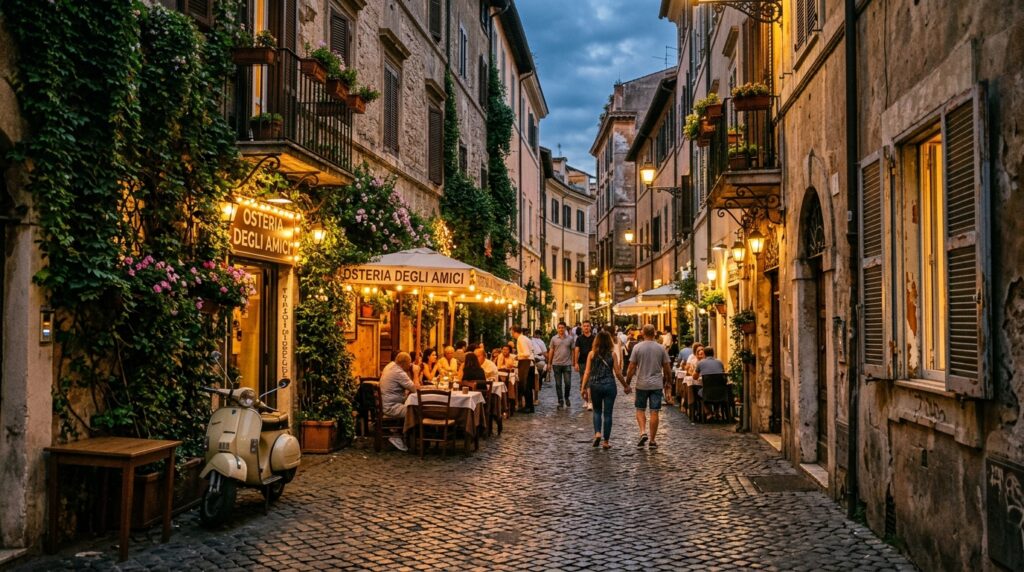
Trastevere is a charming neighborhood on the west bank of the Tiber River that perfectly balances authenticity and accessibility. This medieval district features cobblestone streets, ivy-covered buildings, and a vibrant local atmosphere. You’ll find cozy hostels ranging from €25-40 per night and affordable Airbnb stays for €50-80 per night. The area is well-connected by tram (lines 3 and 8) and bus routes, keeping you just 15-20 minutes from major attractions.
San Giovanni, located near the Basilica of San Giovanni in Laterano, offers another excellent option for budget-conscious travelers. This residential neighborhood provides a genuine taste of Roman daily life, with local markets, family-run restaurants, and fewer tourists. Metro Line A runs through this area, making it incredibly convenient for sightseeing.
Monti, Rome’s first rione (district), sits between the Colosseum and Termini Station. While it’s become increasingly trendy, you can still find budget accommodations here, and its central location means you’ll save money on transportation.
Money-Saving Accommodation Tips
- Book at least 2-3 months in advance for the best rates
- Consider staying Sunday through Thursday when prices drop significantly
- Look for accommodations with kitchenettes to save on meal costs
- Check for hostels that include breakfast – this can save €10-15 daily
Mastering Roman Transportation: Getting Around for Less
Rome is an incredibly walkable city, and walking should be your primary mode of transportation. You’ll stumble upon stunning landmarks, hidden piazzas, and charming cafes at every turn. However, for longer distances, understanding the public transport system is essential for budget travel.
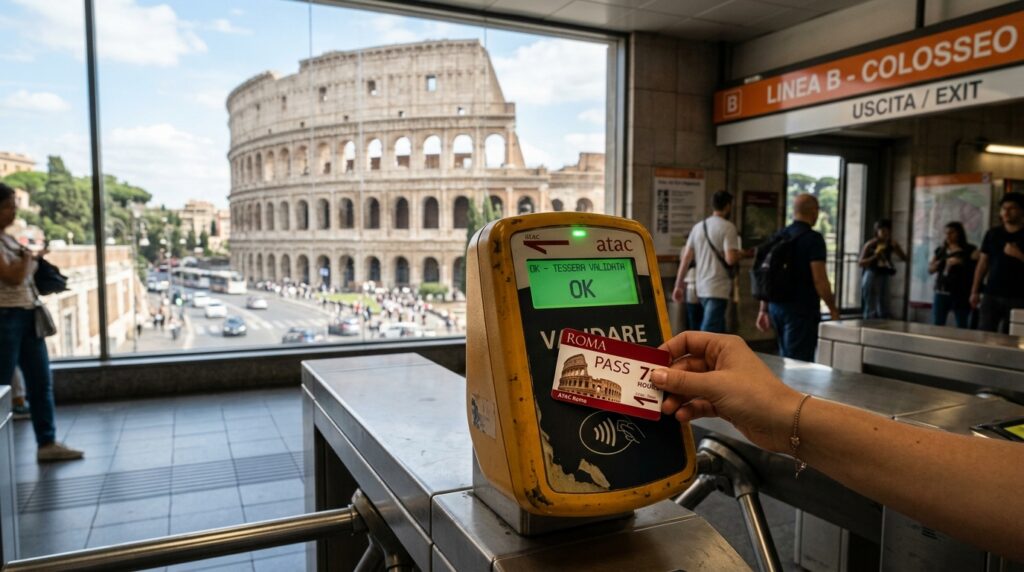
The Roma Pass: Your Golden Ticket
The Roma Pass is an absolute game-changer for budget travelers. This city card offers:
- Unlimited access to buses, trams, and the Metro for 48 or 72 hours
- Free entry to your first two museums or archaeological sites
- Discounted tickets to additional attractions
- Skip-the-line privileges at select locations
The 48-hour pass costs approximately €32, while the 72-hour pass is around €52. If you plan to visit multiple paid attractions, this pass can save you €30-50 or more.
Public Transportation Basics
Rome’s public transport network includes:
- Metro: Three lines (A, B, and C) operating from 5:30 AM to 11:30 PM (1:30 AM on Fridays and Saturdays)
- Buses: Extensive network covering areas the Metro doesn’t reach
- Trams: Six lines connecting various neighborhoods
- Single ticket: €1.50, valid for 100 minutes with unlimited transfers
Pro tip: Avoid buying single tickets repeatedly. Instead, opt for a 24-hour (€7), 48-hour (€12.50), or 72-hour (€18) pass if you’re not using the Roma Pass.
Culinary Adventures: Eating Like a Local Without the Tourist Trap Prices
No trip to Rome is complete without indulging in its world-renowned culinary delights. The good news? Eating well in Rome doesn’t require a Michelin-star budget. You just need to know where to look.
Where to Find Authentic, Affordable Food
Testaccio Market is a food lover’s paradise and a must-visit for budget travelers. This covered market, open Monday through Saturday from 7 AM to 3 PM, offers:
- Fresh pasta dishes for €8-12
- Authentic supplì (fried rice balls) for €2-3
- Pizza al taglio (by the slice) for €3-5
- Fresh fruit and local cheeses at market prices
Avoid Tourist Traps: Restaurants near major attractions like the Trevi Fountain or Spanish Steps often charge 30-50% more for inferior quality. Walk at least 3-4 blocks away from major sights to find authentic trattorias with reasonable prices.
Must-Try Budget-Friendly Roman Dishes
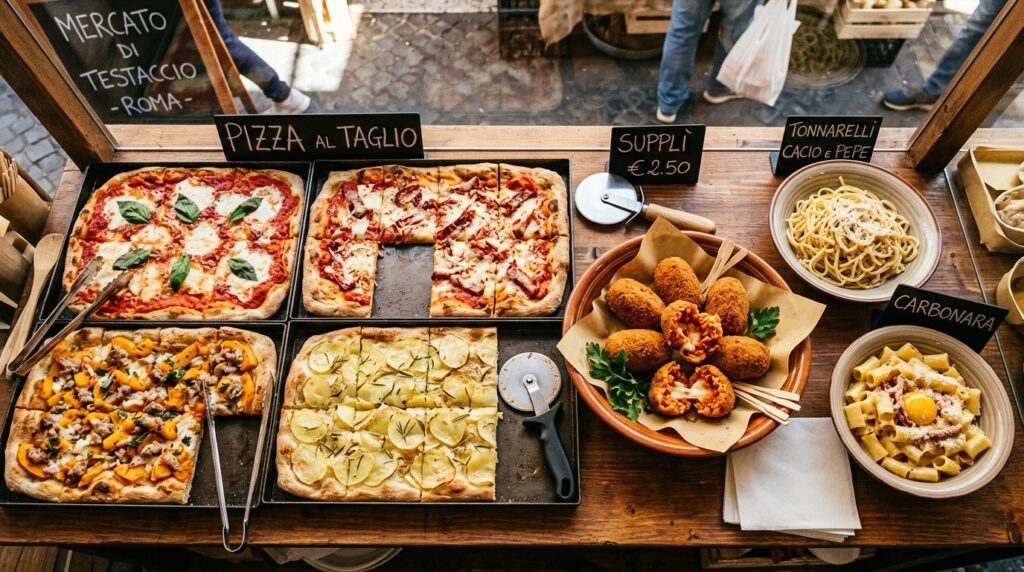
Pizza al Taglio: This Roman-style pizza, sold by weight, is perfect for a quick, affordable meal. Look for places like Antico Forno Roscioli or Pizzarium near the Vatican. Expect to pay €3-6 for a satisfying slice.
Supplì: These crispy fried rice balls filled with tomato sauce and mozzarella are the ultimate street food snack at €2-3 each.
Gelato: Yes, gelato is essential, but avoid shops with brightly colored, mountain-high displays near tourist attractions. Instead, seek out artisanal gelaterias like Giolitti, Fatamorgana, or Gelato del Teatro. A small cup costs €2.50-4 and is far superior to tourist traps.
Pasta Carbonara or Cacio e Pepe: At local trattorias, these classic Roman pasta dishes typically cost €10-14. Look for places filled with locals – that’s always a good sign.
Dining Money-Saving Strategies
- Lunch specials: Many restaurants offer fixed-price lunch menus (€12-18) that include pasta, main course, water, and coffee
- Aperitivo: From 6-9 PM, many bars offer drinks with complimentary snacks
- Water is free: Ask for “acqua del rubinetto” (tap water) instead of bottled water to save €3-5 per meal
- Avoid coperto: Some tourist restaurants charge a “coperto” (cover charge) of €2-5 per person – it’s legal but avoidable
Free Attractions: Experiencing Rome’s Grandeur Without Spending a Euro
One of the best things about Rome is that many of its most iconic landmarks are completely free to visit. You can experience the grandeur of ancient Rome without opening your wallet.
Must-See Free Attractions
The Pantheon: This 2,000-year-old architectural marvel is free to enter (as of 2026, though policies may change). The breathtaking dome, the oculus opening to the sky, and the tomb of Raphael make this an absolute must-see. Plan to spend 30-45 minutes here.
St. Peter’s Basilica: Located in Vatican City, entry to the basilica itself is free. While climbing the dome costs €8-10, the exterior and the magnificent St. Peter’s Square are worth the visit alone. Allow 1-2 hours for your visit, and remember to dress modestly (covered shoulders and knees).
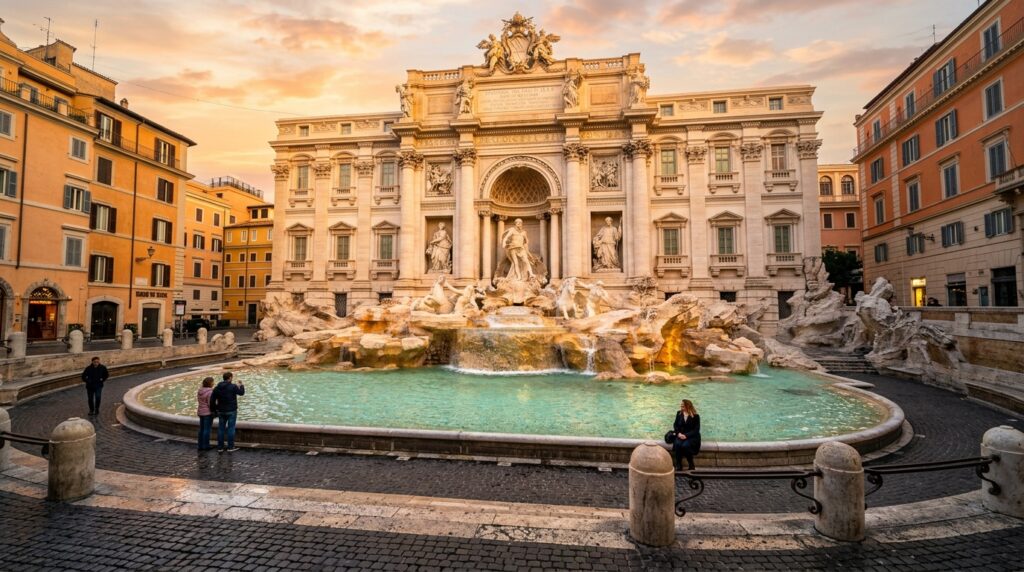
Trevi Fountain: Rome’s most famous fountain is free to visit and absolutely magical, especially early in the morning or late at night when crowds thin out. Don’t forget to toss a coin over your left shoulder with your right hand to ensure your return to Rome!
Piazza Navona: This stunning Baroque square, built on the site of an ancient Roman stadium, features three magnificent fountains and is perfect for people-watching. Spend 30-60 minutes soaking in the atmosphere.
Spanish Steps: While you can no longer sit on the steps (fines apply), admiring this iconic landmark and the surrounding area is free and delightful.
Roman Forum and Colosseum (Exterior Views): While entering these sites requires tickets, you can admire their grandeur from the outside without spending a dime. Walk along Via dei Fori Imperiali for spectacular views.
Free Walking Tours
Many companies offer free walking tours where you pay what you feel the experience was worth (typically €10-15 per person). These tours, led by knowledgeable local guides, cover:
- Ancient Rome highlights (2-3 hours)
- Vatican and Trastevere neighborhoods (2-3 hours)
- Food tours in Testaccio or Trastevere (2-3 hours)
Popular companies include Free Tour Rome, Rome Free Walking Tour, and New Rome Free Tour. Book online in advance and remember to tip your guide if you enjoyed the tour.
Museum Hacks: Culture Without the Cost
Rome boasts some of the world’s greatest museums, and while many charge admission, there are several strategies to experience them affordably.
Free Museum Days
First Sunday of the Month: Most state-run museums and archaeological sites in Rome offer free entry on the first Sunday of each month. This includes:
- Colosseum, Roman Forum, and Palatine Hill
- Capitoline Museums
- Castel Sant’Angelo
- Ostia Antica
Warning: These days are extremely crowded. Arrive at opening time (typically 8:30-9 AM) to avoid long queues.
Budget-Friendly Museum Options
Capitoline Museums: While not free (€15-16), these museums are often overlooked by tourists and offer an intimate experience with ancient Roman statues, Renaissance art, and panoramic views of the Roman Forum from the terrace.
Vatican Museums: Tickets cost €17-20, but booking online in advance (€4 booking fee) saves you from potentially hours-long queues. Visit on the last Sunday of the month (free entry, but very crowded) or book an afternoon slot when crowds thin out.
Centrale Montemartini: This unique museum, housed in a former power plant, displays ancient sculptures against an industrial backdrop. Entry is €10.50, and it’s rarely crowded.
Image Generation Prompt: “Ancient Roman statues displayed in modern industrial setting at Centrale Montemartini museum with dramatic lighting, unique museum photography”
Smart Shopping: Souvenirs Without the Splurge
Shopping in Rome can be tempting, but it doesn’t have to be expensive if you know where to look.
Best Budget Shopping Spots
Porta Portese Flea Market: Open every Sunday from 7 AM to 2 PM in Trastevere, this massive flea market offers everything from vintage clothing to antiques, souvenirs, and local crafts. Bargaining is expected here, and you can find unique items at bargain prices.
Campo de’ Fiori Market: This daily market (Monday-Saturday, 7 AM-2 PM) offers fresh produce, flowers, and local specialties. It’s perfect for picking up affordable food souvenirs like olive oil, pasta, or spices.
Outlet Shopping: For designer items at reduced prices, visit Castel Romano Designer Outlet (30 minutes south of Rome) or Valmontone Outlet (45 minutes southeast). You can find luxury brands at 30-70% off retail prices.
Shopping Tips
- Bargaining is not common in regular stores – only at flea markets
- Avoid souvenir shops near major attractions – prices are inflated 200-300%
- Look for “Made in Italy” labels for authentic products
- VAT refunds are available for non-EU residents on purchases over €155
Timing Your Visit: When to Go for the Best Deals
Timing is everything when it comes to saving money in Rome.
Off-Season Advantages (November-March)
Visiting during the off-season offers significant benefits:
- Accommodation: 30-50% cheaper than peak season
- Flights: Significantly lower prices
- Crowds: Fewer tourists mean better photo opportunities and shorter lines
- Weather: Still pleasant (8-15°C/46-59°F), though rain is more common
Exception: Avoid Christmas week and Easter, when prices spike even in winter.
Shoulder Season (April-May, September-October)
These months offer the best balance of good weather, manageable crowds, and reasonable prices. Book 2-3 months in advance for the best deals.
Peak Season (June-August)
If you must visit during peak season:
- Book everything 3-6 months in advance
- Visit popular sites early morning (7-9 AM) or late afternoon (5-7 PM)
- Expect higher prices and larger crowds
Essential Packing Tips for Budget Travelers
Packing smart can save you money and hassle during your Roman adventure.
Must-Pack Items
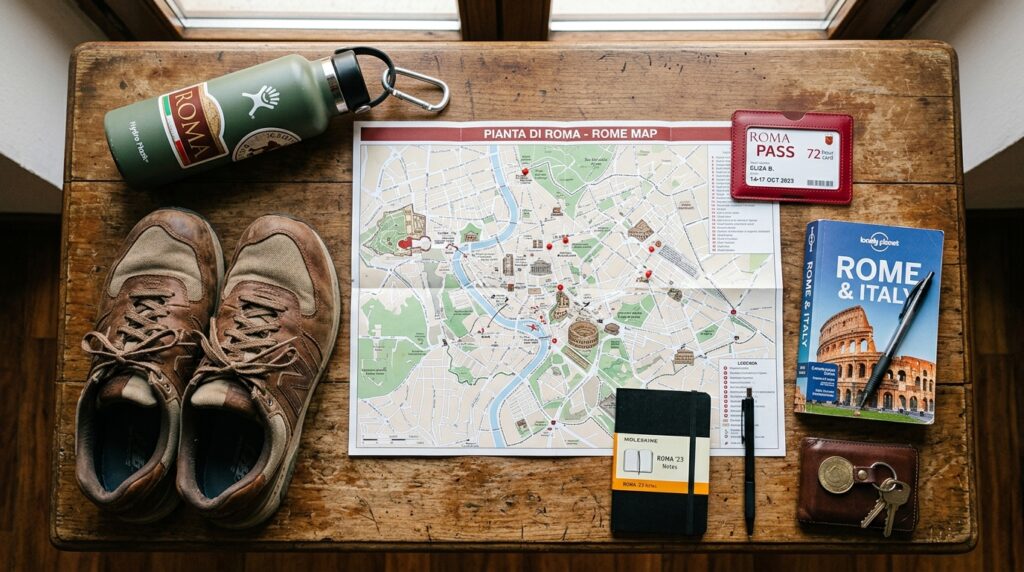
Reusable Water Bottle: Rome has over 2,500 public fountains (called “nasoni”) with free, drinkable water. This simple habit can save you €10-15 and reduce plastic waste.
Comfortable Walking Shoes: You’ll walk 10-15 km daily exploring Rome. Invest in quality, broken-in walking shoes or sneakers.
Light Layers: Rome’s weather can be unpredictable. Pack layers that can be added or removed throughout the day.
Power Adapter: Italy uses Type F/L plugs (230V). Bring a universal adapter.
Student/Senior ID: If you’re a student or under 26, bring your ID – many attractions offer discounted or free entry. Seniors (65+) also qualify for discounts at select sites.
Nightlife on a Budget: Evening Entertainment Without Breaking the Bank
Rome comes alive at night, and enjoying the city’s nightlife doesn’t require a lavish budget.
Affordable Evening Options
Local Bars and Pubs: Skip the fancy clubs and head to neighborhood bars where locals gather. A beer costs €5-7, and wine starts at €4-6 per glass.
Enotecas: These wine bars offer extensive selections of local wines at reasonable prices (€4-8 per glass). Try Enoteca Corsi or Il Goccetto for authentic experiences.
Happy Hour: Many bars offer aperitivo from 6-9 PM with drinks (€8-12) that include access to buffet snacks – sometimes enough for a light dinner.
Evening Strolls: Rome is magical at night, and wandering through illuminated streets costs nothing. Walk from Piazza Navona to the Pantheon to Trevi Fountain for an unforgettable free experience.
The Power of Asking: Local Recommendations
Don’t be afraid to ask locals for recommendations. Romans are generally friendly and proud of their city. They’ll often point you to:
- Hidden trattorias with authentic food at fair prices
- Lesser-known attractions worth visiting
- Local events or festivals happening during your stay
- The best gelato shops in their neighborhood
Engaging with locals not only saves you money but also enriches your travel experience and helps you practice your Italian!
Final Thoughts: Your Affordable Roman Adventure Awaits
Exploring Rome on a budget is not only possible – it’s incredibly rewarding. With careful planning and these insider tips, you can experience the best of this historic city without overspending. From affordable accommodations in charming neighborhoods to free world-class attractions, delicious budget-friendly eats, and smart transportation choices, Rome has something for every budget traveler.
Remember, the essence of Rome isn’t found in expensive tours or luxury hotels – it’s in the simple pleasures of wandering ancient streets, savoring authentic pasta in a family-run trattoria, tossing a coin into the Trevi Fountain, and soaking in millennia of history that surrounds you at every corner.
So pack your bags, grab your Roma Pass, bring your sense of adventure, and get ready for an unforgettable journey through the Eternal City. Rome on a budget isn’t just about saving money – it’s about experiencing the city like a local and creating memories that will last a lifetime.
Ready to start planning your budget Roman adventure? Share this guide with fellow travelers and drop your own Rome budget tips in the comments below. Let’s help each other travel smarter!