Did you know that Egypt is home to the last remaining wonder of the ancient world? That’s right—the Great Pyramid of Giza has stood tall for over 4,500 years, defying time and history. But Egypt isn’t just about pyramids. It’s a land of breathtaking temples, vibrant bazaars, and stunning beaches that will leave you in awe.
Whether you’re a history buff, an adventure seeker, or just someone looking for an unforgettable experience, Egypt has something for everyone. In this comprehensive guide, we’re diving into the top 10 most amazing places to visit in Egypt—some famous, some hidden gems, but all absolutely worth your time.
Planning Your Egyptian Adventure: Essential Information
Before we explore these incredible destinations, let’s cover some practical information to help you plan the perfect trip.
Best Time to Visit: The ideal time to explore Egypt is between October and April when temperatures are milder, ranging from 70-80°F (21-27°C). Summer months (June-August) can be extremely hot, especially in southern regions like Luxor and Aswan, where temperatures often exceed 100°F (38°C).
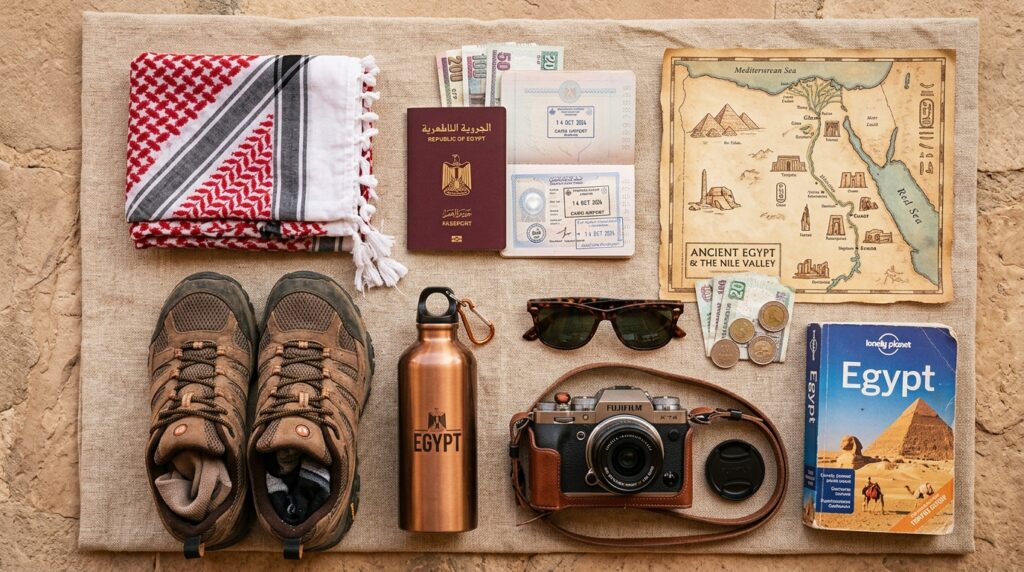
Visa Requirements: Most travelers can obtain a visa on arrival at Egyptian airports for approximately $25 USD, valid for 30 days. However, visa policies may change, so always check with the Egyptian consulate before traveling.
Currency: The Egyptian Pound (EGP) is the local currency. It’s advisable to carry cash for smaller establishments, though credit cards are widely accepted in hotels and larger restaurants.
1. The Pyramids of Giza and the Great Sphinx: Where History Comes Alive
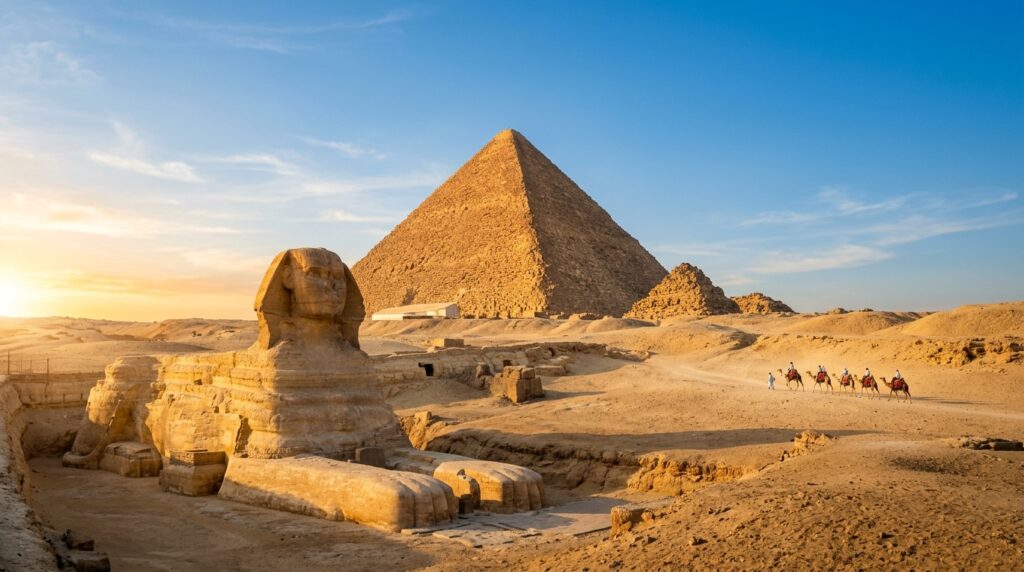
No trip to Egypt is complete without witnessing the awe-inspiring Pyramids of Giza. These iconic structures, built over 4,500 years ago as tombs for pharaohs, are the last surviving wonder of the ancient world. Standing next to the towering Great Pyramid, you can’t help but feel small—like an ant trying to comprehend the scale of a skyscraper.
What Makes It Special: The Giza Plateau houses three main pyramids: Khufu (the Great Pyramid), Khafre, and Menkaure. The complex also includes the enigmatic Great Sphinx, the mysterious guardian with the body of a lion and the head of a pharaoh, watching over the desert for millennia.
Insider Tips:
- Arrive early (around 8 AM) to beat the crowds and the intense desert heat
- Camel rides may look fun, but always negotiate the price beforehand (aim for 50-100 EGP for a short ride)
- Don’t ask your guide why the Sphinx lost its nose—let’s just say Napoleon and a bit of historical mischief may be involved!
- Enter the Great Pyramid for an additional fee (around 400 EGP) to experience the narrow passages leading to the King’s Chamber
Getting There: The pyramids are located about 30 minutes from downtown Cairo. Take a taxi or Uber (approximately 150-200 EGP each way), or join an organized tour that includes transportation.
How Long to Spend: Plan for at least 3-4 hours to explore the plateau thoroughly, take photos, and perhaps enjoy a camel ride.
2. Luxor’s Valley of the Kings and Karnak Temple: The World’s Greatest Open-Air Museum
Welcome to Luxor, once the heart of ancient Thebes and today home to some of Egypt’s most jaw-dropping sights. This city is essentially the world’s greatest open-air museum, packed with temples, tombs, and monuments that showcase the grandeur of ancient Egyptian civilization.
Valley of the Kings: This is where pharaohs, including the famous King Tutankhamun, were buried in elaborately decorated tombs. The intricate hieroglyphics and vibrant paintings have survived for over 3,000 years, offering an intimate glimpse into ancient beliefs about the afterlife.
Karnak Temple Complex: Walking through Karnak feels like stepping into the remains of a civilization that knew how to go big. Huge columns, intricate carvings, and an ancient energy that’s almost eerie await you. Karnak was actually built over 2,000 years, with each pharaoh adding their own touch—kind of like a really slow group project!
Cultural Highlights:
- The Hypostyle Hall at Karnak features 134 massive columns, some reaching 80 feet tall
- Tomb of Tutankhamun (KV62) requires a separate ticket but is worth it for history enthusiasts
- The Luxor Temple, beautifully illuminated at night, is perfect for evening visits
Insider Tips:
- Hire a local guide (approximately 300-500 EGP for a half-day) to explain the hidden symbols—you’ll appreciate the history so much more
- Visit early morning or late afternoon to avoid crowds and extreme heat
- Wear comfortable shoes—you’ll be doing extensive walking on uneven surfaces
Getting There: Fly from Cairo to Luxor (1-hour flight, approximately $100-150 USD) or take an overnight train (sleeper class recommended, around $80-100 USD).
How Long to Spend: Minimum 2 full days to properly explore both the East and West Banks of the Nile.

3. Abu Simbel Temples: Ramses II’s Monumental Masterpiece
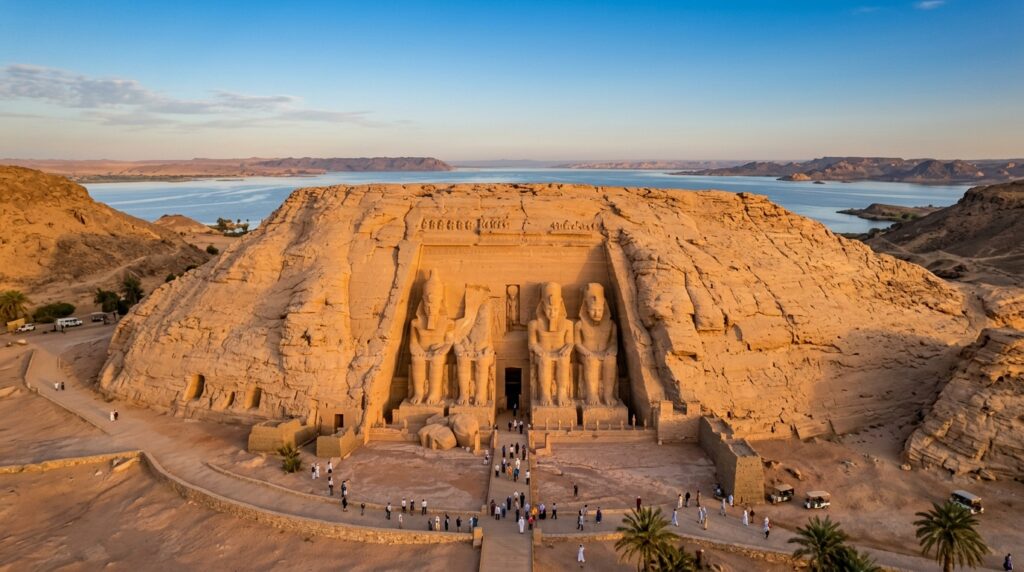
If you think size matters, wait until you see Abu Simbel. These massive rock temples were carved straight into a mountainside by Ramses II over 3,000 years ago to showcase his power and immortalize his reign.
The Engineering Marvel: The temple is guarded by four colossal statues of the pharaoh himself, each towering over 65 feet tall. But here’s the crazy part: when the Aswan Dam was built in the 1960s, the entire temple was moved piece by piece to higher ground to prevent flooding. It was one of the most remarkable engineering feats of the modern era—imagine relocating a whole mountain just to save history!
What to See:
- The Great Temple dedicated to Ramses II and the gods Amun, Ra-Horakhty, and Ptah
- The smaller Temple of Hathor dedicated to Ramses II’s beloved wife, Nefertari
- The biannual sun alignment (February 22 and October 22) when sunlight penetrates the inner sanctuary
Insider Tips:
- Visit during early morning (6-8 AM) when the sunlight hits the statues perfectly, giving them an otherworldly glow
- Join a convoy from Aswan (departs around 4 AM) as individual travel isn’t permitted for security reasons
- Book a guided tour to understand the intricate symbolism and historical significance
Getting There: Abu Simbel is located 280 km south of Aswan. Most travelers join organized tours that include transportation (approximately $50-80 USD including entry fees).
How Long to Spend: 2-3 hours is sufficient to explore both temples thoroughly.
4. The White Desert: Egypt’s Otherworldly Landscape
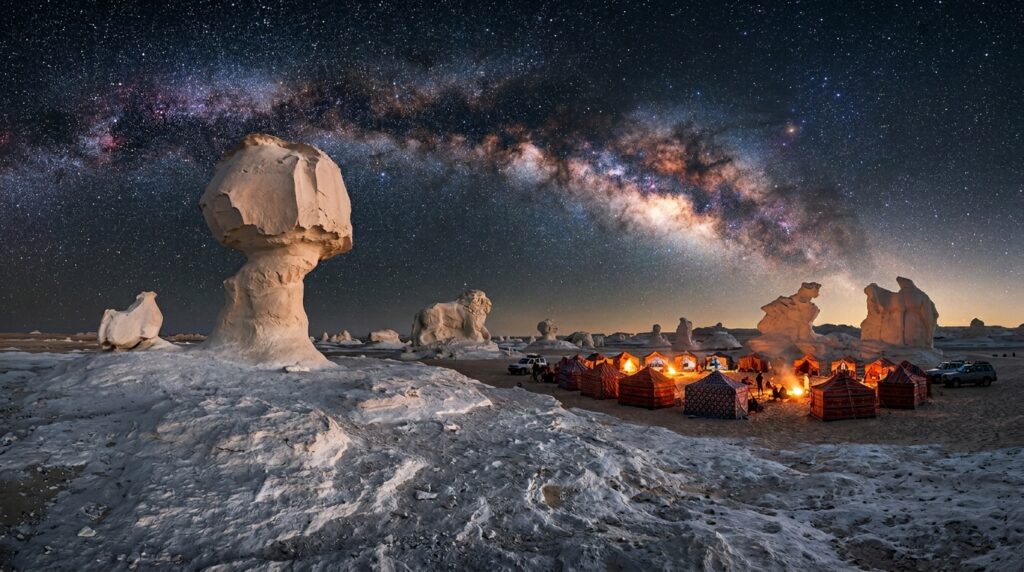
Egypt isn’t just about golden sands—say hello to the White Desert, where bizarre chalk formations make the landscape look like another planet. This surreal natural wonder is one of Egypt’s most underrated destinations.
The Landscape: Giant mushroom-shaped rocks and eerie formations rise from the desert floor, sculpted over millennia by wind and sand. Some formations look like animals—there’s even one that resembles a giant chicken! If you’ve ever wanted to take a selfie with a rock chicken, this is your chance.
Unique Experiences:
- Camping under the stars: A night in the White Desert under a sky full of stars is a once-in-a-lifetime experience
- Sunrise and sunset photography: The chalk formations change colors dramatically throughout the day
- 4×4 desert safaris: Explore remote areas inaccessible by regular vehicles
Insider Tips:
- Bring warm clothes—deserts get surprisingly cold at night (temperatures can drop to 40°F/4°C)
- Book a multi-day tour from Cairo or Bahariya Oasis (2-3 days recommended)
- Hire an experienced Bedouin guide who knows the terrain and best camping spots
Getting There: The White Desert is located in the Farafra Depression, about 450 km from Cairo. Most visitors join organized tours from Bahariya Oasis (5-6 hour drive from Cairo).
How Long to Spend: Minimum 2 days/1 night to fully experience the desert’s magic.
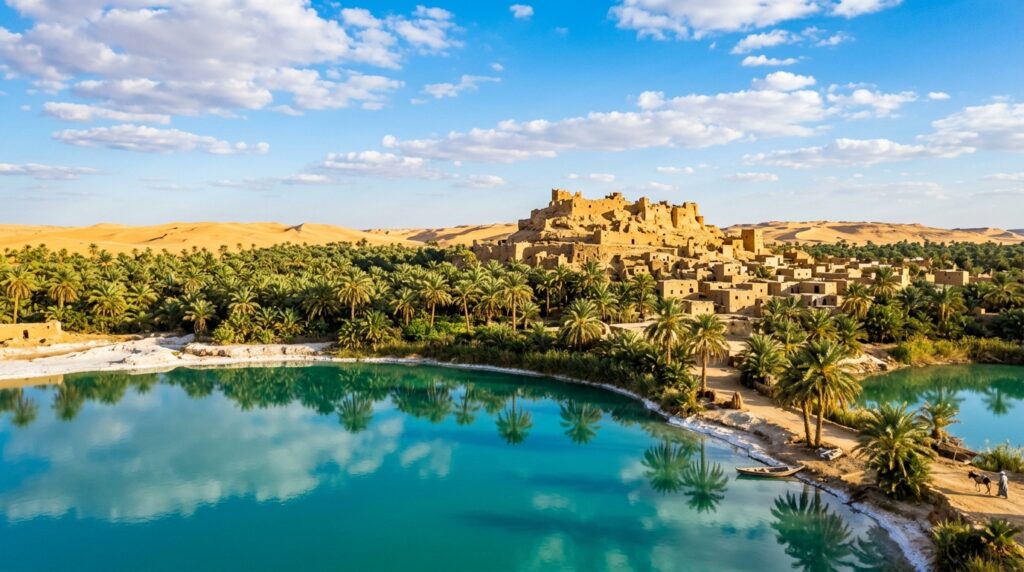
5. Siwa Oasis: Egypt’s Best-Kept Secret
Hidden deep in the Western Desert, Siwa Oasis is Egypt’s best-kept secret. Imagine a paradise of crystal-clear salt lakes, endless palm groves, and historic ruins untouched by mass tourism.
Cultural Richness: Siwa is a world apart from the rest of Egypt, with a culture as unique as its landscapes. The locals speak Siwi, an ancient Berber language, and their traditions have remained remarkably preserved. Even Alexander the Great visited Siwa to consult the famous Oracle of Amun, seeking divine confirmation of his status as a god—even history’s greatest conquerors needed a little reassurance!
Must-Do Activities:
- Swim in the salt lakes of Siwa (the high salt content makes you float effortlessly)
- Explore the Shali Fortress, a mud-brick town dating back to the 13th century
- Visit Cleopatra’s Bath, a natural spring pool
- Try the Siwan dates and olives—they’re some of the best in the world
Insider Tips:
- Rent a bicycle to explore the oasis at your own pace (approximately 50 EGP per day)
- Visit between March-May or September-November for the most comfortable temperatures
- Respect local customs—Siwa is conservative, so dress modestly
Getting There: Siwa is located 560 km from Cairo. Take a bus from Cairo’s West Bus Terminal (approximately 12-14 hours, $15-20 USD) or fly to Marsa Matruh and take a taxi.
How Long to Spend: 3-4 days to fully explore the oasis and surrounding areas.
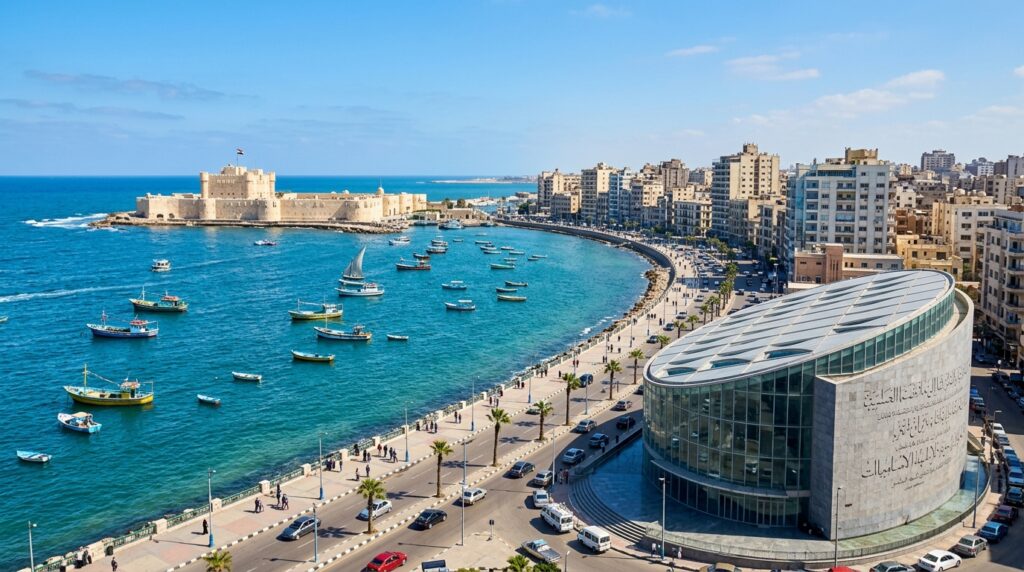
6. Alexandria’s Bibliotheca and Citadel: Mediterranean Charm Meets Ancient History
Once home to the legendary Library of Alexandria, this coastal city blends history with Mediterranean charm in a way that’s uniquely Egyptian.
Modern Marvels & Ancient Wonders: The Bibliotheca Alexandrina is a modern architectural marvel paying homage to the ancient library that once held the knowledge of the world. Then there’s the Citadel of Qaitbay, a fortress built on the ruins of the famous Lighthouse of Alexandria, one of the Seven Wonders of the Ancient World.
City Highlights:
- Stroll along the Corniche for breathtaking sea views and delicious seafood
- Explore the Montaza Palace Gardens for a serene escape
- Visit the Roman Amphitheater, a glimpse into Alexandria’s Greco-Roman heritage
- Discover the Catacombs of Kom El Shoqafa, a fascinating blend of Egyptian, Greek, and Roman art
Food Recommendations: Alexandria is famous for its fresh seafood. Try grilled fish at Fish Market (Samak Bazar) or enjoy traditional Egyptian fare at Tika Tika restaurant.
Insider Tips:
- Visit the Bibliotheca early to avoid crowds and attend cultural events
- Sunset at the Corniche is magical—grab some traditional Egyptian tea from a street vendor
- Wear comfortable walking shoes as the city is best explored on foot
Getting There: Alexandria is 220 km from Cairo. Take a train from Cairo’s Ramses Station (2-3 hours, $10-30 USD depending on class) or a bus (approximately 3 hours).
How Long to Spend: 2-3 days to explore the city’s main attractions at a relaxed pace.
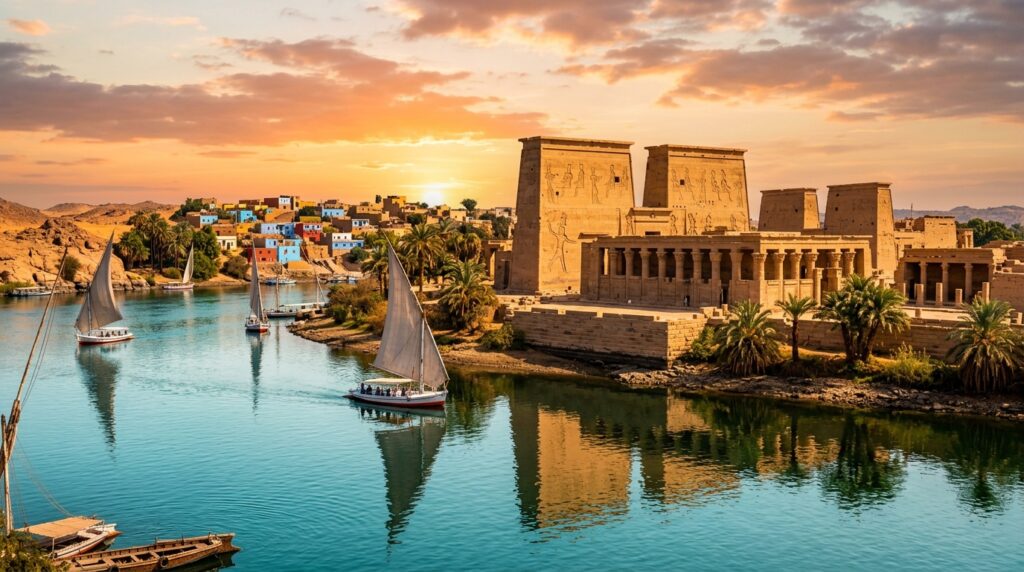
7. Aswan and Philae Temple: Nubian Culture and Nile Serenity
Aswan is Egypt’s most laid-back city, famous for its Nubian culture, colorful houses, and scenic Nile views. The locals are incredibly welcoming, and the vibrant markets are a must-visit.
Philae Temple: The real highlight is the Philae Temple, dedicated to the goddess Isis, which had to be relocated due to rising waters after the construction of the Aswan High Dam. The temple complex is a stunning example of ancient Egyptian architecture, complete with intricate carvings and towering pylons. This temple was still in use during Roman times—talk about longevity! It even features inscriptions left by Roman emperors.
Cultural Experiences:
- Visit a Nubian village to learn about local traditions and enjoy traditional music
- Explore the Unfinished Obelisk to understand ancient quarrying techniques
- Shop at the colorful Aswan Souq for spices, perfumes, and handicrafts
Unique Activities:
- Take a felucca ride on the Nile for a peaceful, magical sunset experience (approximately 100-150 EGP per hour)
- Visit Elephantine Island via ferry to see ancient ruins and Nubian villages
- Take a day trip to Abu Simbel (see #3 above)
Insider Tips:
- Stay in a Nubian guesthouse for an authentic cultural experience
- Visit Philae Temple in the evening for the spectacular sound and light show
- Bargain respectfully in the markets—it’s part of the culture
Getting There: Fly from Cairo to Aswan (1.5-hour flight, approximately $100-150 USD) or take an overnight train (sleeper class recommended).
How Long to Spend: 2-3 days to explore Aswan and take a felucca cruise.
8. The Red Sea: Sharm El-Sheikh and Hurghada – Diver’s Paradise
Looking for a break from history? Egypt’s Red Sea is a paradise for diving and beach lovers. Sharm El-Sheikh and Hurghada offer stunning coral reefs, crystal-clear waters, and world-class resorts.
Marine Life: The marine life here is incredible, with colorful fish, dolphins, and even the occasional whale shark making an appearance. The Red Sea has some of the best diving spots in the world—you might even spot a sunken shipwreck!
Activities:
- Scuba diving and snorkeling in pristine coral reefs
- Kite surfing, parasailing, and windsurfing
- Deep-sea fishing excursions
- Desert safaris and Bedouin dinners
For Beginners: If you’re new to diving, try snorkeling at Ras Mohammed National Park—you won’t regret it! The shallow reefs are teeming with colorful marine life.
Nightlife & Dining: The nightlife is just as vibrant, with beachfront bars, live music, and delicious seafood dining under the stars.
Insider Tips:
- Book diving courses in advance during peak season (December-February)
- Respect marine life—don’t touch or stand on coral reefs
- Try a desert safari for a different perspective of the Red Sea region
Getting There: Direct flights to Sharm El-Sheikh or Hurghada from Cairo (1-hour flight, approximately $80-120 USD) or international flights from Europe and the Middle East.
How Long to Spend: 4-7 days to fully enjoy diving, relaxation, and desert excursions.

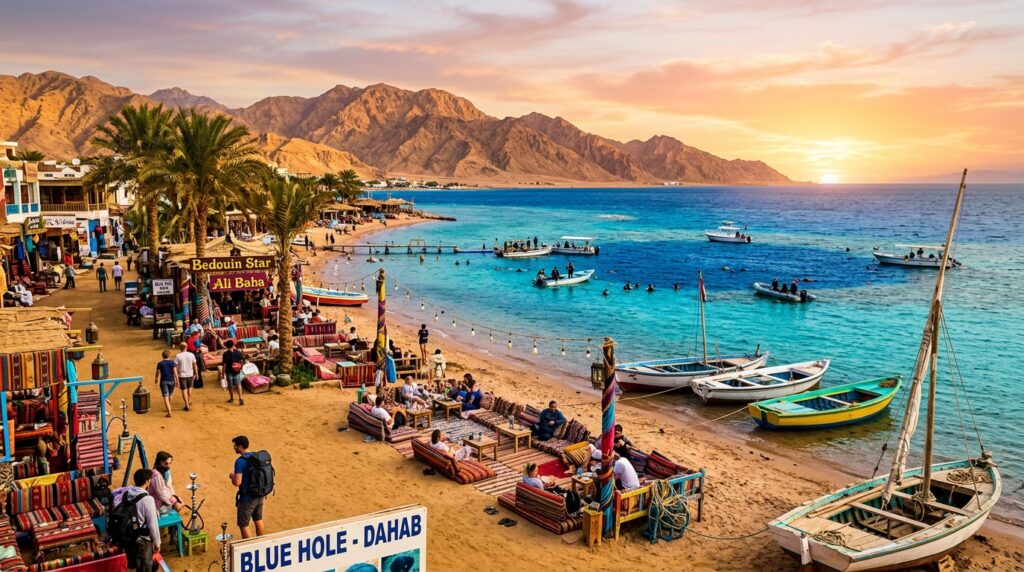
9. Dahab: The Laid-Back Backpacker’s Dream
If you want something more laid-back, skip the crowded resorts and head to Dahab. This small town is a backpacker’s dream with chilled-out vibes, cheap seafood, and stunning beaches.
The Blue Hole: The famous Blue Hole is one of the world’s most dangerous but breathtaking dive sites, attracting thrill-seekers from around the globe. This underwater sinkhole plunges to over 100 meters and is surrounded by stunning coral walls.
Beyond Diving:
- Go windsurfing at the famous Blue Lagoon
- Explore the Lighthouse Reef for excellent snorkeling
- Take a Jeep safari into the Colored Canyon, a natural wonder with vibrant rock formations
- Relax in traditional Bedouin tea houses along the beach
Even if You Don’t Dive: The beaches, hiking opportunities, and laid-back atmosphere make Dahab worth a visit even if you’re not a diver.
Insider Tips:
- Stay in a beachfront hostel for the full Dahab experience ($10-20 USD per night)
- Try the fresh grilled fish at one of the many beachside restaurants
- Rent a bicycle to explore the town and nearby beaches
- Respect the Blue Hole—it’s claimed many experienced divers’ lives
Getting There: Fly to Sharm El-Sheikh and take a bus or taxi to Dahab (1.5 hours, approximately $20-30 USD).
How Long to Spend: 3-5 days to enjoy diving, hiking, and the relaxed atmosphere.
10. Mount Sinai and St. Catherine’s Monastery: Spiritual Adventure
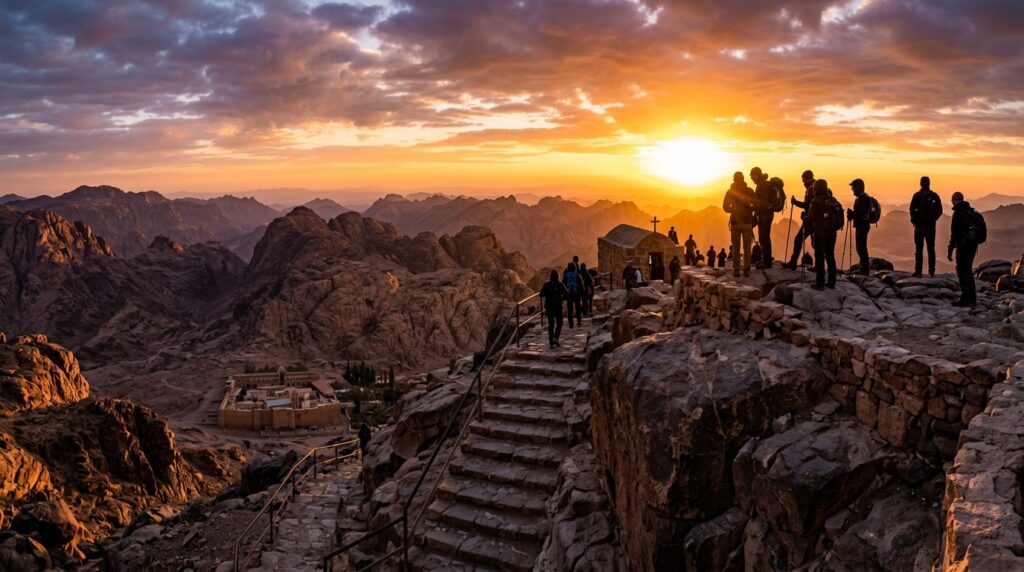
For an unforgettable adventure, climb Mount Sinai at night to catch the sunrise from the peak. It’s believed to be the site where Moses received the Ten Commandments, and the view from the top is absolutely breathtaking.
The Hike: The climb typically takes 2-3 hours and can be challenging, but you can rent a camel if you need some help getting to the top (approximately 200-300 EGP). Most hikers start around 1-2 AM to reach the summit for sunrise.
St. Catherine’s Monastery: At the base lies St. Catherine’s Monastery, one of the oldest working monasteries in the world, dating back to the 6th century AD. The monastery houses an impressive collection of religious icons and manuscripts.
What to Expect:
- The hike: Approximately 750 steps (the “Steps of Repentance”) or a longer, gentler path
- Sunrise views: Spectacular panoramic views of the Sinai Peninsula
- Tea and blankets: Available at the summit while you wait for sunrise (bring cash)
Insider Tips:
- Bring warm layers—it’s freezing at the summit before sunrise (temperatures can drop to 32°F/0°C)
- Carry water and snacks for the climb
- Hire a local Bedouin guide for safety and cultural insights
- Visit the monastery after descending (opens around 9 AM)
Getting There: Located in the Sinai Peninsula, about 5-6 hours by bus from Sharm El-Sheikh or Dahab.
How Long to Spend: 1-2 days (one night for the climb, half-day for the monastery).
Practical Travel Information for Egypt
Transportation Tips
- Domestic flights: Efficient for long distances (Cairo to Luxor/Aswan)
- Trains: Overnight sleeper trains are comfortable and scenic
- Buses: Go Bus and Blue Bus offer reliable service between major cities
- Taxis/Uber: Widely available in Cairo and Alexandria; always agree on price beforehand for regular taxis
- Feluccas: Traditional sailboats perfect for Nile experiences in Aswan
Food Recommendations
- Must-try dishes: Koshary (Egypt’s national dish), Ful Medames (fava beans), Molokhia (green soup), grilled kofta
- Street food: Ta’ameya (Egyptian falafel), hawawshi (spiced meat in bread)
- Desserts: Umm Ali (bread pudding), basbousa (semolina cake), konafa
- Drinks: Fresh sugarcane juice, hibiscus tea (karkade), traditional Egyptian coffee
Weather Advice by Season
- Winter (Dec-Feb): Mild and pleasant (60-75°F/15-24°C); perfect for sightseeing
- Spring (Mar-May): Warm with occasional sandstorms; still good for travel
- Summer (Jun-Aug): Extremely hot (90-105°F/32-40°C); focus on Red Sea or early morning activities
- Fall (Sep-Nov): Ideal temperatures return; excellent for all activities
Cultural Highlights & Etiquette
- Dress modestly, especially when visiting religious sites (shoulders and knees covered)
- Remove shoes when entering mosques
- Ask permission before photographing people, especially women
- Learn basic Arabic phrases: “Shukran” (thank you), “Min fadlak” (please)
- Bargaining is expected in markets and souqs—start at 50% of the asking price
Safety Considerations
- Egypt is generally safe for tourists, with heavy security at major sites
- Stay hydrated and use sunscreen liberally
- Drink only bottled water
- Keep copies of important documents
- Register with your embassy if staying for extended periods
Final Thoughts: Your Egyptian Adventure Awaits
And there you have it—Egypt’s most incredible places to visit! Whether you love history, adventure, or just stunning landscapes, Egypt has something for everyone. From the awe-inspiring Pyramids of Giza to the tranquil waters of the Red Sea, from the ancient temples of Luxor to the otherworldly White Desert, this remarkable country offers experiences that will stay with you for a lifetime.
Which of these places is on your bucket list? Whether you’re planning your first visit or returning to discover hidden gems, Egypt promises an adventure like no other. The warmth of its people, the richness of its history, and the beauty of its landscapes combine to create memories that will last forever.
Ready to start planning? Remember that visa policies and flight schedules may change over time, so always check the latest information before booking. Consider traveling with a reputable tour operator for remote destinations like the White Desert or Siwa Oasis, and don’t hesitate to ask locals for recommendations—they’re often the best source of insider knowledge!
Egypt has been welcoming travelers for thousands of years, and it’s ready to welcome you too. So pack your bags, bring your sense of wonder, and prepare for the adventure of a lifetime in this magnificent land where ancient history meets modern hospitality.
Safe travels, and see you in Egypt!