Imagine standing on a limestone cliff, a warm Caribbean breeze in your hair, gazing down at turquoise water so clear it looks painted — while at your back rises a stone temple built centuries before the Spanish ever set foot in the Americas. That, dear traveler, is Tulum. Few destinations on Earth let you touch ancient history in the morning and dip your toes in a postcard-perfect beach by lunchtime, but this walled Mayan city on Mexico’s Yucatán coast does exactly that.
Tulum is where the ancient and modern worlds beautifully collide: a once-powerful port city, a breathtaking archaeological zone, and today one of the most beloved coastal escapes in the entire Caribbean. In this complete travel guide, we’ll count down the top 10 reasons the Tulum Ruins deserve a spot on your bucket list, then hand you a ready-to-use day itinerary, transportation tips, food recommendations, and weather advice so your visit is as smooth as it is unforgettable.
Quick Facts at a Glance
| Fact | Detail |
|---|---|
| Location | Caribbean coast of Quintana Roo, Mexico (Riviera Maya) |
| Era | Flourished between the 13th and 16th centuries |
| Famous for | El Castillo, Temple of the Frescoes, cliff-top ocean views |
| Time needed | 1.5–3 hours for the ruins |
| Best time of day | Right at opening or late afternoon |
| Nearest airport | Cancún International (CUN), roughly 2 hours away |
| Perfect combo | Ruins + Playa Paraíso + a cenote in one day |
10. A Thriving Walled Port: The Rich History of Tulum
Tulum — meaning “wall” or “fence” in Yucatec Maya — was a thriving city between the 13th and 16th centuries, and one of the last cities built and inhabited by the Maya before the arrival of the Spanish. Earlier, it was likely known as Zama, “the City of Dawn,” a poetic name you’ll understand the moment you watch sunrise from its clifftops.
Crucially, Tulum is the only major Mayan archaeological site built directly on the coast. This was no accident: the city was a bustling port and a vital hub for maritime trade in salt, jade, obsidian, cacao, honey, and feathers. Canoe fleets laden with goods hugged this shoreline, and Tulum’s position turned it into a commercial powerhouse of the late Mayan world. Walking the ruins today, you’re strolling through the remains of an international trading port — a layer of depth that makes every stone feel alive with stories.
9. A Cliff-Top Setting Like No Other
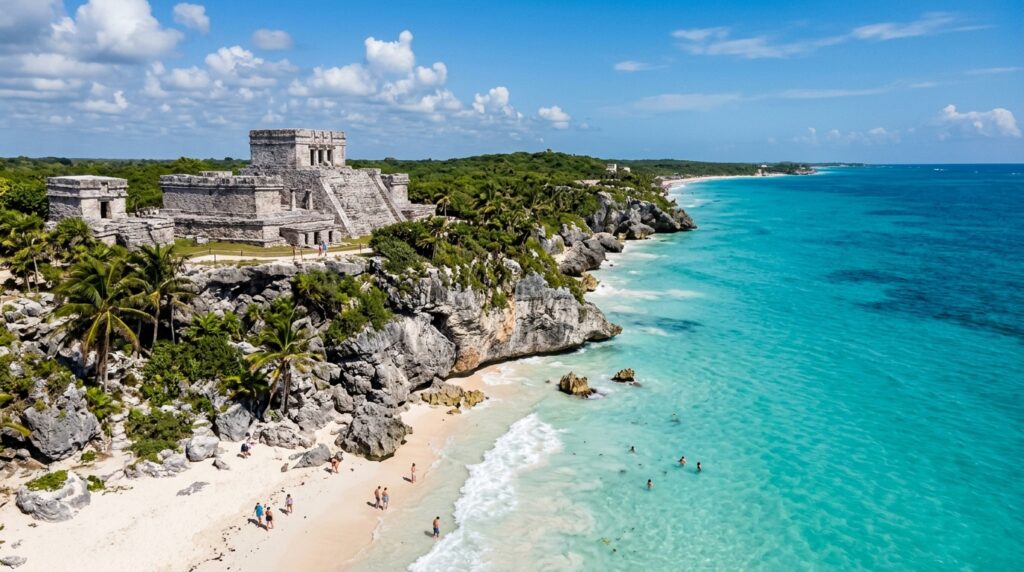
What truly sets the Tulum Ruins apart from other ancient sites is their jaw-dropping location. The city is perched on cliffs rising about 12 meters above the Caribbean Sea, offering a combination of ancient architecture and natural beauty that simply doesn’t exist elsewhere.
That strategic coastal position gave the city a defensive advantage — invaders approaching by sea were spotted long before they landed — but today it gifts visitors something even better: sweeping, uninterrupted views of pristine turquoise water framing thousand-year-old stone temples. With the jungle at its back and the reef-speckled sea in front, Tulum is regularly ranked among the most picturesque archaeological sites on the planet. Bring a spare memory card; you’ll need it.
8. El Castillo: The Lighthouse of the Maya
The most iconic structure in the Tulum Ruins is undoubtedly El Castillo — “the Castle.” This pyramid-shaped temple stands majestically on the very edge of the cliff and is believed to have served as a lighthouse, guiding Mayan canoes through a safe gap in the offshore reef.
Its elevated position allowed lookouts to monitor sea traffic for both navigation and defense, and standing at its base you immediately understand the genius of the placement. The panoramic view from El Castillo is breathtaking: on one side, weathered stone shrines and ceremonial plazas; on the other, an endless gradient of blues rolling toward the horizon. It’s the single best viewpoint in the entire archaeological zone and one of the most photographed vistas in Mexico. Come at opening time and you may have this million-dollar view almost to yourself.
7. Temple of the Frescoes: A Mayan Art Gallery
Just steps from the main plaza, the Temple of the Frescoes is a small but remarkably impressive building celebrated for its vibrant, well-preserved murals. The paintings depict Mayan deities — including figures associated with the god of wind and rain — alongside scenes of ritual ceremony, offering a rare window into the spiritual life of the city’s inhabitants.
It’s one of the best-preserved examples of Mayan fresco art anywhere in the Yucatán, and studying its carved façades and painted chambers reveals both the beliefs and the advanced building techniques the Maya were famous for. Take your time here: the layered construction, the stucco masks, and the faded pigments reward slow, curious travelers far more than a quick snapshot ever could.
6. The Descending God & Tulum’s Hidden Temples
Beyond the headline structures, the Tulum Ruins hide a collection of fascinating smaller buildings. Near the southern wall stands the Temple of the Descending God, named for the curious carved figure above its entrance — a winged deity who appears to dive head-first from the heavens. Scholars often interpret this “Descending God” as linked to bees, honey, and the setting sun or evening star, and the unusual pose has sparked countless interpretations that add to the site’s mystery.
Equally charming are the Temple of the Seven Turtles, thought to be tied to ceremonies of fertility and the sea, and the airy Temple of the Wind, whose rounded base honors the wind god and frames one of the loveliest sea views in the complex. Together, these lesser-visited corners give you space to explore in peace while the crowds cluster at El Castillo.
5. Walking the Ramparts of the Walled City
One of the most striking features of Tulum is its impressive defensive wall. The city is enclosed by sturdy ramparts pierced by three narrow entrances, with the sheer sea cliffs guarding the eastern side — a design that made Tulum remarkably easy to defend and hard to surprise.
The walls weren’t only military hardware; they reinforced the city’s status as an important, wealthy Mayan settlement. As you follow the paths along the ramparts, look for the small watchtowers scattered at intervals: they reveal how carefully the Maya engineered their cities for surveillance and defense. Circling the perimeter takes barely twenty minutes, yet it completely changes how you picture daily life here — sentries on the towers, traders funneling through the gates, and the sea glittering just beyond the stone.

4. A Sacred Landscape: The Spiritual Mystique of Tulum
Tulum was never just a port; it was a deeply spiritual place. Many structures within the ruins were built for religious purposes, and the city’s very layout reflects a profound Mayan connection with nature and the cosmos. Several buildings are aligned with celestial events — the rising sun, the solstices — so that on special days light would pour through doorways and illuminate sacred spaces.
The Temple of the Seven Turtles, for instance, is believed to have hosted ceremonies honoring fertility and the sea, while incense and conch-shell trumpets likely echoed across these plazas during festivals. This strong spiritual presence gives the Tulum Ruins a mystical aura that visitors feel immediately. It’s a place to slow down, listen to the waves, and imagine processions of priests and merchants moving through the City of Dawn at first light.
3. From Ruins to Sand in Seconds: Playa Paraíso
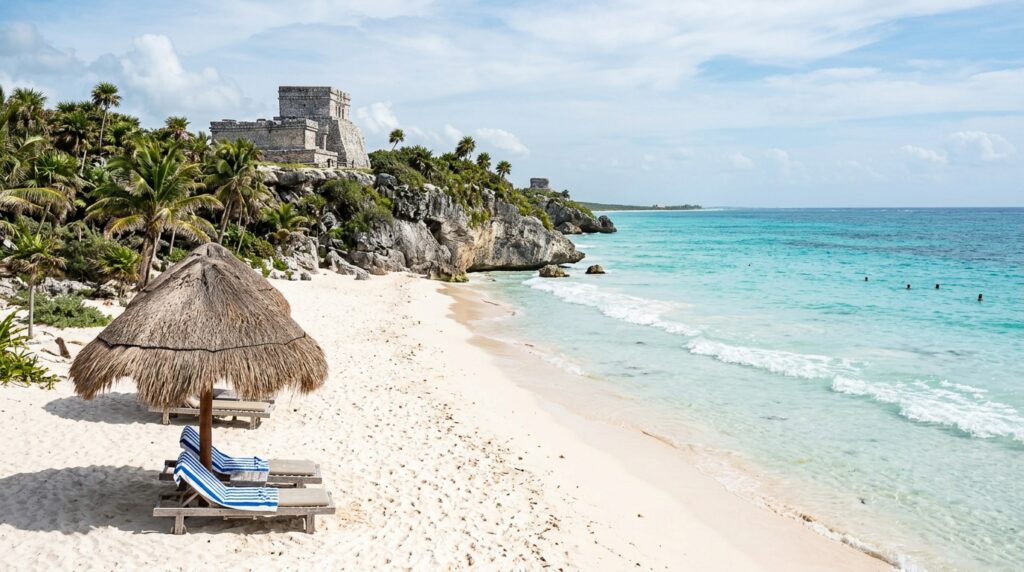
While the ruins themselves are remarkable, Tulum’s masterstroke is what lies just below them: Playa Paraíso, regularly counted among the most beautiful beaches in the world. A short staircase from the archaeological zone drops you onto powder-soft white sand and calm, crystal-clear water that shifts from jade to sapphire as the day moves on.
The experience is unbeatable — spend the morning wandering thousand-year-old temples, then spend the afternoon swimming and unwinding beneath them. Few places on Earth let you pair UNESCO-worthy history with a world-class beach in a single heartbeat. Bring swimwear under your clothes, a little cash for palapa loungers and fresh coconuts, and give yourself at least an hour of pure beach bliss after your history lesson.
2. Small but Majestic: An Intimate Archaeological Site
Unlike the sprawling ruins of Chichén Itzá or Cobá, the Tulum Ruins are refreshingly compact. You can walk the entire site at a leisurely pace in about one and a half to two hours, taking time to admire each structure, study the carvings, and soak in the views without ever feeling rushed or exhausted.
This intimate scale creates a deeper, more personal connection to the place. Instead of marching between distant monuments under a blazing sun, you linger, double back, and discover quiet angles where a temple frames the sea perfectly. It’s also wonderfully manageable for families with children, older travelers, and anyone who prefers reflection over marathon sightseeing. Small, yes — but every square meter earns its majesty.
1. The Perfect Blend of History, Nature & Relaxation
And the number-one reason Tulum mesmerizes everyone who visits? Harmony. No other destination blends ancient history, raw natural beauty, and modern relaxation quite like this. The ruins showcase the Maya’s architectural and cultural achievements; the clifftop setting delivers some of the most stunning views of any archaeological site on Earth; and beyond the gates, Tulum’s idyllic beach zone, eco-conscious resorts, cenotes, and laid-back atmosphere invite you to stay, slow down, and breathe.
Tulum is more than a checklist stop — it’s an experience that weaves history, culture, and nature into one unforgettable package, where the past and present collide beautifully and leave a lasting impression on every traveler.
The Perfect Tulum Day: A Ready-to-Use Itinerary
- 7:30 – 8:15 | Breakfast in Tulum Pueblo: Grab cochinita pibil tacos and fresh juice at a local taquería before the crowds wake up.
- 8:00 – 10:30 | Explore the Tulum Ruins: Enter at opening time for cool temperatures, soft light, and thin crowds. Loop El Castillo, the frescoes, and the walls.
- 10:30 – 12:30 | Playa Paraíso: Descend the stairs from the ruins and swim in the Caribbean beneath the cliffs.
- 13:00 – 14:30 | Lunch: Fresh ceviche or grilled fish at a beach palapa or back in town.
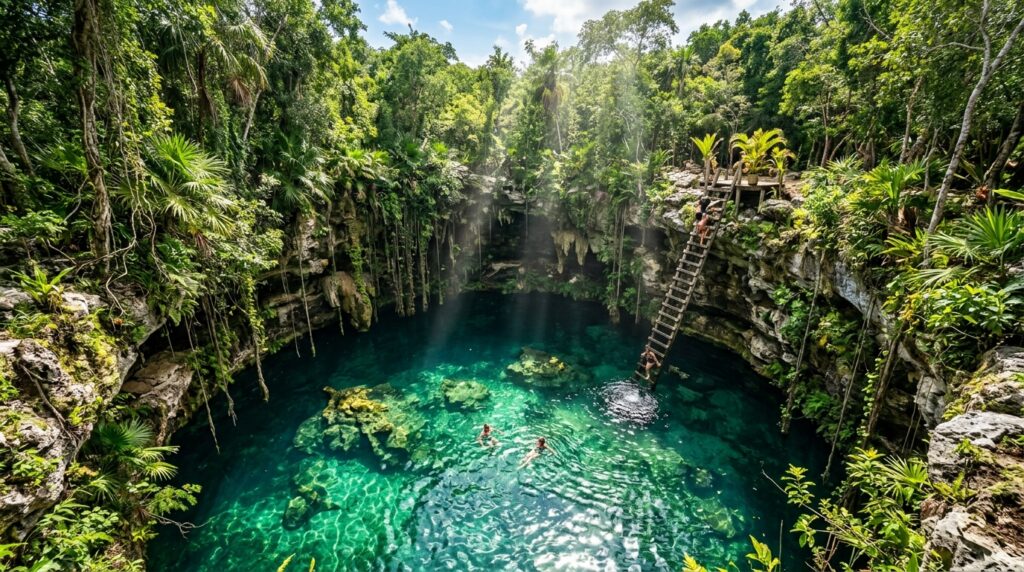
- 15:00 – 17:00 | Cenote swim: Cool off in Gran Cenote’s clear waters or float past mangroves in Casa Cenote.
- 17:30 – 18:45 | Golden hour: Watch the sunset from the beach road or over the turquoise bowl of Laguna Kaan Luum.
- 19:30 onward | Dinner & stroll: Enjoy wood-fired coastal cuisine or street-food classics, then browse boutiques and artisan stalls.
Transportation Tips: Getting to the Tulum Ruins
- By air: Most travelers fly into Cancún International Airport (CUN), about a two-hour drive north on Highway 307. Flight routes and entry requirements can change over time, so always verify before booking.
- By bus: Comfortable ADO coaches connect Cancún and Playa del Carmen to Tulum town regularly and affordably.
- By colectivo: Shared vans zip along Highway 307 for a few dollars — the budget traveler’s best friend on the Riviera Maya.
- From town to the ruins: The archaeological zone sits about four kilometers from Tulum Pueblo, at the start of the beach road. Rent a bicycle, hop a colectivo, or take a short taxi ride (agree on the fare before getting in — taxis here don’t use meters).
- Driving? Rental cars give freedom for cenote-hopping; paid parking sits near the ruins’ entrance, where an optional shuttle trundles visitors to the gate.
What to Eat in Tulum: Foodie Recommendations
Come hungry. In the pueblo, order cochinita pibil — slow-roasted, achiote-marinated pork — and al pastor tacos at beloved local taquerías like Taquería Honorio, where lines move fast and flavors move souls. On the beach road, settle into a palapa for ceviche, aguachile, or pescado frito with your toes in the sand.
Snack your way through the streets with elote (grilled corn slathered in crema and chile), crispy rolled marquesitas filled with cheese and chocolate, and cold coconut water straight from the fruit. For a special night, book a wood-fired coastal dinner at one of Tulum’s celebrated open-air restaurants, and toast the day with xtabentún, a honey-anise liqueur born in the Yucatán.
Cultural Highlights & Site Etiquette
Pair your ruins visit with the wild wonders next door: boat through the Sian Ka’an Biosphere Reserve, a UNESCO-listed world of lagoons, dolphins, and birdlife, or visit a Maya community tour to taste honey from native stingless bees. Within the site, be a respectful guest: climbing on structures and touching murals is prohibited, drones are not allowed, and barriers exist to protect irreplaceable art. Use biodegradable sunscreen when swimming in cenotes and the sea, carry out what you carry in, and learn a few words of Spanish — a warm “buenos días” opens countless smiles.
Weather & Best Time to Visit
Tulum is warm and tropical year-round. The dry season (November to April) brings sunny skies, lower humidity, and calm seas — ideal for ruins and beach days, though it’s also the busiest stretch, so arrive early. May and June turn hotter and more humid, while June through November is the rainy and hurricane season, with brief but intense afternoon showers and the occasional sargassum seaweed arrival on beaches, most common from late spring through summer.
Whenever you go, plan outdoor exploring for early morning or late afternoon, and pack a hat, sunglasses, light breathable clothing, and a refillable water bottle. Hydration is the single most underrated travel tip for the Yucatán.

Practical Tips Before You Go
- Hours & fees: The site typically opens daily from 8:00 to 17:00 with last entry mid-afternoon; entrance fees are modest and payable by card or cash. Opening hours, fees, and rules may change over time — double-check officially before your visit.
- Guides: Licensed guides at the entrance bring the stones to life in about an hour and are worth every peso for history lovers.
- Pack smart: Sunscreen, a hat, sturdy sandals, swimwear, cash for beaches and tacos, and a light cover-up for temple areas.
- Beat the crowds: Cruise-ship and tour-group waves hit mid-morning; being at the gate before opening is your golden ticket.
- Visas & flights: Entry policies and air routes can change over time, so confirm current requirements for your nationality before traveling.
Tulum Ruins FAQ
How long do I need at the Tulum Ruins?
Most travelers spend 1.5 to 2.5 hours, plus extra time if you add the beach staircase and Playa Paraíso.
Can I climb El Castillo or the temples?
No. Climbing structures is prohibited to protect the ancient masonry, but viewpoints around them are spectacular.
What’s the best time of day to visit?
Right at opening for cool air and empty plazas, or late afternoon for golden light and thinner crowds.
Is Tulum worth it compared to Chichén Itzá?
They’re complementary, not competing: Chichén Itzá is grander in scale, but only Tulum pairs major Mayan ruins with a Caribbean beach.
Can I combine the ruins with a cenote in one day?
Absolutely — the compact ruins make a ruins-plus-cenote-plus-beach day perfectly relaxed using the itinerary above.
Final Thoughts
From its days as the walled “City of Dawn” trading jade and obsidian by canoe, to its present reign as a barefoot paradise of cenotes and beach clubs, Tulum remains one of the few places where you can genuinely feel history, nature, and relaxation in a single breath. Stand beneath El Castillo, listen to the Caribbean crash against the cliffs, and you’ll understand why this small but majestic Mayan city captivates every soul who wanders its stones. Put the Tulum Ruins on your travel radar — then go let the ancient world surprise you.