
Two small islands at the bottom of the world hold some of Earth’s most astonishing wonders. From fjords carved by ancient glaciers to beaches where golden sand kisses turquoise water, from jagged mountain ranges that scrape the clouds to forests so old they still whisper in tongues older than humanity itself. But hidden beneath New Zealand’s gentle emerald hills lies a world so enchanting, so surreal, it might just outshine all the beauty above it.
Welcome to the magical realm of New Zealand’s glowworm caves, specifically the world-famous Waitomo Caves on the North Island. This isn’t just another tourist attraction—it’s a journey into a living cathedral where nature’s most delicate artists have been creating masterpieces for millions of years. Let’s explore why visiting these glowworm caves deserves to be at the very top of your New Zealand bucket list.
THE JOURNEY THROUGH DREAMSCAPES: GETTING TO WAITOMO
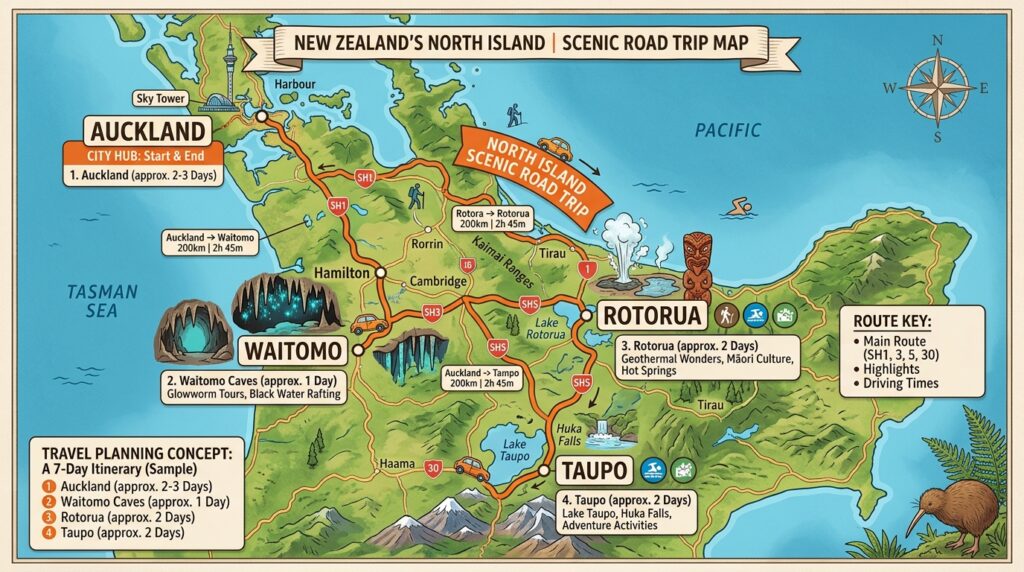
Your adventure begins not in the caves themselves, but in the getting there—and that’s half the magic. The journey to Waitomo takes you through the lush heart of New Zealand’s North Island, approximately 240 kilometers south of Auckland or about 75 kilometers southwest of Hamilton.
Transportation Tips:
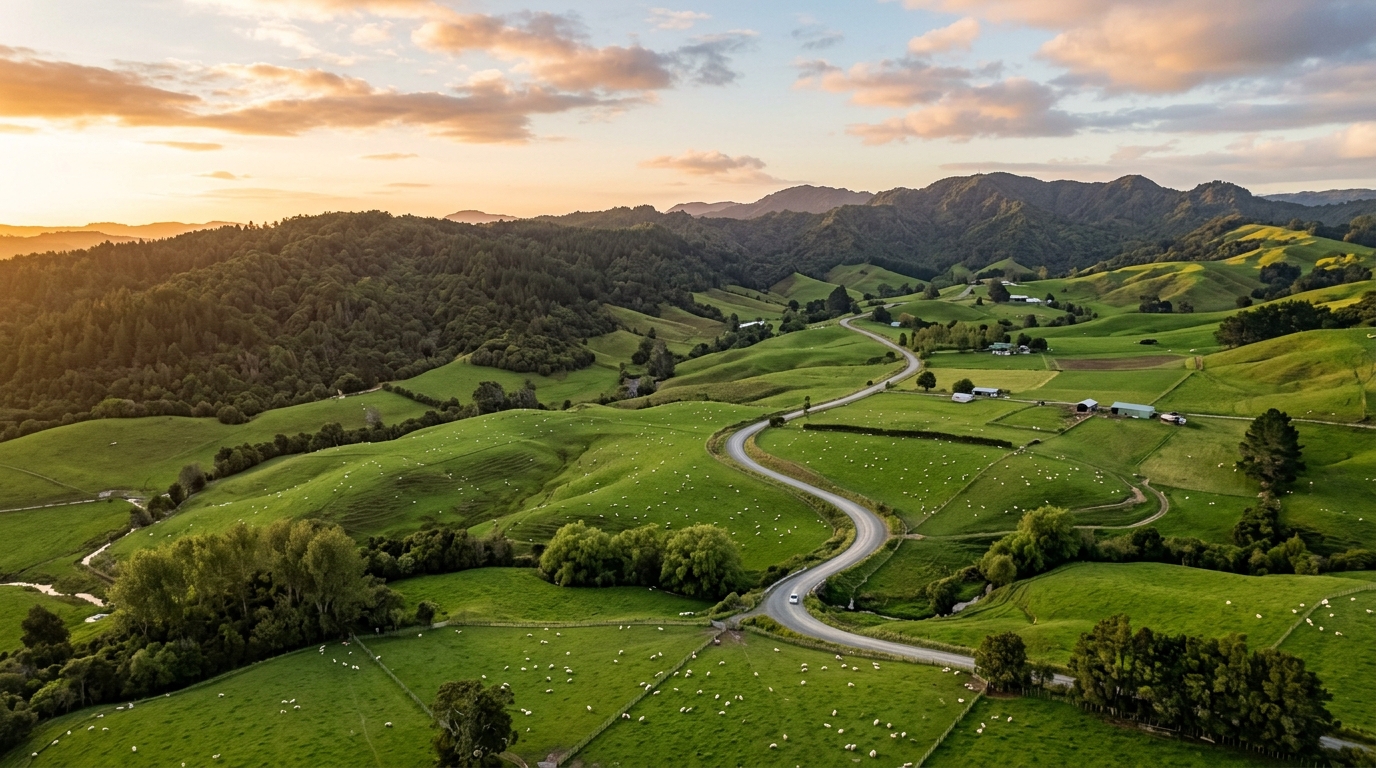
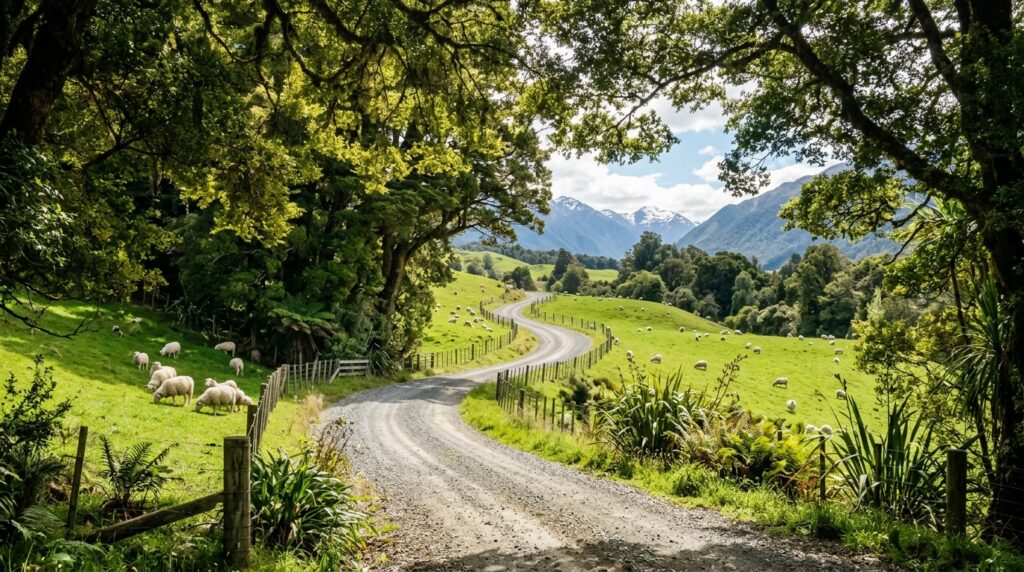
If you’re driving from Auckland, budget around 2.5 to 3 hours along State Highway 1 and State Highway 3. The route winds through picturesque Waikato farmland, where sunlight filters through canopies of ancient pōhutukawa and native trees, dappling the winding roads. Rolling pastures stretch to the horizon, sprinkled with woolly sheep that look like bits of drifting cloud against the emerald landscape.
For those without a car, several tour operators offer day trips from Auckland, Rotorua, and Taupo. Companies like InterCity buses run regular services to Waitomo Village, or you can join organized glowworm cave tours that include transportation, guides, and sometimes combination packages with other North Island attractions.
The drive itself is a meditation in New Zealand’s pastoral beauty. You’ll pass through charming rural towns like Te Kuiti, known as the “Shearing Capital of the World,” where you can stop for a traditional Kiwi meat pie and strong flat white coffee. There’s no grand entrance to Waitomo, no neon lights or tourist traps—just a humble invitation to discover a world hidden beneath your feet. In New Zealand, that’s often how it goes: the most extraordinary places wait quietly, letting you stumble upon them as if you’re the first to ever find them.
NATURE’S CATHEDRAL: SCULPTED BY WATER, TIME, AND PATIENCE
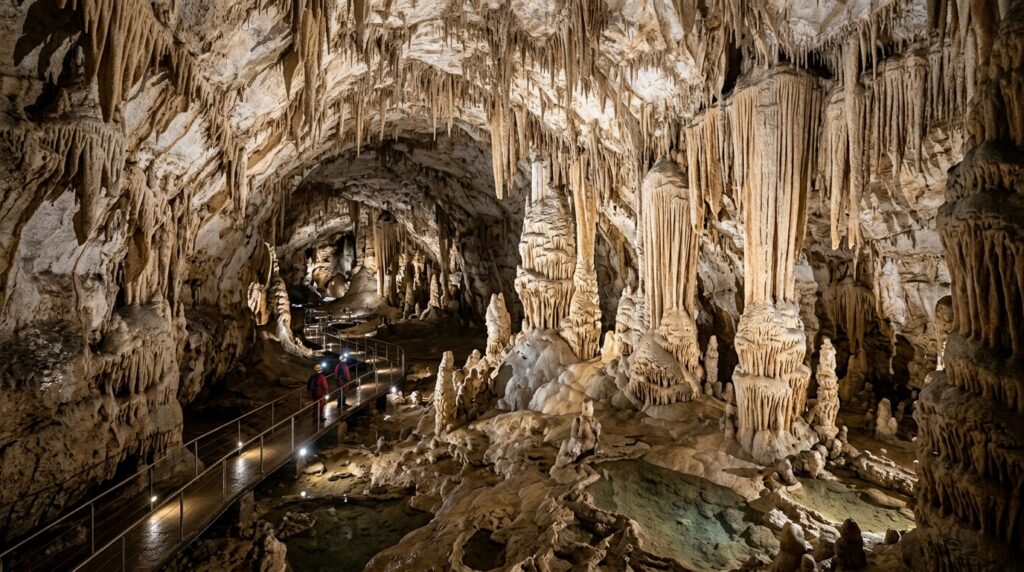
Step inside the Waitomo Caves and you immediately feel the transformation. The cool, damp air brushes your skin, rich with the mineral scent of ancient earth and limestone. Your guide’s lantern beam dances over walls of pale limestone, revealing intricate sculptures shaped over 30 million years by the patient work of flowing water.
The geological story here is extraordinary. Delicate stalactites hang like fragile icicles from the cave ceiling, each drop at their tip a slow artist at work, depositing calcium carbonate one molecule at a time. Stalagmites rise from the cave floor to meet them, knotted and ribbed like ancient tree trunks, growing at a rate of about 0.1 to 3 millimeters per year. When these formations eventually meet, they create stunning columns that have taken hundreds of thousands of years to form.
The cave system includes several chambers, each with its own character. The Glowworm Grotto is the star attraction, but the cathedral-like spaces of the Aranui Cave and the adventure-filled Black Lagoon in the Ruakuri Cave offer equally spectacular experiences. Some caverns open up into massive chambers where your voice echoes and disappears, swallowed by stone. Other times, the passages narrow into twisting corridors close enough that your shoulders almost graze formations older than human memory.
This is a cathedral, but not one built by human hands. Here, the architects were water and time, crafting hall after hall of quiet majesty in total darkness, long before humans ever walked the Earth.
THE LIVING SILENCE: A SOUNDSCAPE OF DRIPS AND HEARTBEATS
As you journey deeper into the cave system, another wonder reveals itself: the profound silence. There’s no wind here, no birdsong, no rustle of leaves—just your breath, your footsteps on damp rock, and the delicate music of water droplets falling into hidden pools below.
This silence isn’t empty; it’s full. It’s the kind of quiet that allows you to hear your own heartbeat, to become aware of the rhythm of your breathing, to feel present in a way that’s increasingly rare in our noisy modern world. Every once in a while, your guide might pause the group, asking everyone to extinguish their lights and stand in complete darkness.
In that moment, you’re united by stillness with fellow travelers from around the world, feeling the slow pulse of the Earth beneath your feet. It’s a kind of meditation, a moment that strips away hurry, noise, and worry, reminding you how small we are inside this patient, timeless world. The temperature remains a constant 16°C (61°F) year-round, so dress in layers and bring a light jacket even if it’s summer above ground.

THE AWAKENING GLOW: STARS UNVEILED UNDERGROUND
Then comes the moment everyone waits for, the reason you’ve traveled thousands of miles to this remote corner of New Zealand’s North Island. Your guide extinguishes the lantern, and darkness swallows everything. It’s so complete you can’t see your own hand in front of your face. At first, you might feel a prickle of unease—this is primal darkness, the kind humans haven’t experienced for millennia.
Then, softly, tiny lights begin to appear. One, two, then dozens, hundreds, thousands. They bloom slowly across the ceiling like stars waking up just for you. You stand there, head tilted back, mouth open in wonder. It’s as if the rock has vanished, replaced by an infinite night sky sprinkled with blue-green constellations.
These are the famous Arachnocampa luminosa glowworms, found only in New Zealand. Technically, they’re the larvae of a fungus gnat, each spinning delicate silk threads that dangle from the ceiling like beaded curtains, tipped with sticky droplets to trap insects. Their bioluminescent glow—produced through a chemical reaction in their bodies—lures prey up from the dark.
But none of that scientific detail matters in the moment. Under this living galaxy, science steps aside for wonder. For a few breathtaking minutes, you’re weightless, floating among tiny living stars. Each glowworm emits a soft blue-green light, and when thousands cluster together on the cave ceiling, they create the illusion of a starry night sky captured underground.

THE BOAT RIDE THROUGH A LIVING COSMOS
At the heart of the Waitomo experience is the crown jewel: the glowworm grotto boat ride. You step into a small wooden boat, carefully balanced by your guide so as not to ripple the dark, mirror-like water. There are no motors here, no paddles breaking the silence. Your guide grabs a rope strung above and begins to pull you gently along.
The boat slides forward, gliding through perfect darkness. Above you, glowworms gather so thickly that the ceiling disappears entirely. It’s just you and millions of tiny lanterns hanging there in silence, as if the whole universe decided to take shelter underground. The water is glassy, reflecting the lights in trembling patterns, doubling the stars until it feels like you’re floating between two galaxies—one above, one below.
No one speaks. Some people close their eyes just so they can open them again and watch the miracle appear twice. Others sit utterly still, hands on hearts, tears welling without even knowing why. It’s pure magic, the kind that doesn’t shout but whispers, forever changing how you look at the night sky above.
The entire boat ride lasts approximately 10-15 minutes, but it feels both timeless and far too brief. Photography is strictly prohibited during this portion to preserve the experience and protect the glowworms, so be present and let the moment imprint itself on your memory.

MĀORI LEGENDS: WHERE SPIRIT AND STONE SPEAK TOGETHER
These caves aren’t just geological wonders—they’re sacred places woven into the very fabric of New Zealand’s identity and Māori culture. The name “Waitomo” itself comes from the Māori language: “Wai” meaning water and “tomo” meaning hole or entrance, literally “water passing through a hole.”
For the local Māori, the caves are tapu—places of spiritual significance that demand respect and reverence. Oral histories tell of taniwha, guardian spirits who live in deep pools and shadowy tunnels, watching over the land and its people. These water spirits are both protectors and potential dangers, embodying the Māori understanding of nature as powerful, alive, and worthy of deep respect.
During your tour, your guide—often knowledgeable in both geology and Māori culture—will pause in the cavern to share stories handed down through countless generations. You’ll learn how these glowworms aren’t just insects but tiny keepers of ancestral light, connecting the present to an ancient past. They might even sing a haunting waiata (traditional song) or recite a karakia (prayer) of protection and respect.
The echo of these ancient words in the stone chamber feels almost otherworldly, like the very cave walls are singing back in gentle reverence. It reminds you this is more than a tourist stop—it’s a living, breathing piece of culture and legend, a place where the spiritual and natural worlds intertwine.

PRACTICAL TRAVEL INFORMATION
Best Time to Visit
New Zealand’s seasons are opposite to the Northern Hemisphere. Summer runs from December to February, winter from June to August. The Waitomo Caves maintain a constant 16°C (61°F) year-round, making them comfortable to visit anytime. However, summer (December-February) offers the warmest weather above ground and longest daylight hours for exploring the surrounding area. Spring (September-November) brings blooming native flora, while autumn (March-May) offers comfortable temperatures and fewer crowds.
Winter visits are perfectly fine—the caves themselves don’t change temperature—but bring warm layers for above-ground activities. The glowworms are visible year-round, as their bioluminescence isn’t affected by seasons.
What to Wear and Bring
- Clothing: Wear comfortable, layered clothing. Even in summer, the caves are cool and damp. A light jacket or sweater is essential.
- Footwear: Closed-toe shoes with good grip are mandatory. The cave paths can be slippery and uneven.
- Photography: Cameras are allowed in most areas but NOT during the glowworm boat ride. This is strictly enforced to protect the glowworms and preserve the experience for all visitors.
- Fitness Level: The standard Glowworm Caves tour involves walking on formed paths with some stairs. It’s suitable for most fitness levels, but those with mobility issues should check with tour operators about accessibility options.
Tour Options and Duration
The classic Waitomo Glowworm Caves tour lasts approximately 45 minutes to 1 hour and includes:
- Guided walk through the limestone formations
- The famous glowworm grotto boat ride
- Interpretive information about geology and glowworms
For adventure seekers, consider:
- Black Lagoon Tour: A more adventurous 2-hour experience involving climbing, abseiling, and tubing through underground rivers
- Ruakuri Cave Tour: New Zealand’s longest guided underground walk at 1.5 hours, featuring spiral entrance and diverse cave formations
- Aranui Cave Tour: Focuses on spectacular limestone formations without glowworms, lasting 1 hour
Booking: Advance booking is highly recommended, especially during peak season (December-February) and school holidays. Tours can fill up days or weeks in advance.

Food and Accommodation Recommendations
Where to Eat:
Waitomo Village is small but offers several dining options:
- Waitomo Village Café: Serves hearty Kiwi breakfasts, lunches, and excellent coffee
- The Grotto Restaurant: Offers sit-down meals with local ingredients
- Waitomo Top 10 Holiday Park Café: Great for quick bites and takeaway options
- Nearby Te Kuiti (20 minutes away): More dining variety including pubs, fish and chips, and Asian cuisine
Don’t miss trying:
- A traditional New Zealand meat pie
- Flat white coffee (NZ’s signature coffee style)
- Fresh local lamb if dining at a restaurant
- Hokey pokey ice cream (a Kiwi favorite)
Where to Stay:
- Waitomo Top 10 Holiday Park: Offers cabins, campsites, and motel units
- Waitomo Lodge: Comfortable accommodation close to the caves
- Hideaway Lodge: Boutique option with personalized service
- Cave World Accommodation: Themed lodging celebrating the area’s natural wonders
- Alternative: Stay in nearby towns like Te Kuiti, Otorohanga, or even make a day trip from Rotorua (1.5 hours away) or Taupo (1.5 hours away)
Getting Around the Region
If you’re planning to explore beyond Waitomo:
- Rotorua: 1.5 hours east—geothermal wonders, Māori culture, redwood forests
- Taupo: 1.5 hours southeast—New Zealand’s largest lake, Huka Falls
- New Plymouth: 2 hours west—Mount Taranaki, coastal walks
- Wellington: 5 hours south—the capital city
Consider renting a campervan for the ultimate New Zealand road trip experience, allowing you to explore the North Island at your own pace.
A MEMORY THAT SHINES LONG AFTER THE LIGHTS FADE
What makes the Waitomo glowworm caves truly special isn’t just what you see—it’s how the experience stays with you long after you’ve stepped back into sunlight. Most natural wonders impress with sheer size or power: the Grand Canyon’s vastness, Victoria Falls’ thunder, the Northern Lights’ dance across Arctic skies.
But the glowworm caves are different. They captivate through intimacy. They surround you, quiet you, invite you into a hidden miracle that only reveals itself in total darkness. There’s no grandstanding, no overwhelming force—just delicate, living light in the deepest dark.
Long after you’ve left New Zealand, you’ll close your eyes and see it again: that gentle, ghostly glow above you, those tiny threads glistening with dew, the way the cave smelled of cool moss and ancient stone. You’ll remember the hush, the boat drifting like a thought across still water, your breath caught in your chest as you floated through an underground galaxy.
It becomes more than a memory. It becomes a small glowing lantern inside you—a reminder of how impossibly beautiful, delicate, and surprising our world still is. In an age of constant noise and digital overload, Waitomo offers something increasingly rare: genuine wonder, authentic silence, and a connection to something ancient and alive.
FINAL THOUGHTS: YOUR UNDERGROUND GALAXY AWAITS
New Zealand’s glowworm caves aren’t just a destination—they’re a once-in-a-lifetime experience that touches something deep within the human soul. From ancient limestone cathedrals sculpted over millions of years to living Māori stories where spirit and stone speak together, from drifting through a midnight sea of tiny stars to standing in silence that speaks louder than words, this is a place that doesn’t just dazzle the eyes—it whispers straight to the soul.
Whether you’re a solo traveler seeking wonder, a couple looking for romance, a family creating memories, or a photographer chasing the impossible shot (outside the boat ride, of course!), Waitomo delivers something profound and uniquely New Zealand.
So pack your sense of wonder, bring warm layers, and prepare to have your perspective shifted. The glowworms have been waiting millions of years for you. All you need to do is show up, turn off your light, and let the magic begin.
Have you ever stood beneath these glowing constellations? Or is this now officially on your bucket list? The underground galaxy of Waitomo is waiting to welcome you to its living cathedral of light.
Visa requirements, flight schedules, and tour availability can change. Always check current New Zealand immigration requirements, book tours in advance during peak seasons, and verify opening hours before your visit. Travel insurance is recommended for all international trips. The glowworms are living creatures—please respect all photography restrictions and follow your guide’s instructions to help preserve this natural wonder for future generations.