
Few travel moments stop you mid-sentence like watching the night sky catch fire in slow motion. Ribbons of emerald green fold into violet, a pale pink fringe shimmers along the horizon, and for a while nobody in your group says a word at all. That is the aurora borealis — the celestial dance that sends travelers chasing darkness across the Arctic every single winter.
When it comes to planning that bucket-list hunt, two destinations consistently rise to the top of the conversation: Iceland and Norway. Both sit squarely beneath the auroral oval, both offer long polar nights, and both serve up landscapes so dramatic that even a quiet sky feels like a reward. But which one deserves your precious vacation days — and your camera memory cards?
In this ultimate northern lights showdown, we rank the ten best aurora destinations across both countries, from Reykjavík’s easy-launch city breaks to the wild, crowd-free fjords of the Westfjords, and from postcard-perfect Lofoten to the edge-of-the-map drama of North Cape. Along the way you’ll find ready-to-use itineraries, transportation tips, food recommendations, cultural highlights, weather strategy and photography advice, so you can choose the Arctic adventure that fits you best.
The Aurora Borealis, Explained in Plain English
The northern lights begin 150 million kilometers away, when charged particles stream off the sun and slam into Earth’s magnetic field. Guided toward the poles, they collide with gases in the upper atmosphere and glow: oxygen paints the sky green and, at very high altitudes, deep red, while nitrogen adds the purple, blue and pink fringes that make viral photos look almost unreal.
Both Iceland (63–66°N) and northern Norway (66–71°N) sit directly under the auroral oval, the ring around the pole where displays are most frequent. That means the lights are absolutely possible in both countries — the real variables are darkness, cloud cover and how far you can get from artificial light.
Weather and timing advice: The aurora season runs from late September to late March, when nights are long and dark. Prime viewing hours fall between 9 pm and 2 am. A KP index of 3 or higher helps, but honest truth: a clear, dark sky at KP 2 beats a cloudy sky at KP 6 every time. Check the Icelandic Met Office forecast (vedur.is) or the Norwegian yr.no app daily, plan to stay at least three nights in one place, and be ready to drive 20–40 minutes away from town lights when the forecast turns green.
How This Showdown Is Scored
To keep this comparison fair and useful, every destination below was weighed on six criteria: darkness and light pollution, aurora frequency, weather reliability, landscape beauty for photography, ease of access, and the quality of daytime activities, food and culture around the hunt. Now, let the countdown begin.
#10 Reykjavík, Iceland — The Perfect Launchpad
As the capital of Iceland, Reykjavík may not be the darkest spot on this list, but it remains a brilliant starting point for aurora hunters. The world’s northernmost capital is small enough that a ten-to-twenty-minute drive escapes the streetlights entirely. Walk or drive out to Grótta Lighthouse on the Seltjarnarnes peninsula for a classic first-night hunt, or use the city as a base for evening tours that run September through April toward darker skies.
Good to know:
- Stay: 2–3 nights; combine with day trips along the south and west coasts.
- Eat: A lamb hot dog “eina með öllu” at Bæjarins Beztu Pylsur, steaming kjötsúpa (lamb soup), and skyr with wild blueberries for dessert.
- Culture: Climb Hallgrímskirkja’s tower, wander the honeycomb glass of Harpa concert hall, and soak with locals in geothermal pools like Laugardalslaug — yes, people absolutely hunt auroras from hot tubs here.
- Tip: Rent a car at Keflavík; freedom to chase clear skies beats any fixed tour schedule.
#9 Lofoten Islands, Norway — The Photographer’s Dream
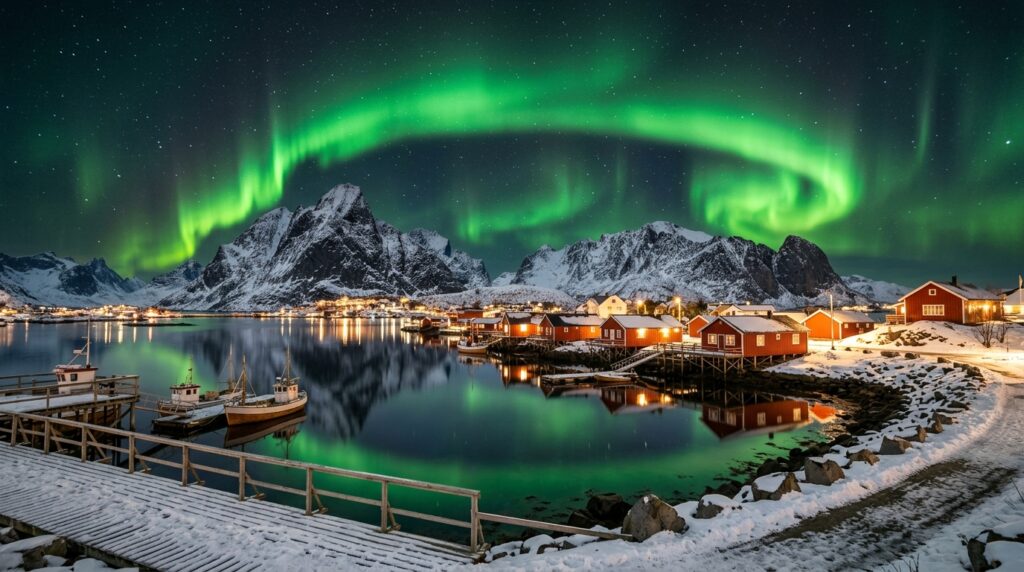
Located just above the Arctic Circle, the Lofoten Islands are famous for scenery that looks digitally enhanced even in person: jagged granite peaks plunging into deep fjords, white-sand beaches, and the red-and-yellow rorbuer (fishermen’s cabins) of Reine and Hamnøy. Because Lofoten sits slightly farther south than Tromsø or Alta, aurora activity is a touch less frequent — but when the lights appear over these mountains, you are looking at the single most picturesque aurora foreground on Earth.
Good to know:
- Stay: 3–4 nights in a rorbu cabin; fall asleep under the lights.
- Eat: Tørrfisk (air-dried cod), creamy fish soup, and in winter, the prized skrei cod.
- Culture: The Lofotr Viking Museum at Borg and centuries of fishing heritage in villages like Nusfjord.
- Tip: Photographers should scout Skagsanden beach and the Hamnøy bridge before dark; tripods on the wet sand are pure magic.
#8 Snæfellsnes Peninsula, Iceland — Iceland in Miniature
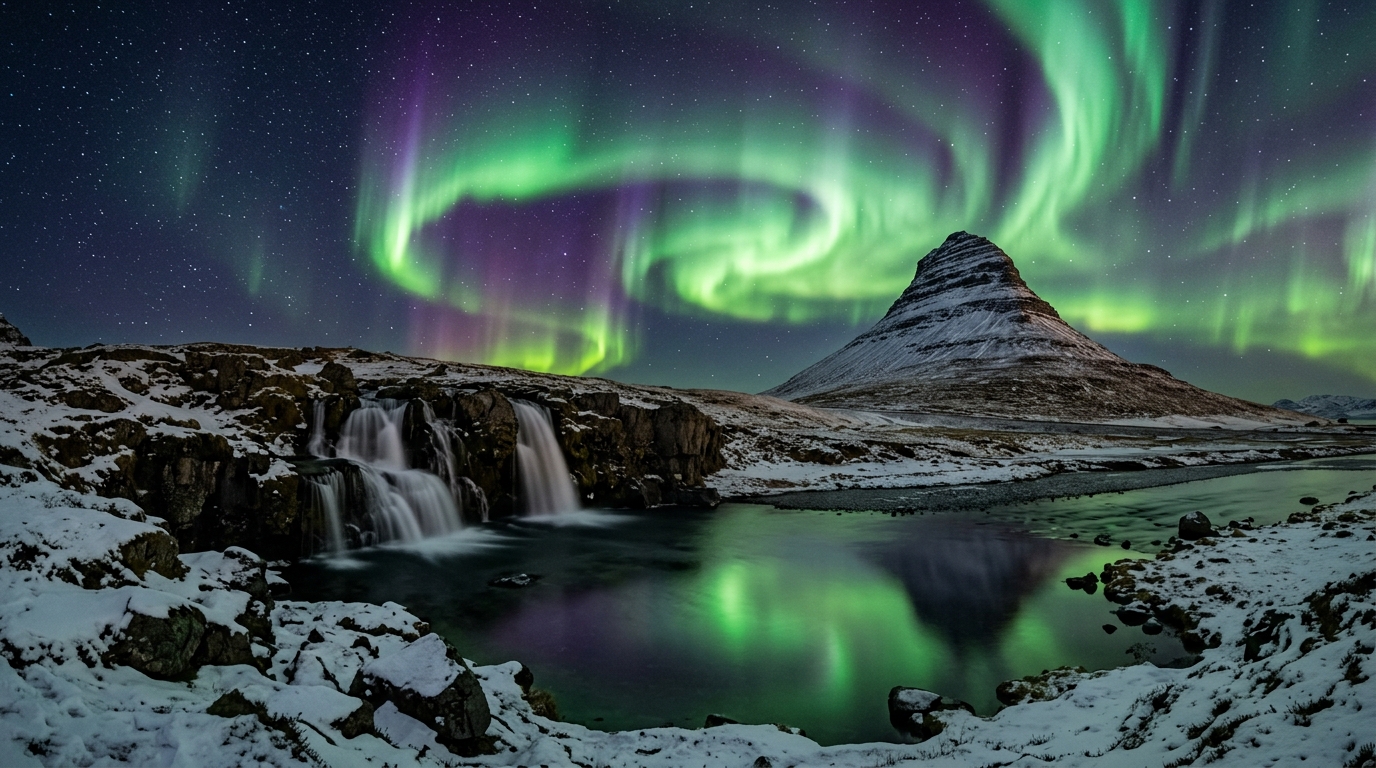
Known as “Iceland in miniature,” the Snæfellsnes Peninsula packs glaciers, black sand beaches, volcanic peaks, lava fields and rugged coastlines into one compact loop about two to two-and-a-half hours’ drive from Reykjavík. Its crown jewel for aurora hunters is Kirkjufell, the cone-shaped peak that has become one of the most photographed landmarks in Iceland. Watching the aurora swirl above Kirkjufell and its little waterfall is a genuinely surreal experience — for many photographers, this single frame is the entire reason to visit.
Good to know:
- Stay: Overnight in Grundarfjörður or Hellnar to catch both sunset and aurora.
- Eat: Fresh seafood in seaside villages; brave hákarl (fermented shark) with a shot of Brennivín at the Bjarnahöfn shark museum.
- Culture: Snæfellsjökull glacier — the entrance to the center of the Earth in Jules Verne’s novel — and lava fields straight from saga folklore.
- Tip: Doable as a long day trip, but an overnight stay doubles your aurora odds.
#7 Alta, Norway — The City of the Northern Lights
Alta is often called the “City of the Northern Lights,” and the nickname is earned. This Arctic town in Finnmark has a long history of aurora research — the world’s first northern lights observatory was built on the nearby Haldde mountain — and its location makes it one of the most consistent viewing spots in Norway. Crucially, Alta enjoys relatively stable, dry weather compared with other Arctic regions, which means fewer cloudy nights blocking your view.
Good to know:
- Stay: 2–3 nights; combine with a snowmobile ride up Haldde for history-plus-aurora in one evening.
- Eat: King crab, reindeer stew and warm flatbread at a Sámi lavvo camp.
- Culture: The UNESCO-listed Alta Museum, with thousands of prehistoric rock carvings beside the fjord.
- Tip: Dog sledding across the Finnmarksvidda plateau by day pairs beautifully with a midnight sky show.
#6 Jökulsárlón Glacier Lagoon, Iceland — Aurora Over Ice
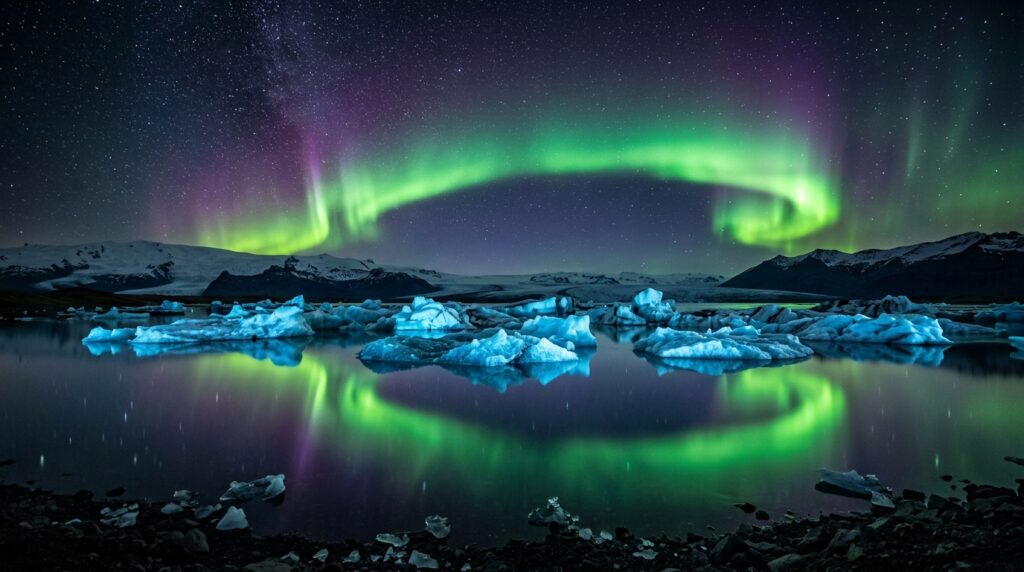
Few places on Earth match the surreal beauty of Jökulsárlón, Iceland’s famous glacier lagoon. Massive icebergs calve off Vatnajökull glacier and drift across deep blue water toward Diamond Beach, where they glitter on black sand like scattered jewels. When the auroras arrive, the reflections of green light on ice and water create a mesmerizing double display that makes this one of the most photogenic spots in all of Iceland. Guided night tours let you experience the lagoon under the glow of the lights, and the south coast drive doubles as a waterfall safari.
Good to know:
- Stay: 1–2 nights near Höfn or in a countryside guesthouse.
- Eat: Humarsúpa (lobster soup) in Höfn — non-negotiable, it’s legendary.
- Culture: Vatnajökull National Park ranger talks and glacier-guide stories of ice and fire.
- Tip: About 5–5.5 hours from Reykjavík; break the drive at Skógafoss and Reynisfjara black sand beach.
#5 Senja, Norway — The Hidden Gem
Often overshadowed by its famous neighbor Lofoten, Senja is a hidden gem for northern lights hunters. Norway’s second-largest island — proudly nicknamed “Norway in miniature” — offers rugged coastlines, steep mountain peaks like Segla and Hesten, and minimal light pollution. Located above the Arctic Circle, Senja sees frequent and vibrant aurora displays, and unlike busier destinations it delivers something increasingly rare: true solitude. If you want an off-the-beaten-path hunt with fishing villages like Husøy and Gryllefjord almost to yourself, Senja is your island.
Good to know:
- Stay: 2 nights at Hamn i Senja or a Gryllefjord guesthouse; auroras appear right off the pier.
- Eat: Fresh cod, fish cakes and stockfish from small local kitchens.
- Culture: Ånderdalen National Park and a living coastal fishing heritage.
- Tip: Reach it from Tromsø in 2–3 hours by car and ferry — an easy add-on that feels worlds away.
#4 Þingvellir National Park, Iceland — History Under the Aurora
Þingvellir (Thingvellir) is not only one of Iceland’s most historic sites but also one of the best aurora viewing locations in the country. This UNESCO World Heritage national park lies in a dramatic rift valley where the North American and Eurasian tectonic plates drift apart, and it hosted the Alþingi, one of the world’s oldest parliaments, from the year 930. Just 45–60 minutes from Reykjavík, the park offers dark skies, open landscapes and the reflective waters of Þingvallavatn lake that amplify the light show overhead.
Good to know:
- Stay: An evening visit from Reykjavík is enough; the park is open 24 hours.
- Eat: Lunch in a tomato greenhouse at Friðheimar on the Golden Circle the next day.
- Culture: Stand literally between two continents, then snorkel the crystal-clear Silfra fissure by day.
- Tip: The Öxarárfoss waterfall viewpoint makes a stunning aurora foreground.
#3 North Cape, Norway — The Edge of Europe
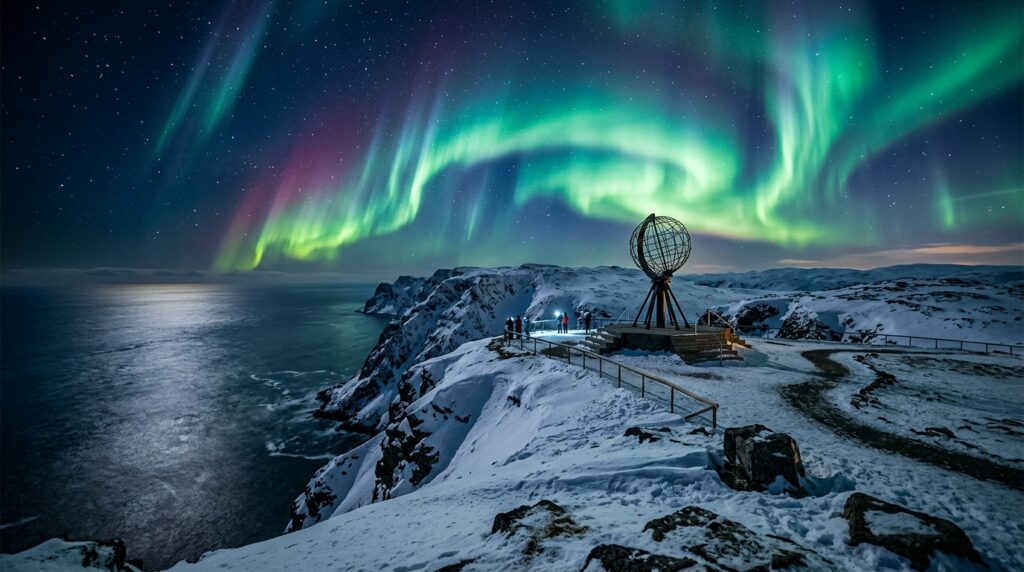
As the northernmost point of mainland Europe, North Cape (Nordkapp) is an incredible, edge-of-the-map location for seeing the northern lights. From its 307-meter cliff, the sky stretches endlessly over the Arctic Ocean with zero obstruction. The extreme latitude brings a bonus: during the polar night from mid-November to late January, the sun barely rises, creating near-constant darkness and the chance of auroras even at midday. The weather can be harsh, but those who make the journey to the iconic globe monument are rewarded with some of the most spectacular displays anywhere.
Good to know:
- Stay: Base in Honningsvåg, one of the world’s smallest “cities.”
- Eat: A king crab safari on the freezing fjord, cooked fresh on board.
- Culture: Sámi reindeer herds on the plateau and the Royal Globe Hall inside the cliff-top hall.
- Tip: Check winter road conditions carefully; the final stretch of E69 is exposed and windy.
#2 Tromsø, Norway — The Gateway to the Arctic
Often called the Gateway to the Arctic, Tromsø is one of the most famous northern lights destinations in the world, and for good reason. Its location well above the Arctic Circle guarantees long dark nights and frequent aurora activity, while the city itself is lively, walkable and packed with polar history. What makes Tromsø especially appealing is the variety: combine aurora viewing with dog sledding, snowmobiling, reindeer feeding at a Sámi camp, and electric-hybrid Arctic cruises that glide into the fjords after dark. For travelers who want adventure and culture in equal measure, Tromsø is nearly unbeatable.
Good to know:
- Stay: 3–4 nights; the city has direct international flights, a rare Arctic luxury.
- Eat: Finnbiff (reindeer stew), king crab, and a cinnamon bolt at a local bakery; toast the sky at Ølhallen, the world’s northernmost pub.
- Culture: The Arctic Cathedral, Polaria aquarium and the Polar Museum’s Amundsen expeditions.
- Tip: Ride the Fjellheisen cable car at sunset, then let an aurora camp minibus chase clear skies from 6 pm to 1 am.
#1 The Westfjords, Iceland — The Ultimate Aurora Sanctuary
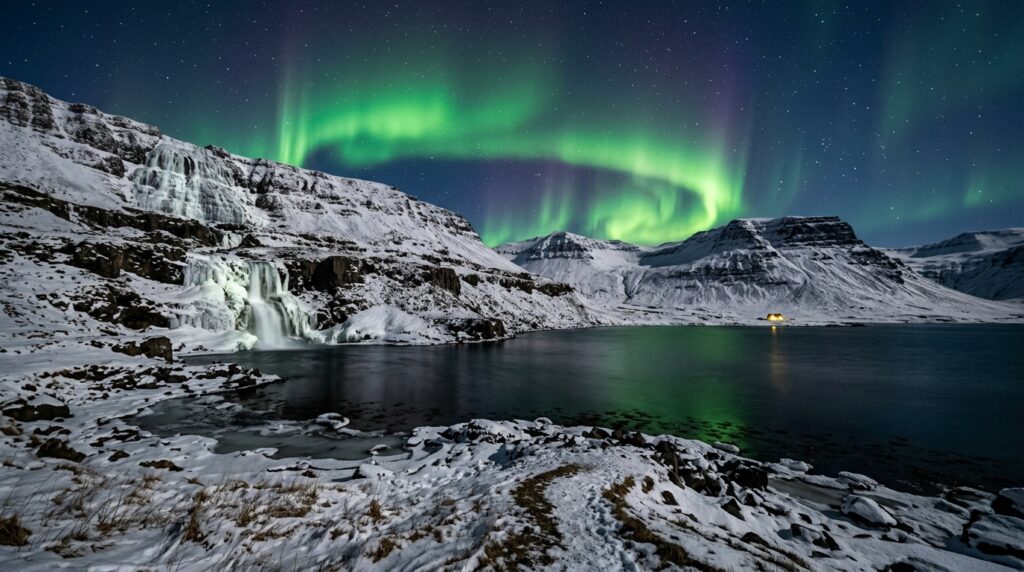
Taking the top spot, the Westfjords of Iceland offer the ultimate northern lights experience. This remote, rugged peninsula in the far northwest is far from tourist crowds, which means minimal light pollution and truly dark skies — the raw material of great aurora watching. The Westfjords are one of Iceland’s most untouched landscapes, with dramatic bird cliffs like Látrabjarg, the cascading Dynjandi waterfall, frozen fjords and vast open spaces that create a dreamlike stage for the lights. Unlike more popular locations, the region offers an intimate, wild experience: soaking in the oceanside Krossneslaug hot pool under a green sky, with nobody else around, is the kind of memory travelers retell for decades.
Good to know:
- Stay: 2–3 nights in Ísafjörður, the charming “capital” of the fjords.
- Eat: The famous fish feast at Tjöruhúsið, Arctic char, and fresh bakery bread in town.
- Culture: The Museum of Icelandic Sorcery and Witchcraft in Hólmavík and eiderdown farming traditions.
- Tip: Fly Reykjavík–Ísafjörður in about 40 minutes in winter; roads are beautiful but demand a 4×4 and flexibility.
Iceland vs Norway: Head-to-Head
| Factor | Iceland | Norway |
|---|---|---|
| Aurora frequency | Strong, under the auroral oval | Strong, with drier, steadier weather in Alta/Tromsø |
| Landscapes | Volcanic, otherworldly: ice, lava, black sand | Alpine fjords, fishing villages, Arctic ocean cliffs |
| Accessibility | Direct flights to Keflavík; easy self-drive | Fly via Oslo to Tromsø/Alta; coastal ferries |
| Signature activities | Hot springs, waterfalls, glacier lagoons | Dog sledding, Sámi culture, fjord cruises |
| Crowd-free picks | Westfjords, Snæfellsnes | Senja, Alta |
| Best for | Landscape photographers & road-trippers | Arctic adventurers & activity lovers |
If you prioritize once-in-a-lifetime landscapes and unique foregrounds, Iceland’s Jökulsárlón, Þingvellir and the Westfjords are unbeatable. If you want reliability, longer polar nights and a true Arctic activity menu, Norway’s Tromsø, Alta and North Cape deliver some of the best conditions in the world.
5-Day Iceland Aurora Itinerary
- Day 1 – Reykjavík: Arrive, pick up your rental car, and walk out to Grótta Lighthouse at dusk. First aurora check at 9 pm; celebrate with kjötsúpa and a famous hot dog.
- Day 2 – Þingvellir: Snorkel Silfra or visit Friðheimar by day; drive into the rift valley at 6 pm and hunt the lights over Þingvallavatn until around 11 pm.
- Day 3 – Snæfellsnes: Depart 8 am; stop at Gerðuberg basalt columns and Djúpalónssandur black beach; sunset and aurora at Kirkjufell; sleep in Grundarfjörður.
- Day 4 – Westfjords: Morning 40-minute flight to Ísafjörður; afternoon viewpoint over the fjord, evening soak in a geothermal pool, aurora watch from the harbor.
- Day 5 – Slow morning: Bakery breakfast, browse local shops, and fly back to Reykjavík with a full memory card.
5-Day Norway Aurora Itinerary
- Day 1 – Tromsø: Arrive; ride Fjellheisen for sunset; join an aurora camp minibus from 6 pm to 1 am; late-night finnbiff in town.
- Day 2 – Arctic adventures: Dog sledding at 10 am; Polaria and the Polar Museum after lunch; evening aurora cruise through the fjords.
- Day 3 – Senja: Pick up a car and ferry to Senja; winter walk toward Segla viewpoints; auroras over the pier at Hamn i Senja.
- Day 4 – Lofoten: Drive south through fjords and ferries; golden hour at Reine; night shoot at the Hamnøy bridge; sleep in a rorbu.
- Day 5 – Sunrise & departure: Climb the Reinebringen stairs for first light, then fly out from Leknes via Bodø. Have two extra days? Add Alta for king crab and the UNESCO rock carvings.
Transportation Tips for Aurora Hunters
In Iceland, there are no passenger trains — your freedom is a rental car. Choose a 4×4 with studded tires from October through April, check road.is and vedur.is every morning, and keep the fuel tank above half. Domestic flights connect Reykjavík’s domestic airport to Ísafjörður and Akureyri in under an hour. In Norway, international gates at Tromsø, Evenes and Alta usually connect through Oslo; the Hurtigruten coastal voyage is a scenic slow-travel alternative, and hop-on flights plus car ferries make Senja and Lofoten surprisingly easy. Please note that flight routes, ferry timetables, road rules and visa or entry requirements can change over time, so always double-check before you travel.
What to Eat: Aurora Fuel in Both Countries
Hunting lights burns calories, and both countries feed you gloriously. In Iceland, warm up with kjötsúpa, plokkfiskur (fish stew), lamb hot dogs, skyr and, for the fearless, hákarl with Brennivín. In Norway, chase the cold with king crab, tørrfisk, reindeer stew, brown cheese (brunost) on waffles, and multekrem — cloudberry cream — for dessert. Coffee culture matters in both: a thermos of hot chocolate at 11 pm is part of the ritual.
Cultural Highlights Worth Slowing Down For
The aurora is the headline, but the culture is the encore. Iceland invites you into geothermal pool etiquette, saga storytelling, and a music scene that echoes through Harpa’s glass halls. Norway opens the door to Sámi traditions — joik song, duodji craft, reindeer herding — plus coastal fishing heritage and the polar expedition legacy of Amundsen and Nansen. Spend one evening listening to a Sámi host tell stories around a lavvo fire, and the lights overhead will mean even more.
Weather, Packing & Aurora Strategy
Plan between late September and late March, with November to January offering polar-night darkness in northern Norway. Dress in three layers: wool base, down or fleece mid, windproof shell; add mittens with liners, wool socks, grippy boots and a headlamp with a red-light mode to protect night vision. Carry hand warmers, a thermos, and patience — the sky often performs just when you were about to give up. Stay three nights or more at each base, watch the cloud-cover forecast like a local, and remember that a new moon week gives the darkest, most vivid skies.
Northern Lights Photography Cheat Sheet
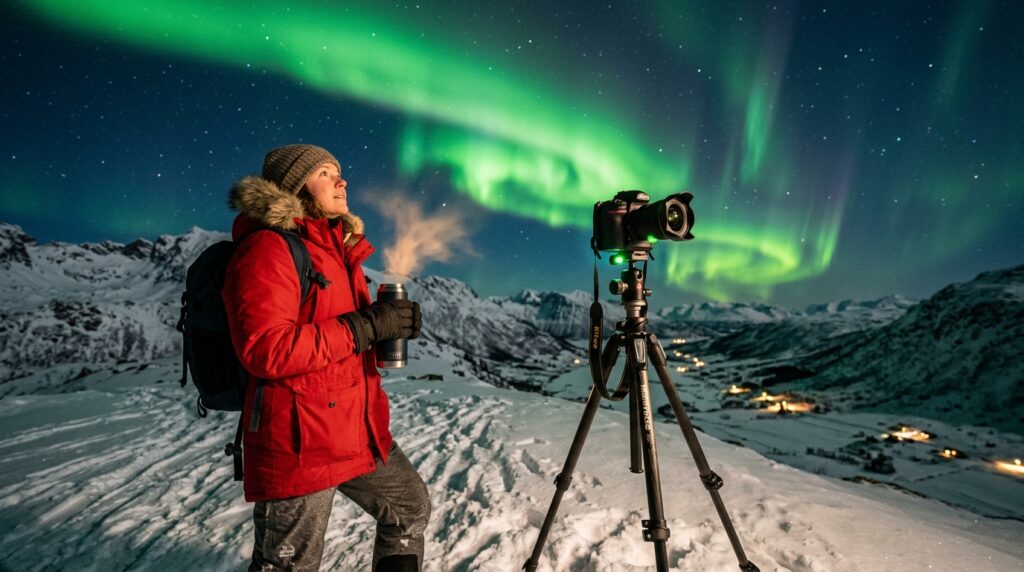
Use a sturdy tripod and a wide, fast lens (f/2.8 or brighter). Set manual mode: ISO 1600–3200, shutter 4–10 seconds depending on brightness, manual focus taped to infinity on a distant light. Shoot RAW, include a foreground like Kirkjufell or a rorbu for scale, and keep spare batteries in an inner pocket — cold drains them fast.
Frequently Asked Questions
Which country is better for the northern lights, Iceland or Norway?
Both sit under the auroral oval. Norway’s Alta and Tromsø edge ahead on weather reliability; Iceland wins on otherworldly landscapes and easy self-drive variety.
What is the best month to see the northern lights?
Late September to late March, with October and March balancing darkness and milder weather, and November to January offering maximum polar-night hours.
Can I see the aurora from Reykjavík or Tromsø city centers?
Yes, during strong displays — Grótta Lighthouse in Reykjavík and the Fjellheisen viewpoint in Tromsø are great urban spots — but dark skies 20–40 minutes away always show more.
How many nights do I need?
At least three per base. Aurora hunting is a probability game, and extra nights dramatically raise your odds of one clear, active sky.
Do I need a guided tour?
Not necessarily if you rent a car and read forecasts. Tours add value with local knowledge, photography coaching and warmth between attempts.
Does a full moon ruin the show?
It washes out faint auroras and stars, but bright displays shine fine — and moonlit snow landscapes are gorgeous for photography.
Final Verdict
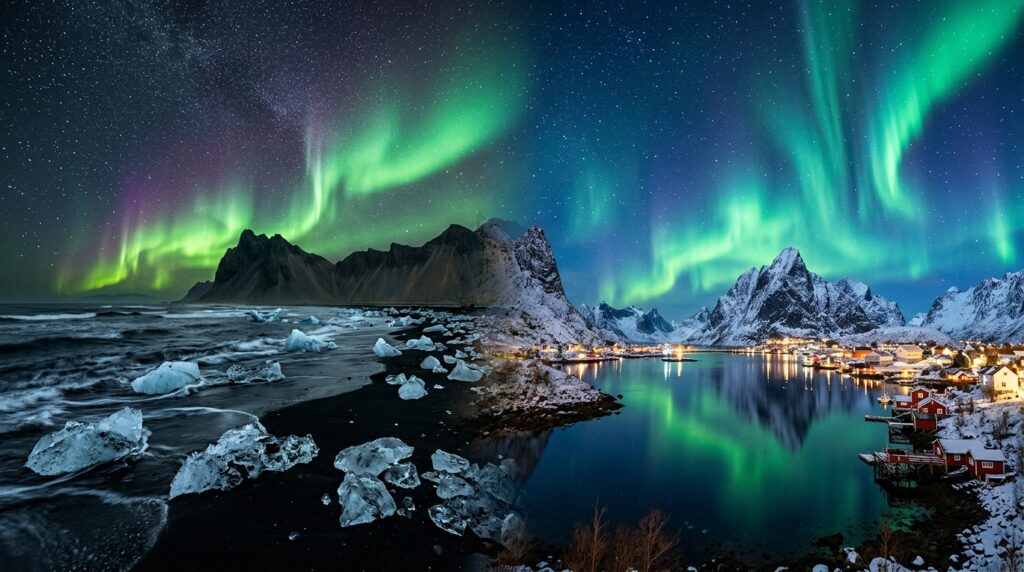
In the battle of northern lights Iceland vs Norway, there are no losers — only two flavors of magic. Choose Iceland for landscapes that feel like another planet: glacier lagoons, rift valleys, black sand and the wild, empty Westfjords. Choose Norway for Arctic reliability and adventure: dog sleds, Sámi fires, fjord cruises and the endless horizon at North Cape. Whichever sky you stand under, bundle up, look up, and let the aurora do the rest.