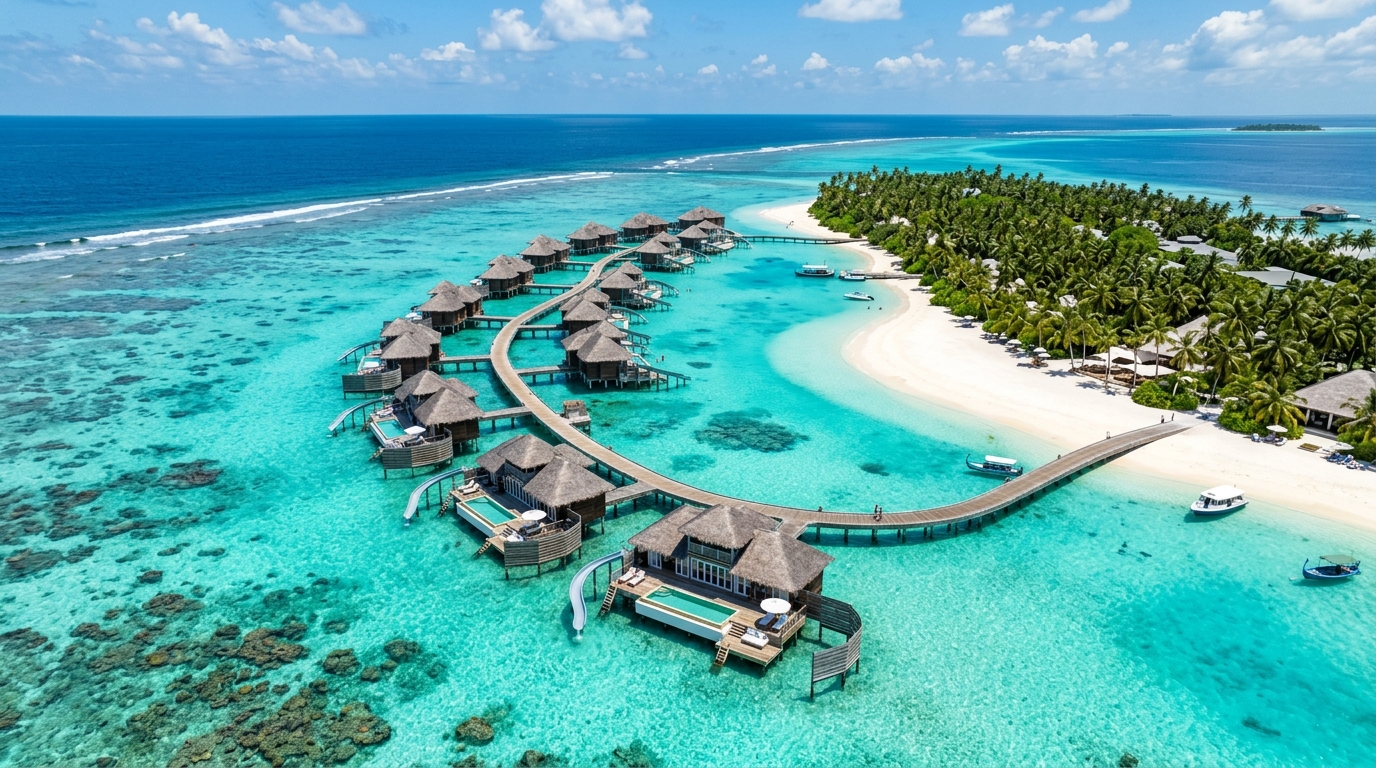

Planning a Maldives getaway? Picking the wrong time can ruin your trip. Don’t worry—we’ve got you covered! The Maldives is a paradise unlike any other, known for its stunning turquoise waters, luxurious overwater villas, and breathtaking coral reefs. Travelers from all over the world dream of visiting this island nation, but many make crucial mistakes when planning their trips.
Whether it’s booking at the wrong time, choosing the wrong island, or not factoring in travel logistics, these errors can turn a dream vacation into a costly misstep. Understanding the best time to visit the Maldives and avoiding common travel mistakes will ensure an unforgettable and stress-free experience. Let’s dive into the essential guide that will transform your Maldivian adventure from ordinary to extraordinary.
Understanding the Maldives: A Tropical Paradise Worth Planning For
The Maldives archipelago stretches over 800 kilometers from north to south, comprising 26 natural atolls and more than 1,000 coral islands. This Indian Ocean gem offers an unparalleled combination of natural beauty, marine biodiversity, and luxury accommodations. However, its remote location and unique geography demand thoughtful planning to maximize your experience.
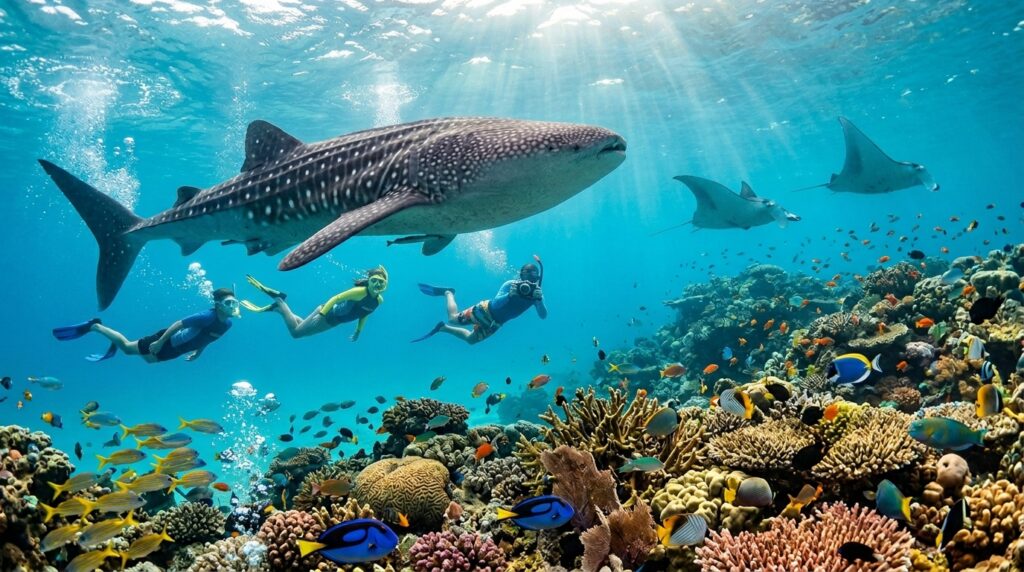
From the vibrant house reefs teeming with tropical fish to the world-class diving sites where manta rays and whale sharks glide gracefully, the Maldives promises experiences that linger in your memory forever. But timing is everything in this tropical destination.
Mistake #10: Visiting During Monsoon Season Without Proper Planning
Many travelers make the mistake of booking their Maldives vacation without considering the weather patterns. The Maldives experiences two primary seasons that dramatically affect your experience:
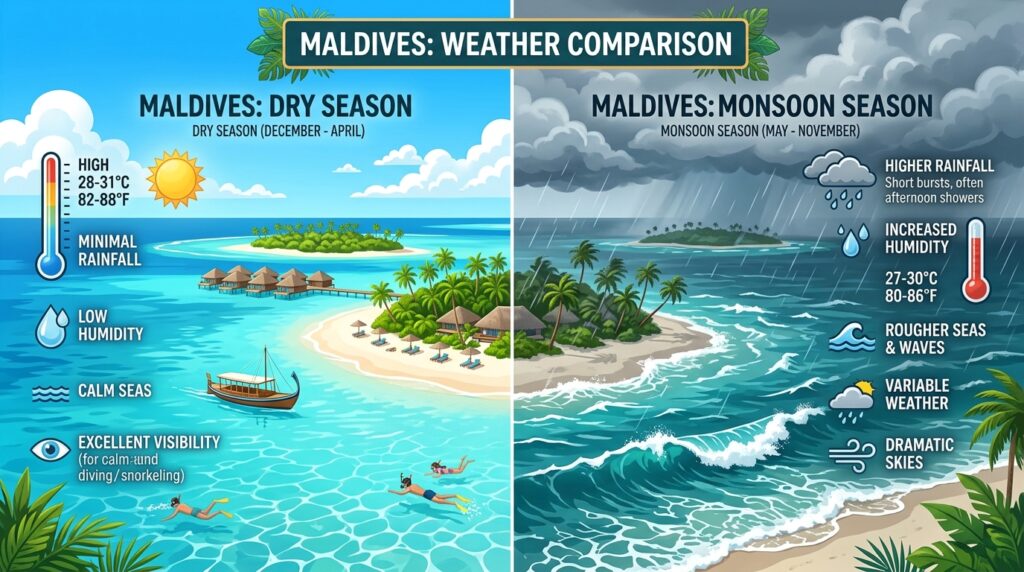
The Dry Season (November to April) offers clear skies, calm waters, and warm temperatures ranging from 27-30°C (81-86°F). This period features minimal rainfall, excellent visibility for diving (up to 30 meters), and gentle breezes perfect for sunset cruises.
The Wet Monsoon Season (May to October) brings heavy rain, strong winds, and rough seas. While this doesn’t mean constant downpours—typically you’ll experience short, intense showers followed by sunshine—the unpredictable weather can disrupt travel plans. Activities like snorkeling, diving, and boat excursions become less enjoyable, and some resorts may limit water sports during particularly rough conditions.
Pro Tip: If you must visit during the monsoon season, consider traveling in June or July when rainfall is typically lighter, and prices are significantly lower. The northern atolls tend to receive less rainfall than the southern regions during this period.
Mistake #9: Ignoring Peak Season Pricing and Crowds
The Maldives is at its most spectacular between December and April, but this period is also the most expensive. Hotel rates can skyrocket by 30-50%, flights become costly, and resorts are fully booked months in advance. Tourists flock to the islands to enjoy the dry, sunny days, making it difficult to find secluded spots on some of the more popular islands.
Peak Season Reality Check:
- December-January: Highest prices due to holiday travelers
- February-March: Perfect weather, premium rates
- April: Slightly lower rates, still excellent conditions
While this is the perfect time for honeymooners and sunseekers, it’s important to keep in mind that traveling during peak season requires early planning and a larger budget. Expect to pay $400-$2,000+ per night for overwater villas during this period.
Sweet Spot Strategy: Consider visiting in late April or early November. These months still offer relatively dry conditions but without the extreme crowds and high prices of peak season. You’ll enjoy 20-30% savings while experiencing similar weather conditions.

Mistake #8: Not Booking Accommodations and Flights in Advance
Unlike many other destinations where last-minute deals are common, the Maldives requires careful forward planning. The best resorts, especially the luxury overwater villas, sell out quickly—sometimes as early as 6 to 9 months in advance.
Booking Timeline Guide:
- 9-12 months ahead: Best for peak season (December-April) and popular resorts
- 6-9 months ahead: Good for shoulder season and mid-range resorts
- 3-6 months ahead: Limited options, higher prices
- Last minute: Very limited availability, premium pricing
Waiting too long to book flights and accommodations can result in fewer options and higher prices. Travelers should also be aware that some resorts require additional transportation such as speedboats or seaplanes, which may need to be arranged in advance.
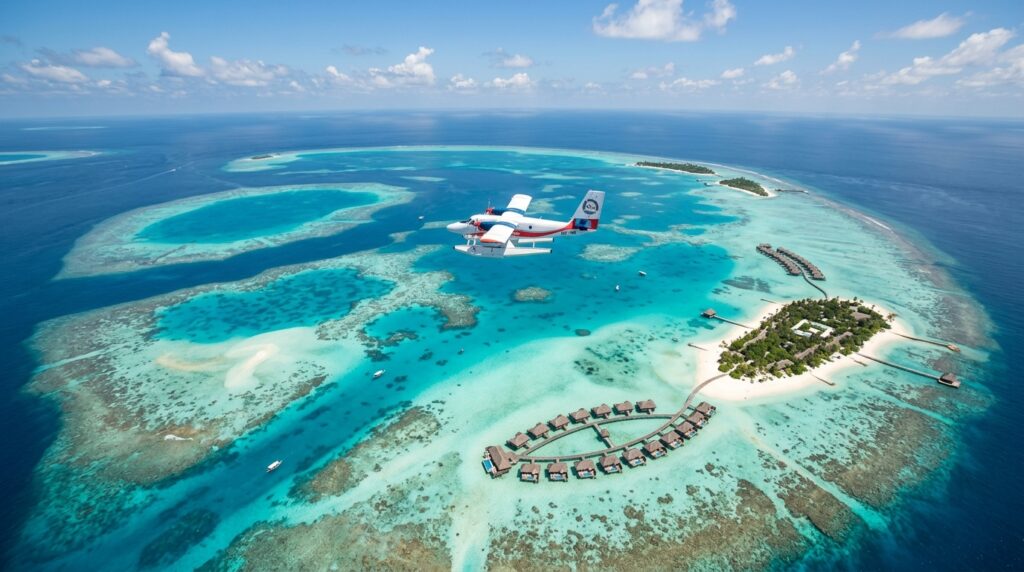
Seaplane Considerations: These scenic transfers operate only during daylight hours (typically 6 AM to 4 PM) and cost $250-$500 per person round-trip. If your international flight arrives late at night, you’ll need to spend a night in Malé before heading to your resort the next day.
Mistake #7: Choosing the Wrong Resort or Island
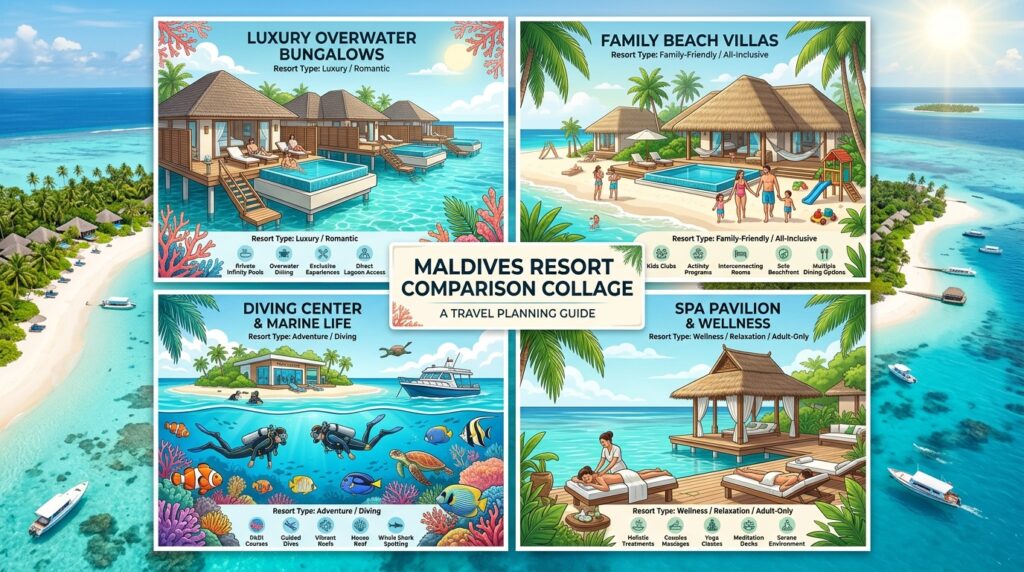
Not all resorts in the Maldives offer the same experience, and choosing the wrong one can greatly impact your trip. The archipelago features over 150 resorts, each with distinct characteristics:
Resort Categories:
Honeymoon & Romance-Focused Resorts:
- Conrad Maldives Rangali Island: Features underwater restaurant and adults-only sections
- Soneva Jani: Famous for overwater slides and retractable roofs
- Gili Lankanfushi: Rustic luxury with no shoes, no news philosophy
Family-Friendly Resorts:
- Club Med Kani: All-inclusive with kids’ clubs
- Paradise Island Resort: Close to Malé, budget-friendly family options
- Hard Rock Hotel Maldives: Teen programs and family villas
Diving & Marine Life Specialists:
- Maaya Thila: World-class dive site nearby
- Manta Point Resorts: Best for manta ray encounters (May-November)
- Hanifaru Bay Access: UNESCO Biosphere Reserve for whale sharks
Wellness & Spa Retreats:
- COMO Maalifushi: Holistic wellness programs
- Anantara Kihavah: Overwater spa pavilions
Selecting a resort without considering its amenities, location, and atmosphere can lead to disappointment. Some islands are remote and require long travel times to reach, while others are close to Malé, making transportation easier and cheaper.
Mistake #6: Assuming the Weather Is the Same Across All Islands
The Maldives covers a vast area, and because of this, weather conditions can vary depending on which atoll you visit. The northern atolls tend to be drier, while the southern atolls receive more rainfall.
Regional Weather Variations:
Northern Atolls (Haa Alif to Baa):
- Less rainfall during monsoon season
- Better visibility year-round
- Ideal for May-October visits
- Examples: Haa Alif, Shaviyani, Noonu, Baa Atoll
Central Atolls (Kaafu to Vaavu):
- Moderate weather patterns
- Most resort concentration
- Good accessibility from Malé
- Examples: Kaafu (North/South Malé), Alifu, Vaavu
Southern Atolls (Meemu to Seenu):
- Higher rainfall during monsoon
- More secluded, pristine reefs
- Better for November-April visits
- Examples: Thaa, Laamu, Gaafu, Seenu (Addu)
Travelers who visit during the monsoon season should consider staying in the northern atolls to reduce the chances of experiencing prolonged rain showers. Checking real-time weather forecasts and understanding regional differences can help ensure a smoother travel experience.

Mistake #5: Not Considering Marine Life Migration Patterns
For travelers who visit the Maldives to see marine life, timing is crucial. The Maldives is home to an incredible variety of sea creatures, including manta rays, whale sharks, sea turtles, and vibrant coral reefs. However, these species migrate depending on the season.
Marine Life Calendar:
Whale Sharks:
- Best Time: Year-round, peak August-November
- Location: South Ari Atoll
- Experience: 95% sighting success rate
Manta Rays:
- Best Time: May-November (west monsoon)
- Location: Baa Atoll (Hanifaru Bay), Ari Atoll
- Experience: Cleaning stations, feeding aggregations
Sea Turtles:
- Best Time: Year-round nesting
- Location: Throughout the archipelago
- Species: Green turtles, Hawksbill turtles
Hammerhead Sharks:
- Best Time: December-April
- Location: Rasdhoo Atoll, Thoddoo
- Experience: Deep dive sites (30m+)
Coral Spawning:
- Best Time: March-April (full moon)
- Location: House reefs throughout
- Experience: Magical underwater phenomenon
For the best diving and snorkeling conditions, visiting between December and April is ideal, as the dry season offers crystal-clear waters with excellent visibility. Travelers should research the specific marine life they want to see and plan their trip accordingly.
Mistake #4: Underestimating Travel Time Between Islands
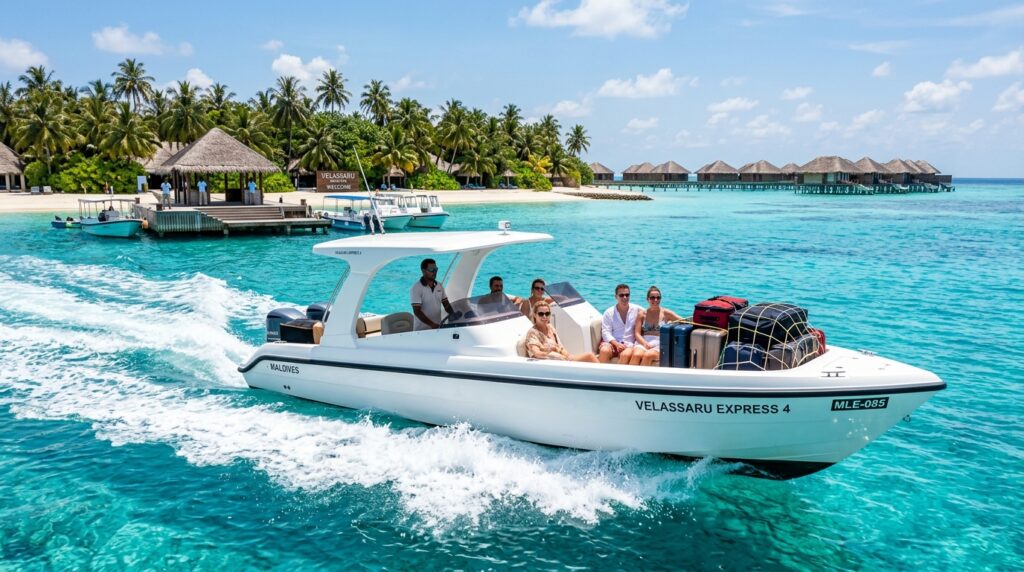
The Maldives may seem small on a map, but getting from one island to another can be time-consuming. Many travelers make the mistake of booking flights into Malé without considering how they will reach their resort.
Transportation Options:
Speedboat Transfers:
- Distance: Up to 50km from Malé
- Duration: 20-90 minutes
- Cost: $50-$200 per person
- Availability: 24/7
- Best for: Close islands, budget-conscious travelers
Seaplane Transfers:
- Distance: 50-150km from Malé
- Duration: 25-45 minutes
- Cost: $250-$500 per person round-trip
- Availability: Daylight hours only (6 AM – 4 PM)
- Best for: Remote resorts, scenic experience
Domestic Flight + Speedboat:
- Distance: 150km+ from Malé
- Duration: 1-2 hours total
- Cost: $200-$400 per person
- Availability: Scheduled flights
- Best for: Southern atolls, extended stays
If your flight arrives late at night, you may need to spend a night in Malé before heading to your resort the next day. When booking a trip, travelers should check their resort’s transfer policies and plan their arrival times accordingly. Choosing a resort close to Malé can save time and money, while remote islands require more complex travel logistics.
Sample Transfer Day Itinerary:
- 6:00 AM – Arrive Malé International Airport
- 7:00 AM – Breakfast at airport or transfer to Malé
- 9:00 AM – Seaplane check-in
- 10:00 AM – Scenic seaplane transfer
- 11:00 AM – Arrive resort, welcome drink
- 12:00 PM – Check-in and lunch
Mistake #3: Overpacking with Unnecessary Items
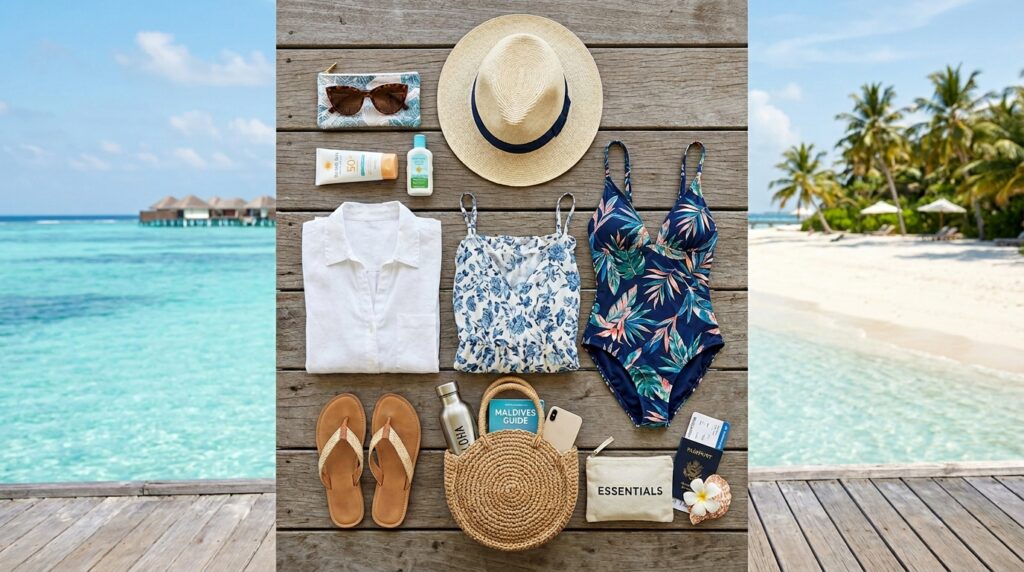
A common mistake among travelers is packing too much for their Maldives trip. Many people bring heavy luggage filled with unnecessary clothing, forgetting that the Maldives is a casual, beach-oriented destination.
What to Pack:
Essentials:
- Swimwear (3-4 sets)
- Lightweight cotton clothing
- Reef-safe sunscreen (SPF 50+)
- Sunglasses with UV protection
- Flip-flops/sandals
- Light cover-up for evenings
- Waterproof phone case
- Snorkeling gear (optional – most resorts provide)
What NOT to Pack:
- High heels
- Formal suits
- Heavy jackets
- Excessive outfits
- Hair dryers (provided)
- Beach towels (provided)
Most resorts have a relaxed dress code, and beachwear is appropriate for most activities. Evening dress codes typically range from “barefoot luxury” to “smart casual”—think linen pants and a nice shirt for men, sundresses for women. Most resorts provide snorkeling gear, so there’s no need to bring your own unless you prefer custom equipment.
Packing Tip: Use a soft-sided duffel bag instead of a hard suitcase. Seaplanes and speedboats have limited storage space, and soft bags are easier to handle.
Mistake #2: Ignoring Local Culture and Laws
While resorts in the Maldives are designed for luxury and relaxation, travelers should be aware that the country follows strict Islamic laws. On local islands, public displays of affection, alcohol consumption, and revealing clothing are prohibited outside of resort areas.
Cultural Guidelines:
On Local Islands (Malé, inhabited islands):
- Dress modestly (shoulders and knees covered)
- No public displays of affection
- No alcohol or pork products
- Respect prayer times (Friday is holy day)
- Ask permission before photographing locals
- Remove shoes when entering mosques
On Resort Islands:
- Western dress codes apply
- Alcohol served freely
- Bikinis acceptable at beach/pool
- More relaxed atmosphere
- Still respect staff and property
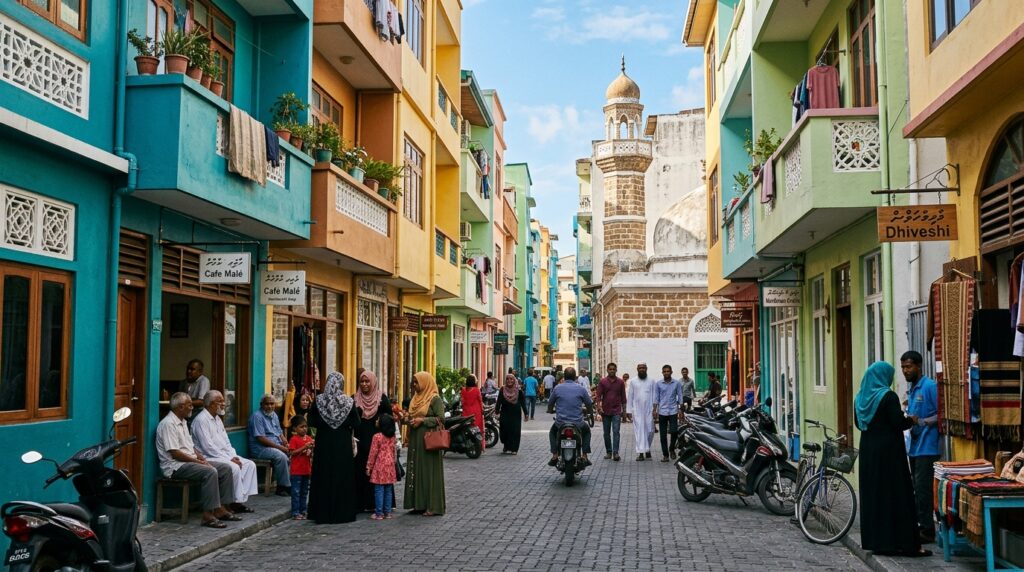
Visitors who plan to explore Malé or other inhabited islands should dress modestly and respect local customs. Resorts operate under different rules and allow alcohol, bikinis, and other Western customs. However, understanding and respecting the local culture is essential for a smooth and respectful travel experience.
Malé City Visit Tips:
- Visit the Grand Friday Mosque (exterior only for non-Muslims)
- Explore the local fish market
- Try traditional Maldivian cuisine
- Shop at local markets for souvenirs
- Dress conservatively
Mistake #1: Not Getting Travel Insurance
The biggest mistake a traveler can make when visiting the Maldives is not purchasing travel insurance. Given the remote nature of the islands, unexpected weather conditions, medical emergencies, flight cancellations, or lost luggage can create significant challenges.
Why Travel Insurance is Critical:
Medical Considerations:
- Medical treatment on resort islands can be expensive ($500-$5,000+)
- Limited medical facilities on remote islands
- Medical evacuation to Malé costs $2,000-$10,000
- International evacuation can exceed $50,000
- Pre-existing conditions may not be covered
Coverage Essentials:
- Medical emergencies and evacuation
- Trip cancellation/interruption
- Lost or delayed baggage
- Flight cancellations
- Weather-related disruptions
- Adventure sports coverage (diving, water sports)
Recommended Coverage Amount:
- Medical: $100,000+
- Evacuation: $250,000+
- Trip cancellation: 100% of trip cost
Since the Maldives is an expensive destination, having insurance ensures peace of mind and financial protection in case of unexpected events. Don’t let a $100-$300 insurance premium risk a $5,000-$20,000 vacation.

Your Perfect Maldives Itinerary: 7 Days of Paradise
Day 1-2: Arrival & Acclimatization
- Arrive at Velana International Airport
- Transfer to resort via speedboat or seaplane
- Settle into your overwater villa
- Sunset dolphin cruise
- Welcome dinner at beachfront restaurant
Day 3-4: Marine Exploration
- Morning snorkeling at house reef
- Afternoon diving excursion
- Spa treatment with ocean views
- Private sandbank picnic
- Stargazing from your villa deck
Day 5-6: Island Hopping & Culture
- Visit local inhabited island
- Explore Malé city (if time permits)
- Traditional Maldivian cooking class
- Sunset fishing trip
- Beachside BBQ dinner
Day 7: Departure
- Final sunrise yoga session
- Leisurely breakfast
- Last-minute souvenir shopping
- Transfer to airport
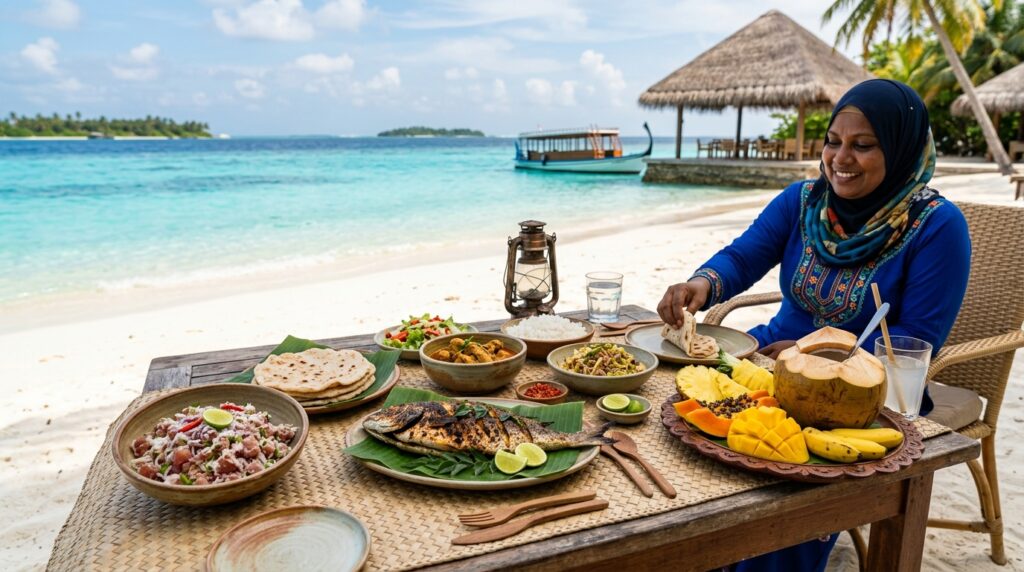
Culinary Delights: What to Eat in the Maldives
Must-Try Maldivian Dishes:
Mas Huni: Traditional breakfast of shredded tuna, coconut, and chili served with flatbread (roshi)
Garudhiya: Clear fish broth served with rice, lime, chili, and onions—the staple of Maldivian cuisine
Fihunu Mas: Grilled fish marinated in chili, lime, and spices, cooked over open flame
Hedhikaa: Short eats—savory snacks like bajiya (fish pastry), gulha (fish balls), and keemia (fish rolls)
Rihaakuru: Thick fish paste used as a condiment, strong flavor acquired taste
Resort Dining:
- International buffets ($40-$80 per person)
- Specialty restaurants ($80-$200 per person)
- Private beach dinners ($150-$400 per couple)
- All-inclusive packages available
Beverage Note: Alcohol is only available at resort islands, not on local islands. Expect to pay $8-$15 for beer, $12-$20 for cocktails.
Weather Wisdom: Month-by-Month Guide
November: Transition month, improving weather, good deals
- Temperature: 27-29°C
- Rainfall: Moderate
- Crowds: Low-moderate
- Price: $$
December-February: Peak season, perfect weather
- Temperature: 27-30°C
- Rainfall: Minimal
- Crowds: High
- Price: $$
March-April: End of dry season, excellent visibility
- Temperature: 28-31°C
- Rainfall: Low
- Crowds: Moderate-high
- Price: $
May-June: Monsoon begins, great value
- Temperature: 27-29°C
- Rainfall: Increasing
- Crowds: Low
- Price: $$
July-August: Mid-monsoon, whale shark season
- Temperature: 27-29°C
- Rainfall: High (short bursts)
- Crowds: Moderate
- Price: $$
September-October: Wettest months, lowest prices
- Temperature: 27-29°C
- Rainfall: Highest
- Crowds: Low
- Price: $

Final Thoughts: Your Maldives Adventure Awaits
The Maldives truly is a once-in-a-lifetime destination that rewards careful planning with unforgettable memories. By avoiding these ten critical mistakes, you’ll set yourself up for an experience that exceeds even your wildest dreams.
Remember, the best time to visit the Maldives depends on your priorities: perfect weather and marine life sightings favor the dry season (November-April), while budget-conscious travelers can find excellent value during the monsoon months (May-October) by choosing northern atolls and staying flexible.
Whether you’re celebrating a honeymoon, planning a family vacation, or seeking underwater adventures, the Maldives offers something magical for everyone. The key is preparation—book early, choose wisely, pack light, respect local culture, and protect your investment with comprehensive travel insurance.
As you embark on planning your Maldivian escape, keep in mind that this tropical paradise isn’t just a destination; it’s an experience that will transform your perspective on natural beauty, luxury, and tranquility. The crystal-clear waters, vibrant marine life, and warm Maldivian hospitality await.
Ready to start planning? Research resorts that match your style, check marine life calendars for your must-see species, and book at least 6-9 months in advance for the best selection. Your slice of paradise is waiting!