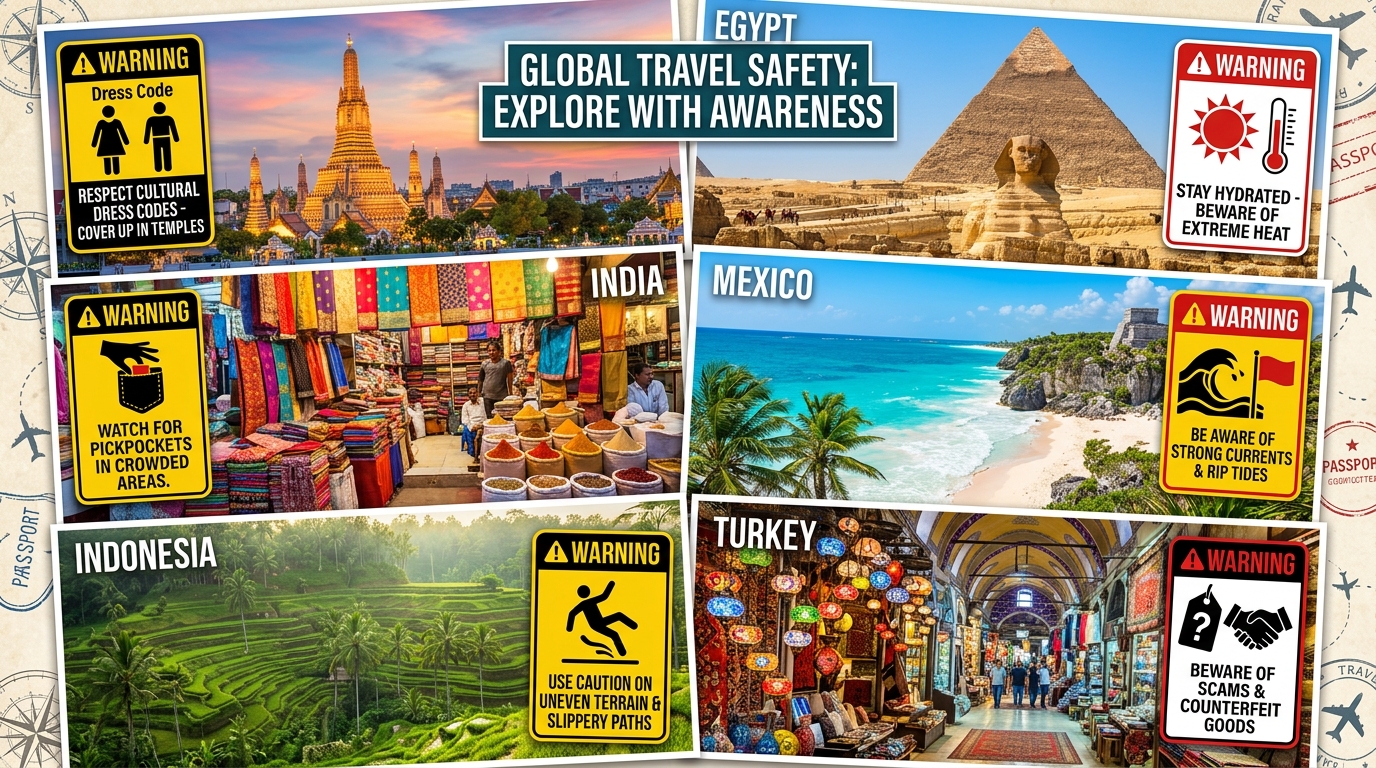

Did you know that millions of travelers lose billions of dollars every year to sophisticated tourist scams across popular destinations? From the bustling streets of Bangkok to the ancient pyramids of Egypt, scammers have perfected the art of targeting unsuspecting visitors. If you’re planning international travel in 2026, understanding these deceptive tactics isn’t just helpful—it’s essential for protecting your wallet and your peace of mind.
This comprehensive guide exposes the most prevalent travel scams in Thailand, India, Egypt, Mexico, Indonesia, and Turkey, providing you with actionable strategies to avoid becoming the next victim. Let’s ensure your dream vacation doesn’t turn into a financial nightmare.
The Global Scam Epidemic: Why Tourists Are Targeted
Tourist scams have evolved dramatically in recent years, becoming more sophisticated and harder to detect. Scammers specifically target travelers because they’re often carrying cash, unfamiliar with local customs, distracted by sightseeing, and unlikely to pursue legal action across international borders. The emotional impact extends beyond financial loss—falling victim to a scam can cast a shadow over your entire travel experience.
According to recent travel safety reports, Southeast Asia and North Africa remain hotspots for tourist fraud, with incidents increasing by 35% since 2023. The good news? Awareness is your strongest defense. By recognizing these common schemes before they happen, you can travel with confidence and keep your hard-earned money where it belongs—in your pocket.
1. The Taxi Trap: Your Airport Arrival Nightmare
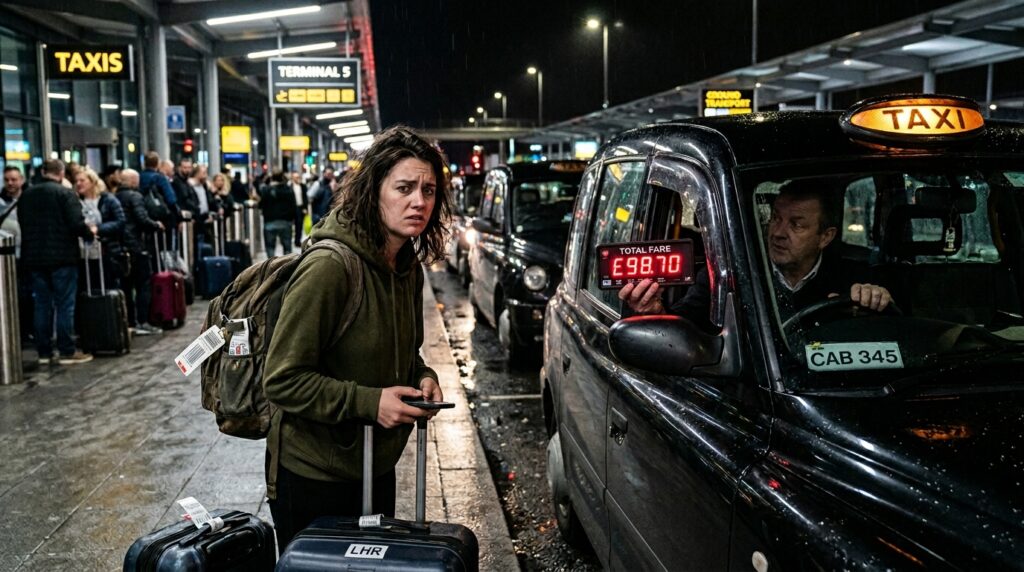
You’ve just landed after a grueling 12-hour flight. Your eyes are heavy, your luggage feels heavier, and all you want is to reach your hotel. This moment of vulnerability is exactly what taxi scammers count on.
How the Taxi Meter Scam Works
The taxi trap is one of the oldest and most pervasive tourist scams in countries like Thailand, India, Egypt, and Indonesia. Here’s what typically happens:
The Broken Meter Excuse: Drivers claim their meter is “broken” and insist on a flat fare that’s three to five times the actual cost. Once you’re in the taxi and committed, there’s little you can do.
The Rigged Meter: Some meters have been tampered with to run at double or triple speed, spinning faster than your head after that long flight.
The Scenic Route: Drivers take unnecessarily long routes, claiming “traffic” or “road construction,” watching the meter climb while you’re too exhausted to notice.
The No Change Trick: At journey’s end, the driver claims to have no change for large bills, forcing you to overpay or accept worthless local currency.
The Commission Drop: Drivers insist on taking you to “better” hotels or shops where they receive kickbacks, often at inflated prices.
Real-World Impact
In Bangkok alone, taxi scams cost tourists an estimated $2 million annually. In Cairo, unlicensed taxis operating outside airports have become so prevalent that authorities have launched special tourist police units.
How to Protect Yourself
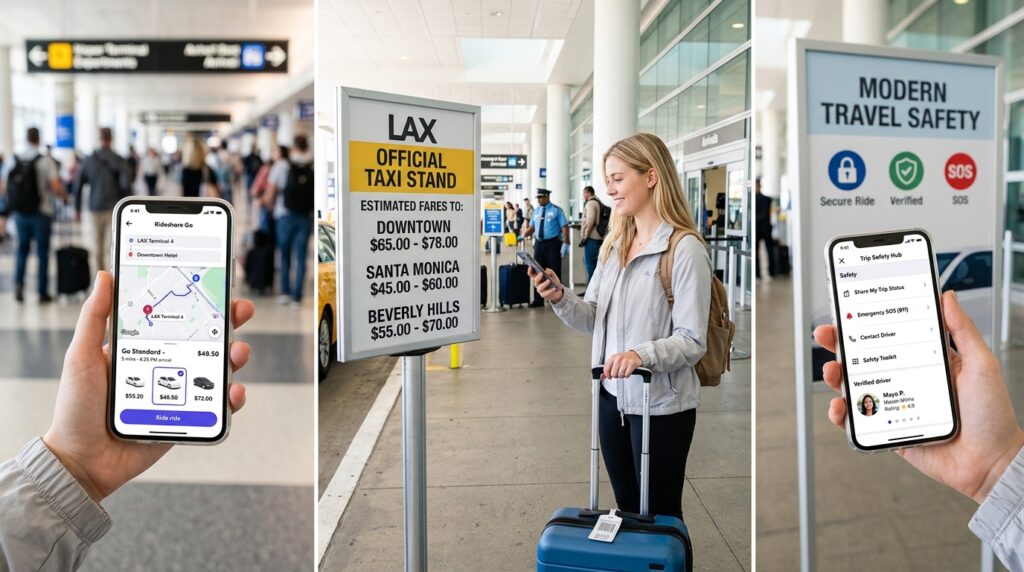
Use Ride-Share Apps: Download Grab (Southeast Asia), Uber (Mexico, Turkey, India), or local equivalents before arrival. These apps provide upfront pricing and driver tracking.
Official Taxi Stands Only: Never accept rides from drivers who approach you inside terminals. Always use official taxi queues with posted rates.
Research Standard Fares: Know the approximate cost from airport to your hotel before landing. A quick Google search or hotel inquiry can save you hundreds.
Insist on the Meter: If a driver refuses, walk away immediately. There are always other options.
Small Bills Ready: Exchange a small amount of currency at the airport to have local bills for taxi fares.
2. Fake Tour Guides: The “Friendly Local” Deception
You’re wandering through Delhi’s Old City or Istanbul’s Grand Bazaar when an impeccably dressed, English-speaking local approaches with a warm smile. “I’d love to show you around,” they offer. “No charge—just being friendly!”
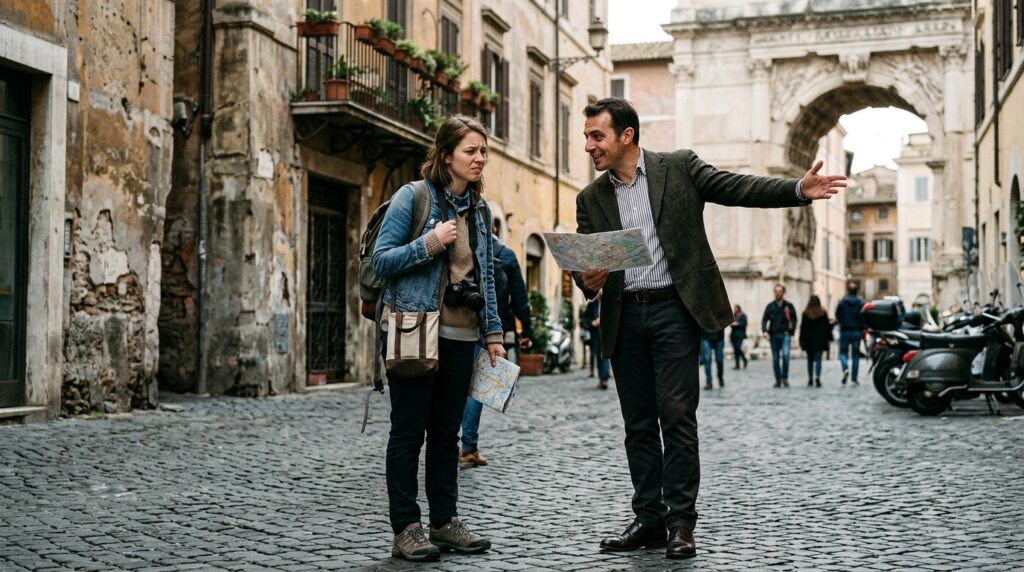
The Bait-and-Switch Scheme
By tour’s end, you’ll find yourself:
- Pressured into purchasing overpriced souvenirs from “family-owned” shops
- Dining at restaurants charging tourist prices five times the local rate
- Facing aggressive demands for tips exceeding the cost of legitimate tours
- Led to commission-based establishments where your guide earns 30-50% of your spending
Red Flags to Recognize
Too Good to Be True: Legitimate guides charge for their expertise. Free tours from strangers are never free.
Overly Eager: Professional guides work through agencies or official tourism boards, not by soliciting on street corners.
Resistance to Credentials: When asked for identification or licensing, fake guides become evasive or defensive.
Smart Tour Booking Strategies
Book Through Reputable Sources: Use platforms like Viator, GetYourGuide, or your hotel’s concierge service.
Verify Credentials: Legitimate guides carry official government-issued identification and licenses.
Join Group Tours: Official walking tours operate on fixed schedules with clear pricing.
The Polite Decline: A simple “No, thank you” while continuing to walk is usually sufficient. Don’t engage in lengthy conversations.
3. Hotel Nightmares: When Your Reservation Vanishes
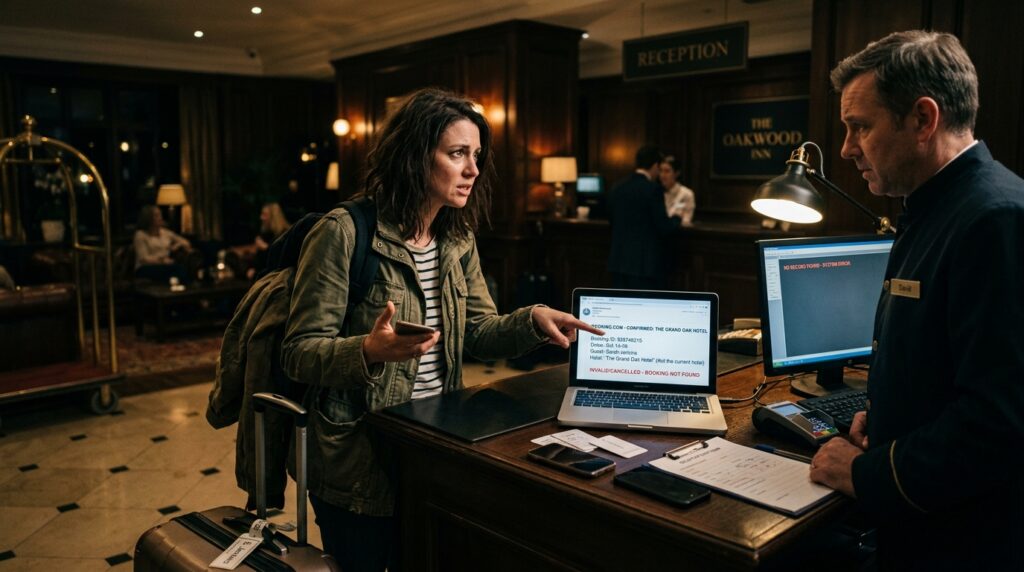
You’ve scored an incredible deal—50% below market rate for a beachfront villa in Bali or a boutique hotel in Mexico City. You arrive exhausted, only to discover the hotel doesn’t exist, your reservation was “lost,” or the property looks nothing like the photos.
Common Hotel Scam Tactics
The Phantom Property: Scammers create fake listings using stolen images, collect payment, and vanish. You arrive to find an empty lot or completely different building.
The Bait-and-Switch: The hotel exists but is a rundown disaster with dirty rooms, broken amenities, and a location miles from what was advertised.
The Last-Minute Cancellation: Days before arrival, you receive notice that your reservation is cancelled due to “overbooking.” The scammer then offers to “help” rebook you at an inferior property at triple the price.
The Hidden Fee Trap: Upon check-in, you’re hit with mandatory “resort fees,” “service charges,” or “tourist taxes” never mentioned during booking.
Protection Strategies
Stick to Reputable Platforms: Book through established sites like Booking.com, Hotels.com, or Expedia with verified review systems and customer support.
Read Recent Reviews: Focus on reviews from the past 3 months. Look for patterns mentioning cleanliness, location accuracy, and hidden fees.
Cross-Check Everything: Verify the hotel has an official website. Call directly to confirm your reservation exists in their system.
Too Good to Be True? If that oceanfront suite is 70% cheaper than competitors, it’s a scam. Period.
Use Credit Cards: Never wire money or use debit cards. Credit cards offer fraud protection and chargeback options.

4. Fake Police Officers: The Intimidation Scam
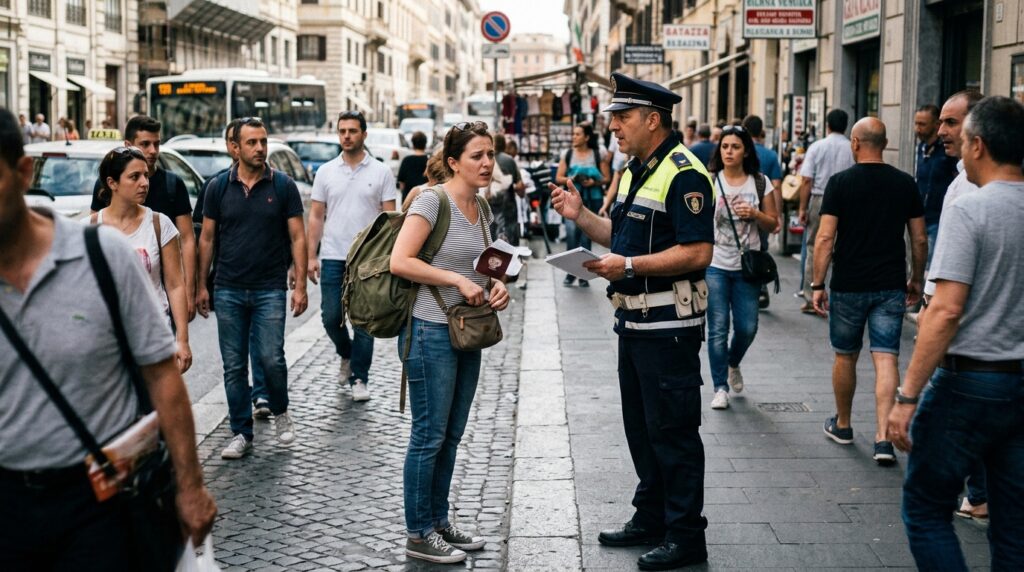
You’re exploring a market in Cairo or walking through a tourist area in Jakarta when someone in uniform stops you. “Papers, please,” they demand, accusing you of a minor infraction—drug possession, currency violation, or photographing government buildings.
How the Fake Badge Scam Works
The Authority Play: Scammers wear convincing uniforms and carry fake badges, exploiting tourists’ fear of legal trouble in foreign countries.
The On-the-Spot Fine: They demand immediate cash payment to “avoid court” or “prevent deportation.”
The Passport Seizure: Some request to “inspect” your passport, then demand money for its return.
The Partner Distraction: While one “officer” interrogates you, an accomplice pickpockets your belongings.
Critical Response Protocol
Demand Official Station Visit: Real police don’t collect fines on the street. Calmly insist on going to the nearest police station. Nine times out of ten, the fake officer will retreat immediately.
Never Hand Over Your Passport: Offer a photocopy or digital version instead. Keep your actual passport secured in your hotel safe.
Know Local Laws: Research common regulations before traveling. Understanding actual laws prevents panic when false accusations arise.
Record the Interaction: Discreetly use your phone to record. Scammers hate documentation.
Contact Your Embassy: If genuinely detained, request to contact your country’s embassy or consulate immediately.
5. Currency Exchange Scams: The Math That Doesn’t Add Up
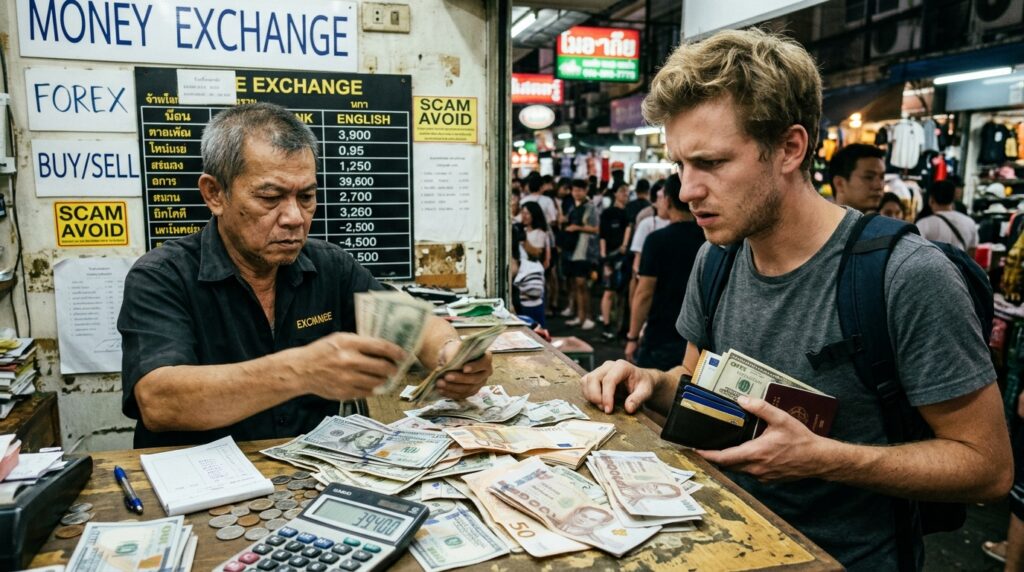
You spot a money exchange booth advertising rates significantly better than banks. Excited by the deal, you hand over your cash—only to receive far less than expected.
Sleight-of-Hand Exchange Tricks
The Quick Count: Cashiers count bills at lightning speed, palming some notes while maintaining eye contact and conversation.
The Hidden Fee: After agreeing on a rate, they suddenly add “commission,” “service charges,” or “administrative fees.”
The Manipulated Calculator: They punch in numbers quickly, showing you a total that’s incorrect.
The Old Currency Switch: Some countries have redenominated currencies. Scammers give you outdated bills worth a fraction of current value.
The No Small Bills Excuse: They claim to lack smaller denominations, forcing you to accept less money or unfavorable rounding.
Safe Currency Exchange Practices
Use Bank ATMs: Withdraw local currency from ATMs inside banks during business hours. The exchange rate is typically fair and transparent.
Official Exchange Offices Only: Use banks or licensed exchange bureaus in airports, hotels, or commercial districts.
Count Twice, Always: Never leave the counter until you’ve counted every bill yourself. Do it slowly and carefully.
Know the Current Rate: Check exchange rates on your phone before transacting. Use apps like XE Currency.
Avoid Street Exchangers: Anyone offering “better rates” on the street is running a scam.
Small Test Transaction: Exchange a small amount first to verify the process before committing larger sums.
6. Fake ATMs: Your Card Information for Sale
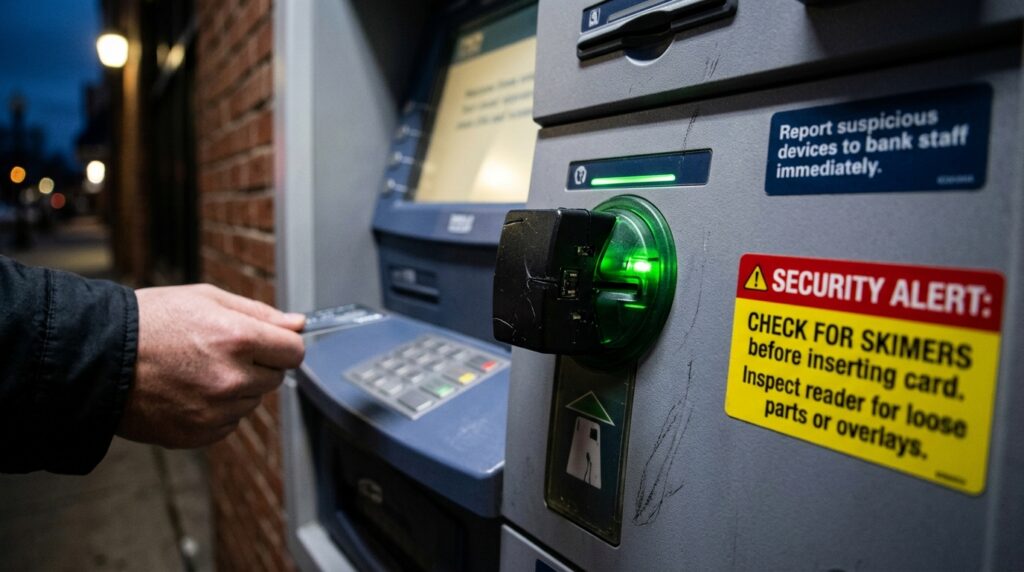
ATM skimming has become a multi-billion dollar criminal enterprise. These devices look identical to legitimate machines but harbor hidden technology designed to steal your card data and PIN.
ATM Skimming Technology
The Card Slot Skimmer: A thin device fits over the card reader, capturing your card’s magnetic stripe data as you insert it.
The Hidden Camera: Tiny cameras record your PIN entry from above or nearby objects.
The Fake Keypad: A membrane placed over real buttons records keystrokes while still allowing normal function.
The Cash Trap: A device prevents cash dispensing. When you leave frustrated, scammers retrieve your money from the trap.
The Fake Screen Overlay: Displays error messages after capturing your information, making you think the transaction failed.
ATM Safety Protocol
Location Matters: Only use ATMs inside bank branches, airports, or well-lit, high-traffic areas. Avoid standalone machines in isolated locations.
Inspect Before Use: Check for loose parts, misaligned card slots, unusual attachments, or cameras positioned to view the keypad.
Cover Your PIN: Always shield the keypad with your free hand when entering your PIN, regardless of camera presence.
Feel the Card Slot: Gently wiggle the card reader. Skimmers are often slightly loose or bulky.
Bank Teller Alternative: When in doubt, withdraw cash inside a bank with a teller during business hours.
Enable Transaction Alerts: Set up instant notifications for all card activity through your banking app.
7. Overpriced Souvenirs: The “One-of-a-Kind” Lie
That handwoven rug in Istanbul’s Grand Bazaar? The “ancient” artifact in Cairo’s Khan el-Khalili? The “locally made” jewelry in Bali? Chances are, they’re mass-produced imports marked up 500%.
The Souvenir Scam Formula
The Ancestral Oath: Vendors swear items are handmade by their grandmother using traditional methods passed down for generations.
The Limited Edition Pressure: “Only one left!” or “Special price just for you today!”
The Comparison Prevention: They discourage shopping around, claiming other vendors sell inferior quality.
The Guilt Trip: After lengthy negotiations and relationship building, backing out feels rude.
Smart Souvenir Shopping
The 24-Hour Rule: Never buy on first visit. Say you’ll return after “checking with your spouse” or “seeing more options.”
Shop Where Locals Shop: Ask hotel staff or long-term expats where they purchase authentic items.
Learn Local Prices: Research typical costs for common souvenirs before your trip.
Negotiate Confidently: Start at 30-40% of asking price in markets where haggling is expected.
Mass-Production Clues: Identical items in multiple shops, perfect uniformity, or “handmade” items with factory precision indicate imports.

8. The “Helpful Local”: Unsolicited Assistance with a Price Tag
A friendly stranger offers to carry your bags, translate menus, or show you shortcuts. Their kindness feels genuine—until they demand payment or refuse to leave without a tip.
The Helper Scam Variations
The Guilt Trip: After providing unrequested help, they insist their time deserves compensation.
The Commission Redirect: They lead you to specific shops or restaurants where they earn kickbacks.
The Distraction Duo: One person engages you with helpfulness while an accomplice pickpockets you.
The Aggressive Escalation: Some become hostile when refused payment, creating scenes to pressure compliance.
Polite but Firm Boundaries
Decline Graciously: “No, thank you” delivered with a smile usually suffices.
Seek Official Help: Look for uniformed workers, information desks, or store employees.
Use Technology: Google Maps, translation apps, and ride-share services eliminate the need for stranger assistance.
Trust Your Instincts: If something feels off, it is. Remove yourself from the situation immediately.
Preventive Research: Study maps, learn basic phrases, and understand local customs before arrival.

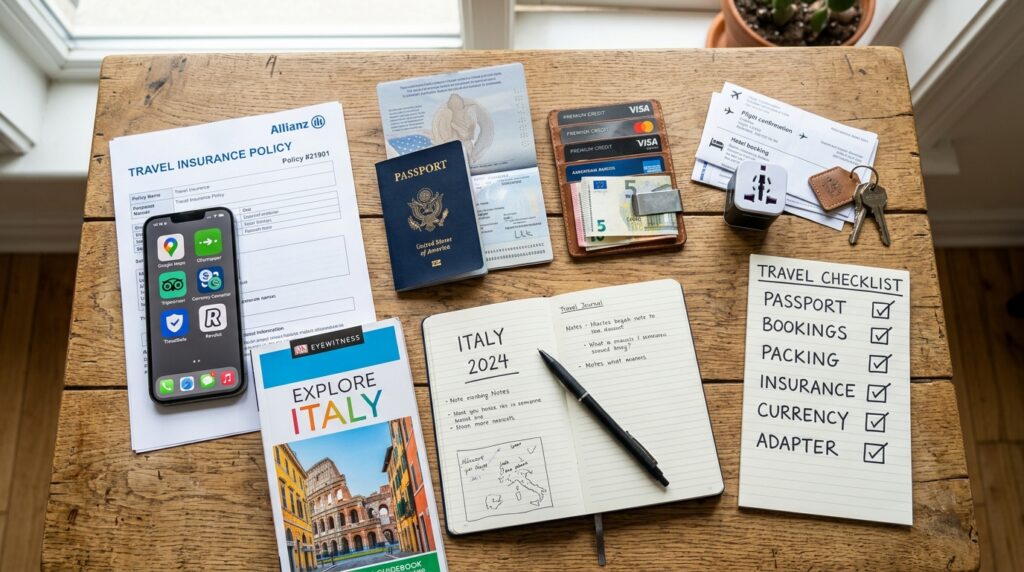
Essential Pre-Travel Preparation Checklist
Before You Book
✓ Research destination-specific scams on travel forums like TripAdvisor and Reddit ✓ Read recent traveler reviews mentioning safety concerns ✓ Register with your country’s embassy travel alert system ✓ Purchase comprehensive travel insurance covering theft and fraud
Before You Depart
✓ Notify your bank of travel dates and destinations ✓ Set up transaction alerts on all cards ✓ Download offline maps and translation apps ✓ Photocopy important documents; store digital copies in cloud ✓ Learn basic phrases in the local language ✓ Research standard prices for taxis, hotels, and common purchases
While Traveling
✓ Keep emergency numbers saved offline ✓ Use hotel safes for passports and excess cash ✓ Maintain situational awareness in tourist areas ✓ Trust your instincts—if it feels wrong, it is ✓ Stay connected with family/friends about your whereabouts
Conclusion: Travel Smart, Travel Safe

Traveling remains one of life’s greatest joys—a chance to expand your horizons, experience new cultures, and create unforgettable memories. While tourist scams are unfortunately prevalent in popular destinations, they don’t have to derail your adventure.
Knowledge is your most powerful weapon against fraud. By understanding these common schemes—from rigged taxi meters to fake police officers—you’re already ahead of most travelers. Combine this awareness with practical precautions like using ride-share apps, booking through reputable platforms, and trusting your instincts, and you’ll dramatically reduce your risk of becoming a victim.
Remember: legitimate service providers won’t pressure you, real police won’t demand on-the-spot fines, and deals that seem too good to be true always are. Stay vigilant without becoming paranoid, and don’t let fear prevent you from experiencing the world’s incredible diversity.
Have you encountered a travel scam? Sharing your story helps protect fellow travelers. Drop your experience in the comments below, and don’t forget to share this guide with anyone planning international travel. Together, we can make tourism safer for everyone.
Stay safe, stay aware, and happy travels!