
Andalusia is not merely a destination; it is a profound feeling. It is the haunting, rhythmic strum of a Spanish guitar echoing through ancient, narrow alleyways. It is the intoxicating scent of orange blossoms drifting on a warm breeze, the radiant heat of the sun on cobblestone plazas, and the fiery, passionate rhythm of flamenco dancers spinning late into the velvet night. From the breathtaking grandeur of the Alhambra in Granada to the buzzing, vibrant tapas bars of Seville and the dramatic, whitewashed hilltop towns of Ronda, this southern region of Spain overflows with raw emotion and undeniable authenticity.
Capturing the true essence of a place that has inspired poets, painters, and dreamers for centuries requires more than just a superficial glance. It requires immersion. This comprehensive Andalusia Spain travel guide will take you deep into the heart of the region through its legendary architecture, mouthwatering cuisine, colorful festivals, and breathtaking natural beauty. Prepare to uncover the passion, pride, and poetic spirit that define one of the most enchanting regions in all of Europe.
Cultural Highlights: A Tapestry of Civilizations
Before diving into the specific cities, it is vital to understand the cultural fabric of Andalusia. This region is a mesmerizing tapestry where Islamic, Jewish, and Christian heritages seamlessly interweave. For nearly eight centuries, Moorish rule left an indelible mark on the architecture, agriculture, and language of the region. Later, the Christian Reconquista added its own layers of grand cathedrals and fortresses. Today, this unique blend creates a cultural landscape unlike anywhere else in Europe, visible in everything from the intricate tile work (azulejos) to the melancholic, soulful notes of flamenco music.
The Top 10 Destinations in Andalusia
1. Seville: The Beating Heart of Passion
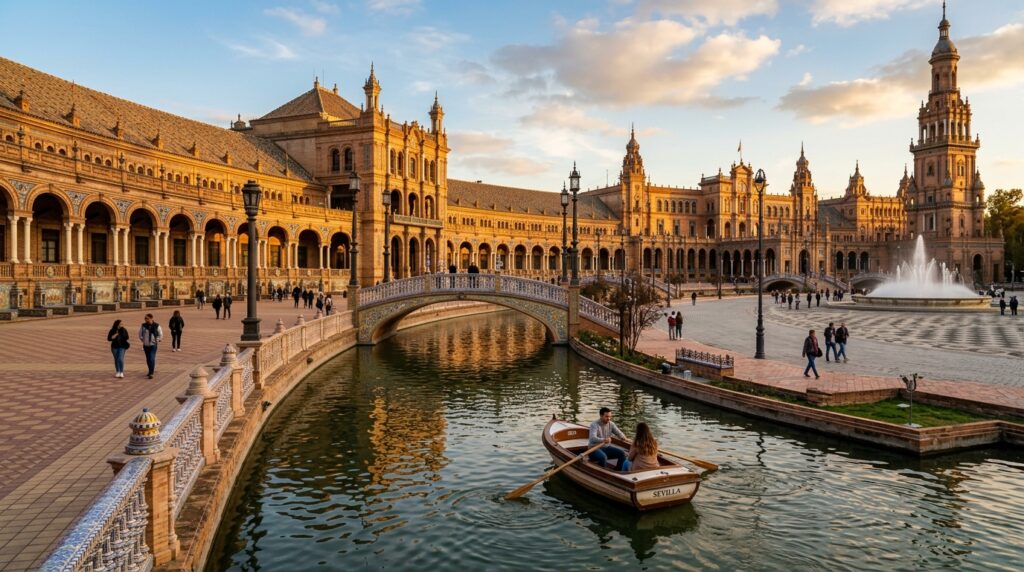
Seville is where the Andalusian spirit reaches its absolute peak. The city pulses with an infectious energy, especially during the vibrant Feria de Abril and the solemn, breathtaking processions of Semana Santa. The massive Seville Cathedral and the majestic Giralda Tower dominate the skyline, standing as testaments to the city’s grand history. Nearby, the Real Alcázar offers fairy-tale gardens and rich royal history that will leave you spellbound. Take a classic horse-drawn carriage through the iconic Plaza de España, or cruise down the gentle Guadalquivir River. As the widely recognized birthplace of flamenco, Seville fills the air with music, rhythm, and deep emotion. When night falls, the city transforms into a joyous fiesta of food, laughter, and dance. Seville doesn’t just welcome you; it seduces you.
2. Granada: The Soul of Andalusia
Granada is pure, unadulterated magic. At its heart stands the Alhambra, a majestic palatial fortress adorned with intricate Islamic art, lush Generalife gardens, and sweeping panoramic views of the city and the snow-capped Sierra Nevada. The old Moorish quarter, the Albaicín, climbs the steep hillside opposite the Alhambra. Its narrow, winding lanes lead past whitewashed homes and hidden, fragrant courtyards. At night, the raw, emotional flamenco echoes through the cave dwellings of the Sacromonte district. A unique cultural highlight here is the local tradition of receiving free, generous tapas with every drink you order. In Granada, culture is quite literally served on a plate.
3. Córdoba: A Tapestry of Cultures
Once the greatest and most sophisticated city in Western Europe, Córdoba is a place where history whispers from every stone. The undisputed jewel of the city is the Mezquita, a breathtaking mosque-cathedral featuring a mesmerizing forest of red and white double arches that seem to stretch into infinity. Wander through the historic Jewish quarter, filled with pristine whitewashed buildings, flower-draped balconies, and quiet, charming cobblestone streets. Do not miss the ancient Roman Bridge at sunset, and if you visit in May, the famous Patio Festival transforms private courtyards into explosive competitions of floral color.

4. Málaga: Urban Cool with Coastal Charm
Once considered merely a gateway to the Costa del Sol, Málaga has brilliantly reinvented itself as one of Spain’s most exciting, culturally rich cities. As the birthplace of Pablo Picasso, it now boasts world-class museums, a beautifully restored vibrant old town, and a youthful, dynamic energy. The Alcazaba Fortress and Gibralfaro Castle offer fascinating history paired with spectacular coastal views. Meanwhile, the modern port promenade and pristine beaches provide the perfect setting for relaxation. Málaga’s culinary scene is booming, with trendy rooftop bars, excellent tapas tours, and traditional seafood chiringuitos making it an absolute food lover’s dream.
5. Ronda: The Cliffside Wonder
Perched dramatically above a deep, sheer gorge, Ronda is a city literally carved by nature. The iconic Puente Nuevo (New Bridge) spanning the El Tajo gorge is one of the most jaw-dropping sights in all of Spain. On one side lies the old Moorish town, and on the other, the modern quarter, with both offering spectacular panoramic views of Andalusia’s rolling hills. Ronda is also home to one of Spain’s oldest and most beautiful bullrings. Whether you are exploring ancient, steam-filled Arab baths or sipping local wine on a terrace overlooking the canyon, Ronda feels like a timeless painting brought to life.
6. Jerez de la Frontera: Horses, Sherry, and Flamenco
In Jerez, tradition is vibrantly alive. This city is globally renowned as the birthplace of Sherry wine; a tour through its historic bodegas reveals centuries-old barrels and closely guarded secret recipes. It is also the undisputed capital of Andalusian horsemanship, home to the Royal Andalusian School of Equestrian Art, where horses perform with the grace of ballet dancers. Furthermore, the flamenco here is as authentic as it gets. Locals gather in intimate, dimly lit taverns, clapping and singing with a raw, visceral emotion that echoes deep into the night. Jerez is where passion is poured into every glass and every note.

7. The White Villages (Pueblos Blancos): Andalusia’s Timeless Soul
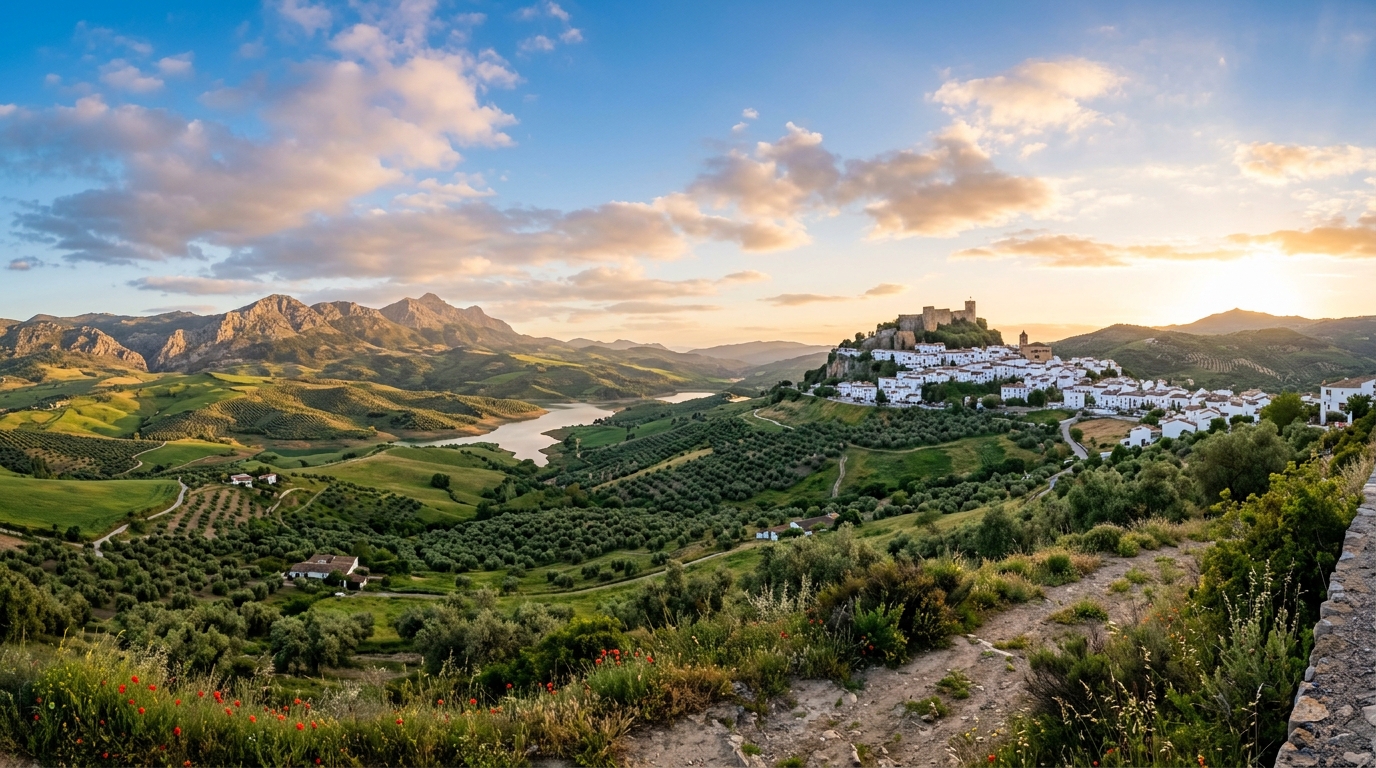
The heart of Andalusia beats strongest in its famous Pueblos Blancos. Hilltop towns like Arcos de la Frontera, Grazalema, and Zahara de la Sierra are sprinkled across the Sierra de Grazalema and Sierra Nevada mountains. Their brilliant whitewashed homes gleam against the deep blue skies, wrapped around ancient churches and sunlit plazas. Life here moves at a beautifully slow pace. Locals gather at corner cafes, children play safely in the streets, and the sweet scent of jasmine drifts through the air. Hike between the villages, visit local artisans, or simply enjoy the profound silence broken only by distant church bells. This is where Andalusia reveals its true, unfiltered soul.
8. Jaén: The Olive Oil Kingdom
Often overlooked by international tourists, Jaén is Andalusia’s hidden, verdant heart. This province produces more olive oil than anywhere else on Earth, and its endless rolling hills form a shimmering sea of silvery-green trees. The city of Jaén itself is crowned by the imposing Santa Catalina Castle, while the nearby Renaissance towns of Úbeda and Baeza boast stunning, UNESCO-listed architecture. For a slower pace and authentic charm, Jaén delivers serenity and incredible flavor with every drop of its liquid gold.
9. Huelva: The Untouched Coastline
On Andalusia’s western edge lies Huelva, a coastal province featuring quiet, sweeping beaches and rich maritime history. This is the exact location where Christopher Columbus set sail for the New World, and the town of Palos de la Frontera beautifully preserves that legacy. However, it is the wild beaches of Doñana National Park that truly shine. Miles of untouched sand, shifting dunes, and lush marshes teem with diverse wildlife. Far fewer tourists make it to this western edge, giving Huelva a peaceful, undiscovered vibe. It is Andalusia without the crowds—pure, quiet, and naturally stunning.
10. Almería: Where the Desert Meets the Sea
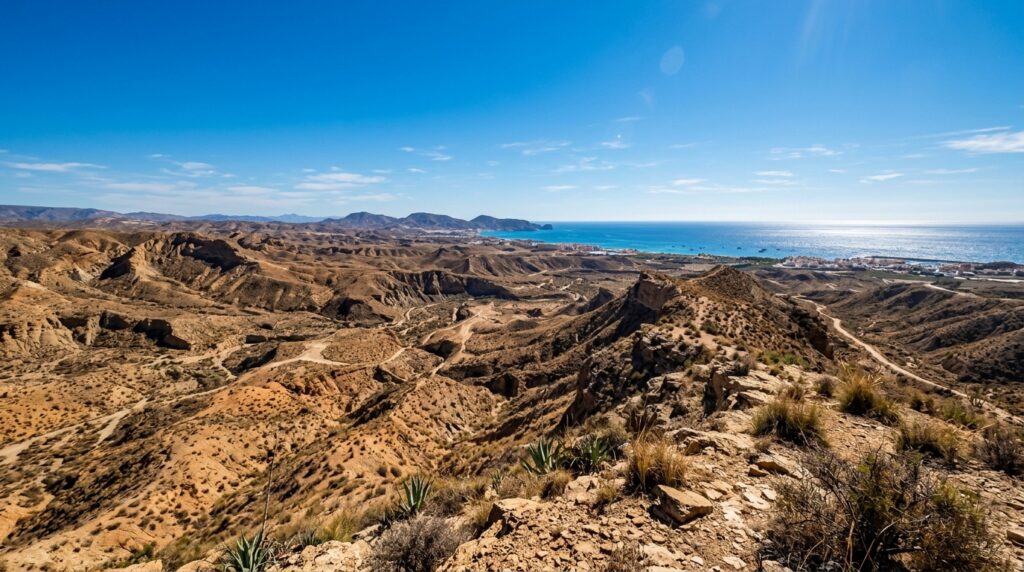
Almería represents the arid, dramatic edge of Andalusia, where Spain’s only true desert meets the sparkling Mediterranean. The Tabernas Desert has served as the filming location for countless classic Spaghetti Westerns, and its barren, otherworldly beauty contrasts brilliantly with the lush, vibrant coastline. The massive Alcazaba Fortress looms over the city, serving as a powerful reminder of Almería’s Moorish past. Just outside of town, the Cabo de Gata-Níjar Natural Park offers untouched beaches, striking volcanic rock formations, and crystal-clear waters perfect for snorkeling. Almería is Andalusia’s wild, untamed side.
Practical Travel Tips for Andalusia
Transportation Tips: Getting Around
Navigating Andalusia is relatively straightforward, but the best method depends on your itinerary.
- Trains: The AVE high-speed train network is excellent for connecting major cities like Madrid, Seville, Córdoba, and Málaga. It is fast, comfortable, and highly recommended for intercity travel.
- Rental Cars: If you plan to explore the White Villages (Pueblos Blancos), Jaén, or the remote beaches of Huelva and Almería, renting a car is absolutely essential. Public transport in these rural, mountainous areas is limited.
- Local Transit: Within major cities like Seville and Málaga, walking is the best way to absorb the atmosphere. For longer distances within the cities, utilize the affordable and efficient local bus networks.
Food Recommendations: A Culinary Journey
Andalusian cuisine is a celebration of fresh, local ingredients.
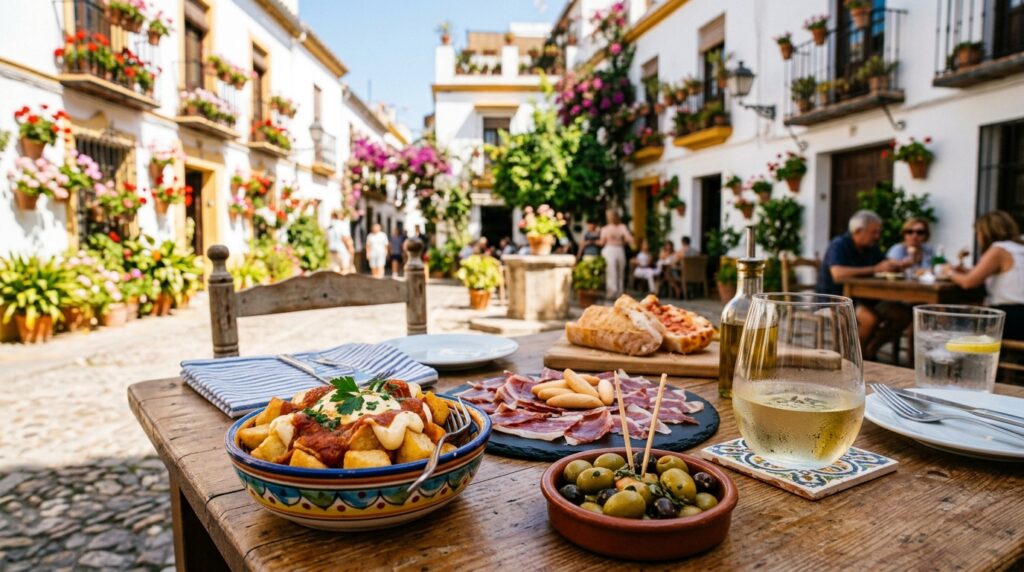
- Cold Soups: You must try Gazpacho (a refreshing tomato-based soup) and Salmorejo (a thicker, creamier tomato and bread soup topped with hard-boiled egg and jamón), especially during the hot summer months.
- Seafood: Head to the coast for Pescaíto frito (lightly battered and fried local fish) and fresh grilled sardines.
- Meat: Indulge in Rabo de toro (oxtail stew), a rich, slow-cooked dish with deep historical roots, and of course, world-class Jamón Ibérico.
- Drinks: In Jerez, sip on authentic Sherry (from dry Fino to sweet Pedro Ximénez). In Granada and Málaga, enjoy the local tradition of free tapas with every beer or wine you order.
Weather Advice and Best Time to Visit
Andalusia enjoys a Mediterranean climate, but the interior can get exceptionally hot.
- Spring (March to May) and Autumn (September to November): These are the absolute best times to visit. The weather is pleasantly warm, the landscapes are green, and the cities are vibrant without being overwhelming.
- Summer (June to August): Be prepared for intense heat. In cities like Seville and Córdoba, temperatures frequently exceed 40°C (104°F). If you visit now, plan your sightseeing for the early morning and late evening, and spend the afternoons resting or by a pool.
- Winter (December to February): Mild and relatively quiet. While the days are pleasant for exploring, the evenings can be chilly, especially in inland areas. The Sierra Nevada offers excellent skiing opportunities during this time.
Suggested 7-Day Andalusia Itinerary
To help you organize your trip, here is a practical, well-paced daily schedule that covers the absolute highlights of the region.
Day 1 & 2: Seville
- Day 1: Arrive in Seville. Spend the morning exploring the magnificent Seville Cathedral and climbing the Giralda Tower. In the afternoon, get lost in the winding streets of the Santa Cruz neighborhood. Enjoy your first evening tapas crawl in the Triana district.
- Day 2: Dedicate the morning to the breathtaking Real Alcázar (book tickets well in advance). In the afternoon, visit the iconic Plaza de España and take a relaxing boat ride. End the night with an authentic flamenco show in a local tablao.
Day 3: Córdoba
- Take a morning high-speed train to Córdoba (approx. 45 mins). Spend the day exploring the awe-inspiring Mezquita and wandering the flower-filled patios of the Jewish Quarter. Watch the sunset from the Roman Bridge before taking an evening train to your next stop.
Day 4: Ronda and the White Villages
- Rent a car or join a guided tour. Drive through the stunning Sierra de Grazalema. Stop at the picturesque villages of Zahara de la Sierra and Grazalema. Arrive in Ronda in the late afternoon to walk across the Puente Nuevo and explore the old town.
Day 5 & 6: Granada
- Day 5: Drive or take the bus to Granada. Dedicate your entire day to the Alhambra and the Generalife gardens. This requires a full day to truly appreciate the intricate details. Watch the sunset from the Mirador de San Nicolás in the Albaicín for the classic view of the Alhambra.
- Day 6: Explore the Albaicín’s narrow streets in the morning. Visit the Royal Chapel in the afternoon. In the evening, experience the unique cave flamenco shows in Sacromonte and enjoy the free tapas culture along Calle Navas.
Day 7: Málaga and Departure
- Travel to Málaga. Visit the Picasso Museum and explore the vibrant Mercado de Atarazanas for a delicious lunch. Walk up to the Gibralfaro Castle for panoramic views of the port and city. Enjoy a relaxing evening by the beach before heading to the airport for your departure.
Conclusion
Andalusia is a region that captures your heart and refuses to let go. It is a land of stark contrasts and beautiful harmonies, where ancient history lives side-by-side with vibrant modern life. Whether you are marveling at the intricate arches of a Moorish palace, hiking between sun-drenched white villages, or simply enjoying a glass of sherry as a flamenco guitar plays in the background, the soul of southern Spain will leave an indelible mark on your memory. Pack your bags, bring your sense of wonder, and let the passionate spirit of Andalusia guide your journey.