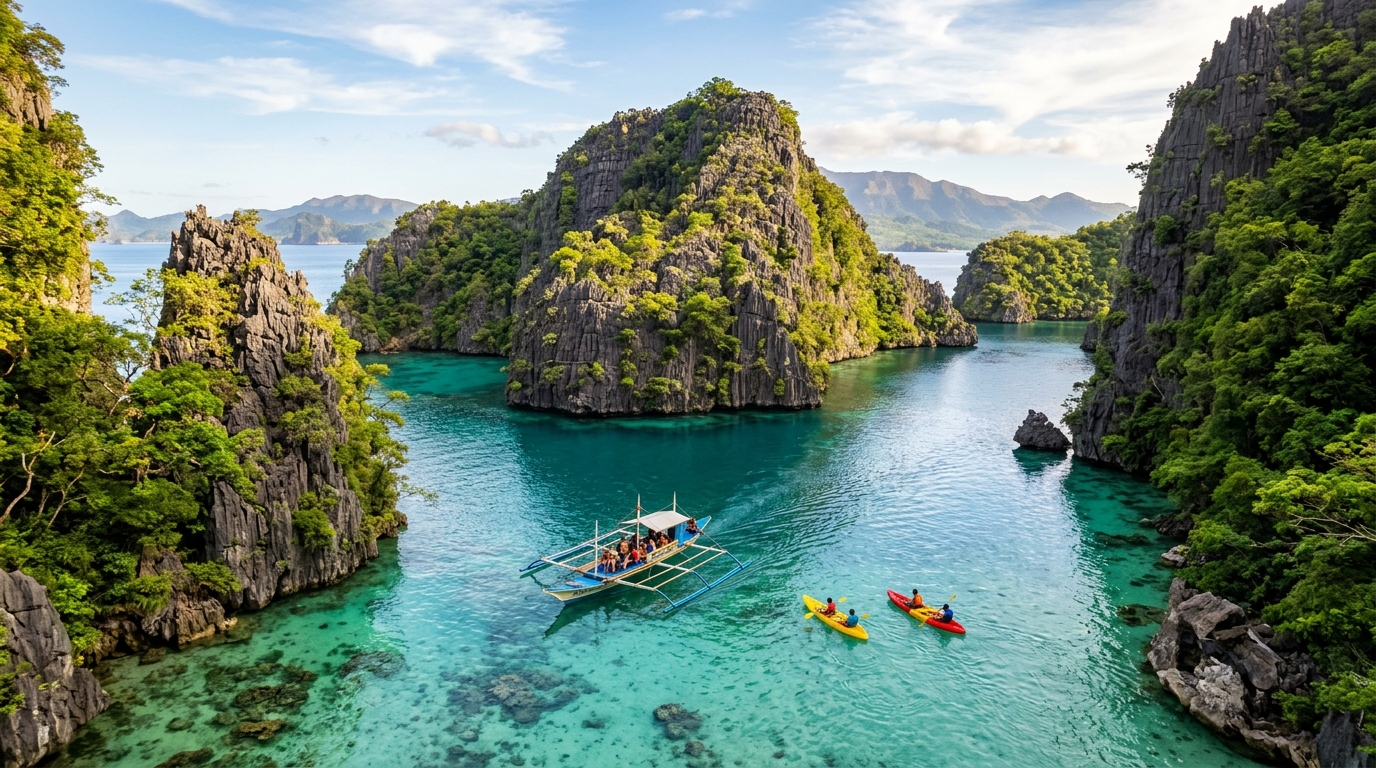

There is a moment on every Philippine journey when you stop taking photos — not because the beauty fades, but because some scenes simply demand to be felt. It might happen while kayaking across the glassy emerald water of El Nido’s Big Lagoon, while a gentle whale shark materializes from the blue off Oslob, or when sunrise spills over 2,000-year-old rice terraces carved into misty mountains. The Philippines, a tropical archipelago of more than 7,000 islands in Southeast Asia, is that rare destination where the postcards never lie.
Island hopping in the Philippines is not just an activity; it is a way of traveling. From hidden lagoons and vibrant coral reefs to powdery white-sand beaches and lush jungle waterfalls, every island tells its own story. This guide walks you through the very best of them — Palawan, Cebu, Bohol, Boracay, Siargao, Siquijor, and beyond — with practical transport tips, a ready-to-use itinerary, food you must try, and honest weather advice so you can plan the trip of a lifetime.
Why the Philippines Is the Ultimate Island Hopping Destination
Few countries on earth pack this much variety into one border. The Philippines is divided into three main island groups — Luzon in the north, the Visayas in the center, and Mindanao in the south — and each has its own personality, cuisine, and coastline. Sea temperatures hover around a bath-warm 26–31°C (79–88°F) all year, English is widely spoken, travel costs remain refreshingly affordable, and the famous Filipino hospitality greets you everywhere with one warm word: “Mabuhay!”
Whether you are a backpacker, a honeymooner, a surfer, or a diver, island hopping here bends to your style. You can fill your days with adrenaline — canyoneering, cliff jumping, surfing — or spend them doing absolutely nothing under a coconut palm. Often, you will do both on the same island.
Palawan: El Nido and Coron, the Crown Jewels
Start your island hopping adventure in Palawan, routinely voted the most beautiful island in the world. Its two stars, El Nido and Coron, boast towering limestone karsts, secret beaches reachable only by boat, and water so clear it feels liquid.
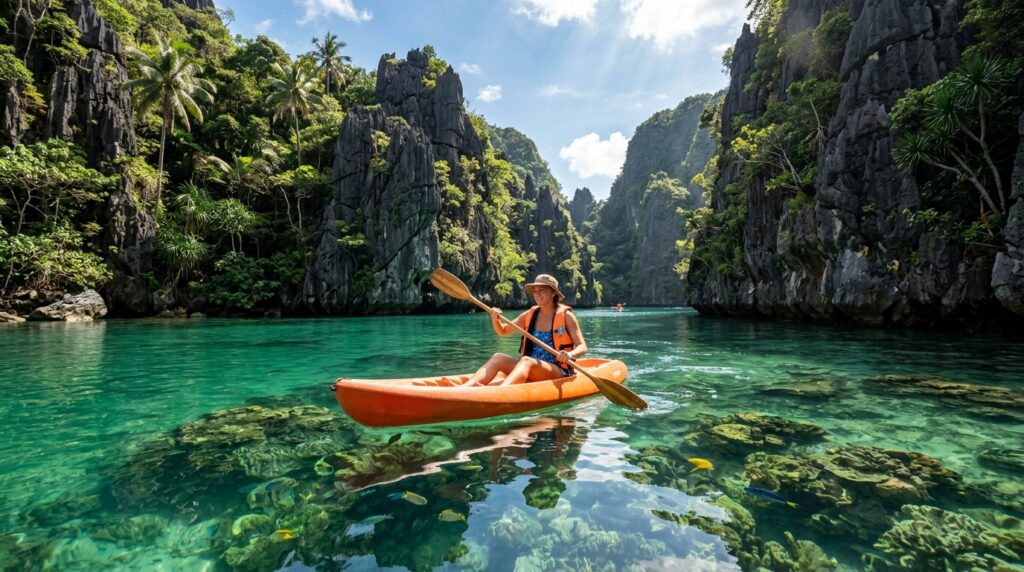
In El Nido, join the famous Tour A island hopping route (around 7 hours) to paddle through the Big Lagoon, slip into the Secret Lagoon through a low rock hole, and snorkel over Shimizu Island’s coral gardens. For a quieter experience, rent a kayak at sunrise and glide the Big Lagoon before the tour boats arrive — the water is so still you can watch fish dart beneath your hull. Finish the day with sunset at Nacpan Beach, a 4-kilometer stretch of golden sand.
Across the water, Coron delivers the surreal Barracuda Lake, where freshwater and saltwater meet in distinct temperature layers, creating an almost otherworldly dive. Climb the viewpoint at Kayangan Lake, often called the cleanest lake in Asia, and float between sheer cliffs at the Twin Lagoon.
Getting there & timing: Fly from Manila to Puerto Princesa (about 1 hour 20 minutes), then take a scenic van ride north to El Nido (5–6 hours), or fly directly to Busuanga for Coron. A fast boat connects El Nido and Coron in roughly 3.5–4 hours. Give Palawan 4–5 days — you will want every one of them.
Cebu: Swim with Whale Sharks and Chase Waterfalls
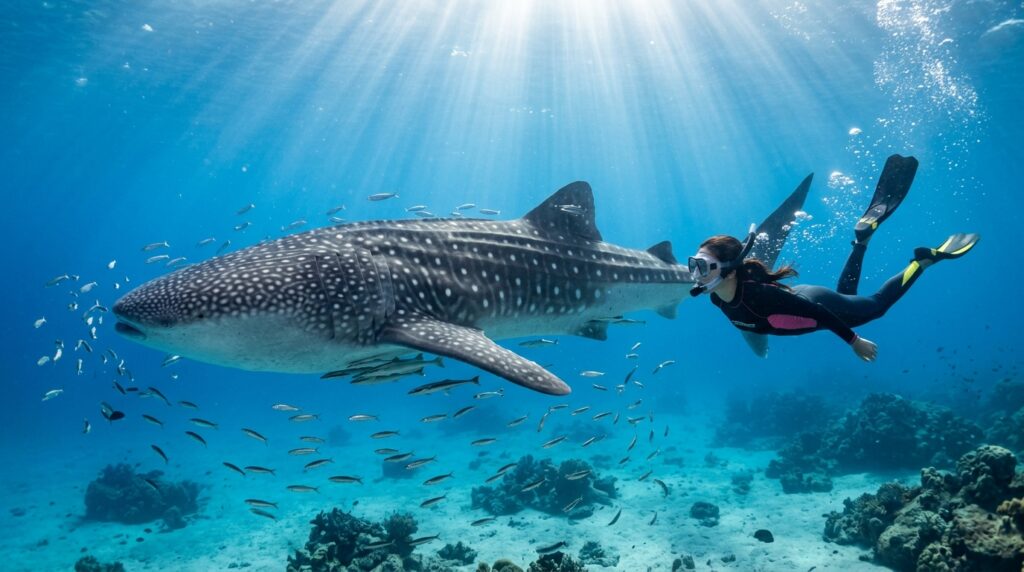
Next, fly to Cebu, a vibrant island that blends natural wonders with rich history. Its most famous encounter awaits in Oslob, where gentle whale sharks glide gracefully through shallow water each morning. Arrive at dawn (6–9 am is prime time), listen to the briefing, and slip in to swim beside the ocean’s biggest fish — always keeping a respectful distance and never touching.
Afterward, head to Badian for the region’s signature adrenaline rush: canyoneering at Kawasan Falls. Over roughly four hours you will jump off cliffs (some up to 10 meters high), slide down natural rock chutes, and swim through a river canyon of impossible turquoise, ending at the three-tiered cascade of Kawasan Falls itself. It is exhausting, exhilarating, and absolutely unforgettable.
Round out Cebu with the sardine run at Moalboal, where millions of sardines swirl just offshore at Panagsama Beach, and a heritage stop in Cebu City at Magellan’s Cross and the Basilica del Santo Niño. Adventure and relaxation go hand in hand here — plan 2–3 days.
Bohol: Chocolate Hills and Wide-Eyed Tarsiers
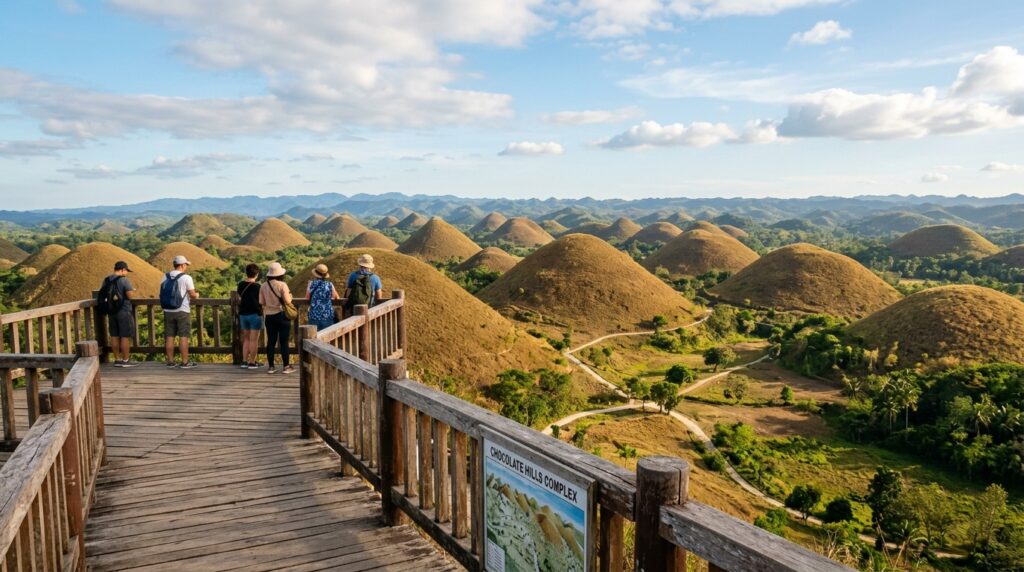
A two-hour fast ferry from Cebu brings you to Bohol, home to two of the Philippines’ most iconic sights. The Chocolate Hills are a geological curiosity: more than 1,200 perfectly cone-shaped mounds spread across the interior. During the dry season the grass turns brown, and the hills resemble endless rows of chocolate kisses — best viewed from the observation deck in Carmen.
Equally charming are the Philippine tarsiers, tiny primates with enormous eyes and rotating heads, among the smallest in the world. Visit the Philippine Tarsier Sanctuary in Corella, where they are protected in the wild; keep your voice low and your camera flash off. Seeing one cling to a branch, no bigger than your fist, is a once-in-a-lifetime moment.
Fill the gaps with a floating lunch cruise on the Loboc River, the historic Baclayon Church, and the white sands of Alona Beach on Panglao Island, where a short boat ride to Balicasag rewards you with turtles and dazzling reef walls. Two days covers the highlights comfortably.
Boracay: White Sand, Sunsets, and Fire Dancers
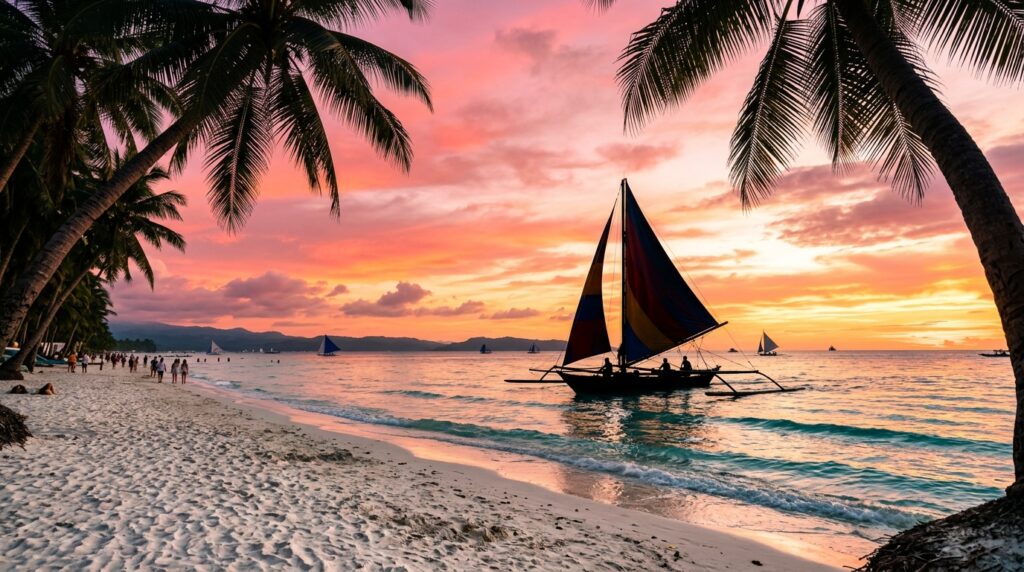
No island hopping route is complete without Boracay, the world-famous sliver of sand renowned for its powdery White Beach and electric evenings. Spend your days lounging along the 4-kilometer beach, swimming in calm, crystal-clear water, or escaping the crowds at Puka Shell Beach on the island’s wilder north side.
As the sun melts into the sea — watch it from Willy’s Rock or aboard a traditional paraw sailboat — the island changes mood. Beachfront bars light up, live music drifts down the sand, and fire dancers twirl flaming ropes under the stars. Boracay caters to everyone: partygoers, families, honeymooners, and spa-seekers alike. Add water sports, sunset cruises, and romantic dinners by the shore, and 2 days feel both perfectly full and never quite enough.
Siargao: Ride the Waves at Cloud 9
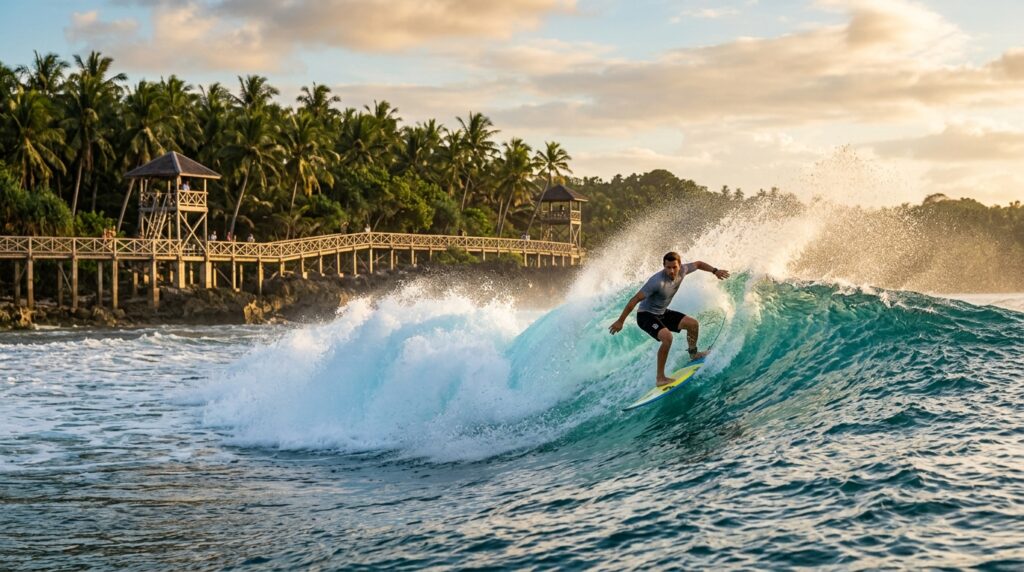
For a more laid-back, off-the-beaten-path rhythm, fly to Siargao, the surfing capital of the Philippines. The legendary Cloud 9 break draws pros from around the world, but beginners have plenty of forgiving waves too — rent a board, hire a local coach, and feel the thrill of your first ride. The surf season peaks from around September to November.
When you are not in the water, island-hop to the sandbars of Naked Island, Daku Island, and Guyam Island, paddle through the glassy Sugba Lagoon, and time your visit to the Magpupungko Rock Pools for low tide, when natural infinity pools appear in the stone. Mangrove forests and hidden lagoons offer tranquil escapes for kayakers and nature lovers.
Evenings in Siargao are hammock time: fresh grilled seafood, cold drinks, reggae music, and some of the warmest hospitality you will meet. Three days lets you settle into the island’s irresistible slow motion.
Siquijor: The Mystical Island of Waterfalls and Legends
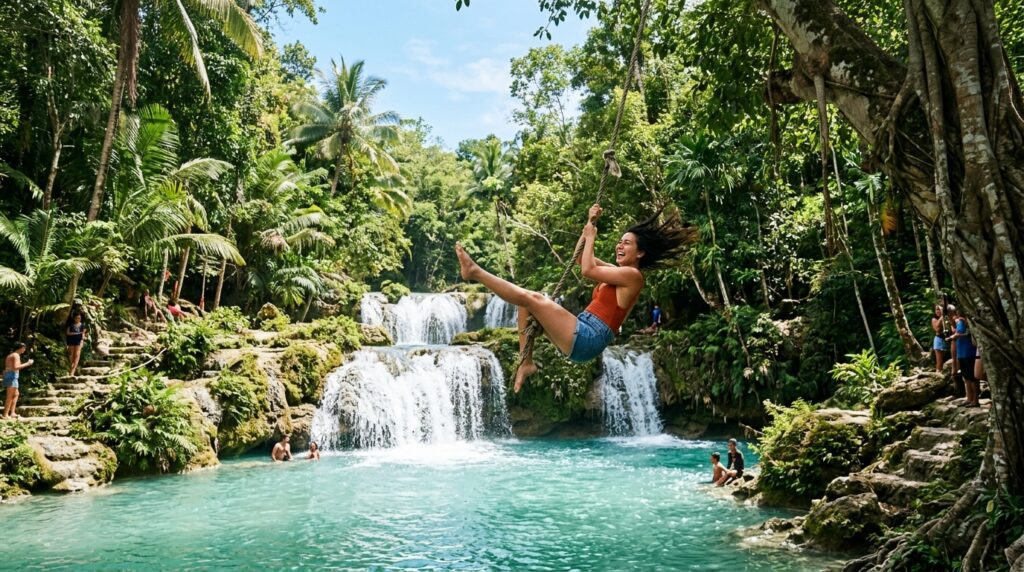
Often overlooked by tourists, Siquijor is the Philippines’ hidden gem, an island steeped in folklore of healers, mystics, and enchanted places. Its mystical reputation is matched only by its natural beauty. Cool off beneath the cascading turquoise pools of Cambugahay Falls, where rope swings invite you to leap into the blue, and feel the strange magic of the centuries-old balete tree in Lazi, said to be enchanted and home to local legends — brave visitors dip their feet in the spring below while tiny doctor fish nibble away.
Cliff-jump at Salagdoong Beach, ride a scooter through jungle roads lined with banyan trees, and let the island’s serene atmosphere slow your heartbeat. Siquijor is the perfect escape from modern life: a place for yoga, meditation, and quiet moments in nature. Reachable by a short ferry from Dumaguete, it deserves 2 unhurried days.
Tubbataha Reefs Natural Park: A UNESCO Diving Dream
If marine life is your passion, write Tubbataha Reefs Natural Park at the top of your list. This UNESCO World Heritage Site in the Sulu Sea protects some of the most diverse coral reefs on the planet. Dive into its crystal-clear waters and you will be greeted by vibrant coral gardens, schools of tropical fish, reef sharks, manta rays, and green sea turtles.
Because Tubbataha is a strictly protected area, its ecosystem remains pristine and thriving. Access is by liveaboard boat only, during the short diving season from roughly March to June — a bucket-list pilgrimage for any diving enthusiast.
Luzon: Rice Terraces, History, and City Flavors
For a taste of culture and history, head to Luzon, home to the bustling capital, Manila. Wander the cobblestone streets of Intramuros, the old walled city from the Spanish colonial era, and graze your way through Binondo, the world’s oldest Chinatown.
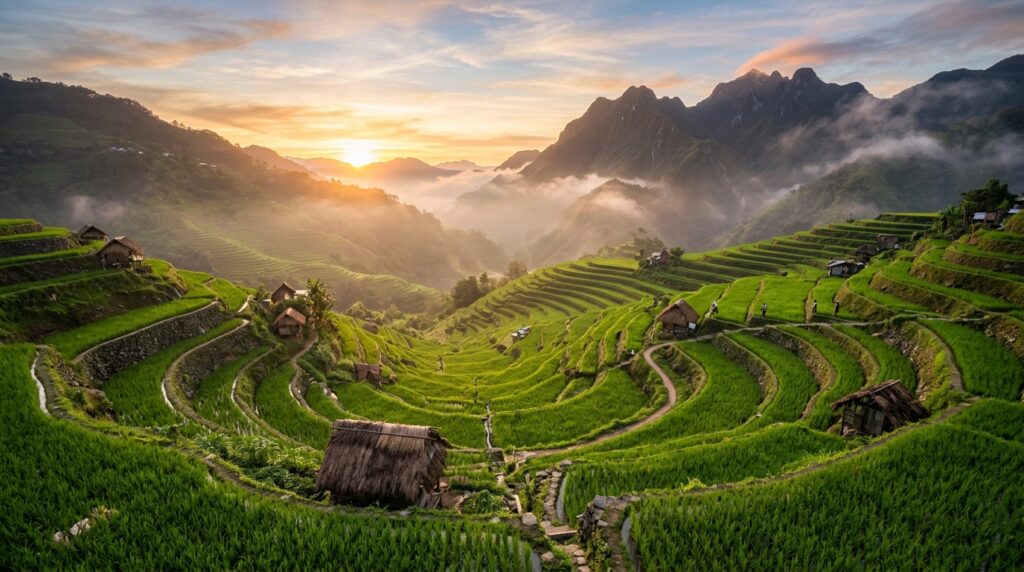
Beyond the city lies a wonder often called the Eighth Wonder of the World: the Banaue Rice Terraces. Carved into the mountains by Ifugao ancestors more than 2,000 years ago and still farmed today, these emerald stairways to the sky are breathtaking at sunrise — especially the amphitheater-like terraces of nearby Batad. An overnight bus from Manila takes around 8–9 hours; allow 2–3 days for the Cordillera region. Luzon offers the perfect blend of history, culture, and natural beauty.
The Visayas: Samar, Negros, and Leyte’s Hidden Wonders
The Visayas region is another island hopping hotspot, with destinations like Negros, Samar, and Leyte still flying delightfully under the radar. Paddle beneath the dramatic Sohoton Caves and natural rock bridge in Samar, escape to the tranquil marine sanctuary of Danjugan Island off Negros, or walk the impossibly white twin sandbars of Kalanggaman Island in Leyte. The Visayas is where you truly disconnect from the world and immerse yourself in nature — underground rivers, secluded beaches, and not a crowd in sight.
A Taste of Paradise: Filipino Food You Must Try
Island hopping also means eating your way across the archipelago, and Filipino cuisine is a joyful burst of flavor. Order adobo, the national comfort dish of meat braised in soy, vinegar, and garlic; warm your soul with sinigang, a tangy tamarind soup; and celebrate with lechon, whole roasted pork with crackling skin — Cebu’s version is legendary.
Add sisig (sizzling chopped pork), kinilaw (fresh raw fish cured in calamansi and vinegar, the Filipino ceviche), grilled seafood straight off the boat, sweet ripe mangoes, and halo-halo, the shaved-ice dessert piled with colorful toppings. Eat at local carinderias, night markets, and beachfront grills — the best meals cost little and taste like memory.

Best Time to Visit and Weather Tips
The Philippines has two main seasons. The dry season (November to May) is the best time for island hopping, with calm seas, sunny skies, and peak conditions from December to May. The wet season (June to October) brings afternoon showers and the occasional typhoon, though also lush landscapes and fewer crowds.
Plan around specialties: Tubbataha’s liveaboard season runs March to June, Siargao’s prime surf is roughly September to November, and the Chocolate Hills turn their famous brown during the dry months. Pack light, breathable clothing, a light rain jacket, reef-safe sunscreen, and dry bags for boat days.
Getting Around: Transportation Tips
- Between islands: Domestic flights (Cebu Pacific, Philippine Airlines, and budget carriers) connect Manila, Cebu, Puerto Princesa, and Siargao in 1–2 hours. Fast ferries like OceanJet and 2Go link Cebu–Bohol, Dumaguete–Siquijor, and more. Flight routes, ferry schedules, and visa policies can change over time — always double-check before traveling.
- On the islands: Tricycles and jeepneys cover short hops; habal-habal (motorcycle taxis) reach remote waterfalls; and renting a scooter is the freest way to explore Bohol or Siquijor. In Manila, ride-hailing apps like Grab beat haggling.
- Smart moves: Book ferries ahead during holidays, carry small cash bills, and leave buffer days — tropical weather occasionally reshuffles plans, and that is part of the adventure.
The Perfect 14-Day Philippines Island Hopping Itinerary
- Day 1 – Manila: Arrive, wander Intramuros at golden hour, food crawl through Binondo.
- Day 2 – To Palawan: Morning flight to Puerto Princesa; scenic van to El Nido; sunset drinks on Corong-Corong beach.
- Day 3 – El Nido Tour A: Big Lagoon, Secret Lagoon, Shimizu Island snorkeling (full day, about 7 hours).
- Day 4 – El Nido Slow Day: Sunrise kayak in the Big Lagoon; afternoon at Nacpan Beach.
- Day 5 – Coron: Fast boat to Coron; sunset at Mt. Tapyas viewpoint.
- Day 6 – Coron Lakes: Kayangan Lake, Twin Lagoon, and a shipwreck snorkel.
- Day 7 – Coron to Cebu: Barracuda Lake in the morning; afternoon flight to Cebu City; lechon dinner.
- Day 8 – Oslob & Kawasan: Dawn whale shark swim; canyoneering at Kawasan Falls; sleep in Moalboal.
- Day 9 – Moalboal: Sardine run and turtle snorkeling; beach evening at Panagsama.
- Day 10 – Bohol: Fast ferry to Tagbilaran; tarsier sanctuary and Chocolate Hills day tour; night at Alona Beach.
- Day 11 – Balicasag & Loboc: Morning snorkel with turtles; Loboc River cruise; evening ferry back toward Cebu.
- Day 12 – Boracay: Fly to Caticlan; check in near White Beach; paraw sunset sail and fire dancers.
- Day 13 – Boracay Free Day: Puka Shell Beach, spa hour, farewell dinner on the sand.
- Day 14 – Homeward: Fly out via Manila with a mango-filled souvenir bag and a full camera roll.
Want more? Add 3 days for Siargao (surfing and lagoons), 2 days for mystical Siquijor, 2–3 days for the Banaue Rice Terraces, or a multi-day Tubbataha liveaboard if diving is your calling.
Travel Like a Friend: Culture and Responsible Travel
The best thing about island hopping in the Philippines is the people. Filipinos are famous for their friendliness and welcoming nature — whether you stay in a luxury resort or a humble beach hut, you will be treated like family. Learn a few words (salamat means thank you), join a local fiesta if one erupts during your visit, and say yes to invited karaoke.
Travel gently: keep distance from whale sharks and tarsiers, never stand on coral, choose reef-safe sunscreen, refuse single-use plastics, and support local guides, eateries, and homestays. Your respect keeps these islands pristine for the next dreamer.
Frequently Asked Questions
How many days do I need for island hopping in the Philippines?
Ten to fourteen days is the sweet spot for 4–5 islands. With three weeks, add Siargao, Siquijor, and Banaue without rushing.
What is the best month for island hopping?
December to May offers dry weather and calm seas. March to June is ideal for Tubbataha diving; September to November for Siargao surfing.
Is the Philippines budget-friendly?
Very. Guesthouses, local meals, and ferries are affordable, while luxury resorts remain excellent value compared to other tropical destinations.
Do I need a visa?
Many nationalities receive visa-free entry for short stays, but requirements differ by passport and may change over time — verify with official sources before booking.
Final Thoughts: Paradise Is Waiting
Island hopping in the Philippines is more than a vacation; it is a journey of discovery. It is snorkeling over coral gardens at dawn, jumping into turquoise canyons by noon, and watching fire dancers under a moonlit sky by night. Each island — from Palawan’s lagoons to Siquijor’s legends — has its own story, and every adventure brings you closer to understanding why this country is called paradise.
So pack your bags, grab your camera, and get ready for the trip of a lifetime. The islands of the Philippines are waiting to be explored — and once you leave, a piece of your heart will stay floating somewhere between those 7,000 islands. Keep exploring, and keep dreaming of paradise.