You’ve done everything right. You’ve scoured flight comparison sites for hours, found what looks like an incredible deal on airfare, booked what appears to be an affordable hotel room, and planned your dream vacation within budget. But then comes the moment of truth: checkout day. The final bill arrives, and it’s hundreds of dollars more than you expected. What happened?
You’ve become a victim of the travel industry’s best-kept secret: legal scams disguised as “fees” and “charges.”
Airlines and hotels have mastered the dark art of lure pricing—advertising rock-bottom rates to get you through the door, then hitting you with a barrage of sneaky fees when it’s too late to back out. From baggage charges to resort fees, overpriced Wi-Fi to mandatory “amenity” charges, these companies have turned nickel-and-diming travelers into a multi-billion dollar industry.
But here’s the good news: once you know how these scams work, you can fight back. This comprehensive guide will expose every hidden fee, explain exactly how the travel industry takes your money, and arm you with practical strategies to keep more cash in your pocket.
The Budget Airline Trap: When “Cheap” Flights Cost More

Budget airlines have revolutionized travel by making flights accessible to millions. But that $50 flight you found? It’s not really $50. By the time you add all the “optional” fees, you’re often paying more than you would with a traditional carrier—and with far fewer comforts.
The Baggage Fee Bonanza
Baggage fees represent one of the most profitable scams in modern aviation. Some budget carriers now charge for carry-on bags, meaning you’re literally paying to bring your own belongings onto the plane.
Here’s how it works: When booking, you might see a tempting $20 baggage fee. But if you forget to pre-pay (or your travel plans change), the airport price can be double or triple that amount. Some airlines charge over $100 per bag at the gate.
Even worse, carriers are getting increasingly sneaky with personal item rules. That small backpack that fit perfectly under the seat on every other airline? Suddenly it’s “too big” on this budget carrier, and you’re forced to pay an unexpected $50-75 carry-on fee at the gate—when you have zero alternatives.
Pro Tip: Always measure your bags at home and check the airline’s exact dimensions. Bring a tape measure in your personal item. When gate agents try to charge you, politely ask them to measure your bag using their sizing box before paying.
Seat Selection: The Algorithmic Separation Scheme
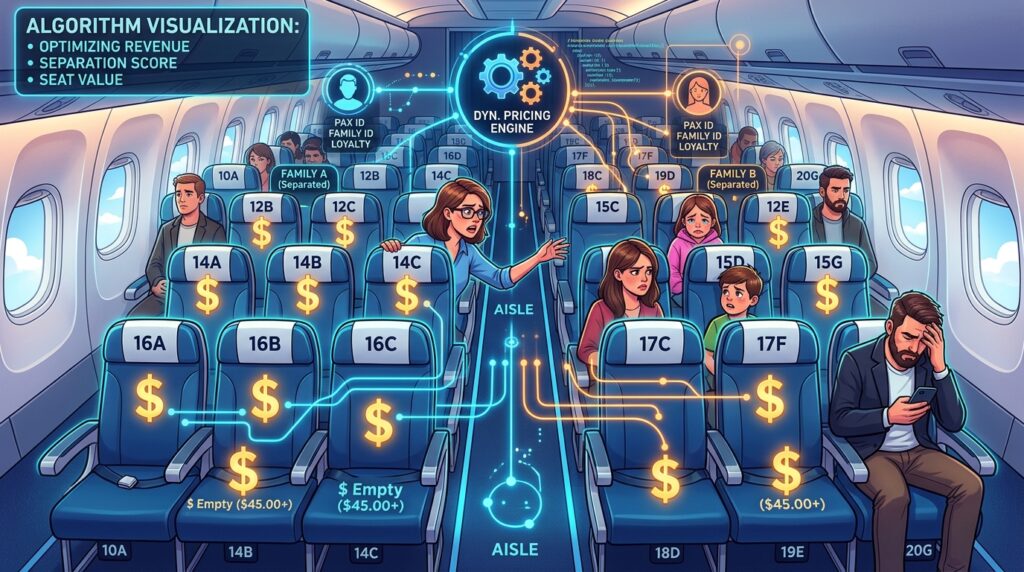
Airlines use sophisticated algorithms designed to separate families and friends, forcing them to pay extra just to sit together. It’s manipulative, it’s calculated, and it’s completely legal.
Here’s the playbook: The airline’s system automatically assigns middle seats to those who don’t pay for seat selection, scattering groups throughout the cabin. Want to actually sit with your travel companions? That’ll be $15-50 per person, per flight segment.
Prefer a window or aisle seat? The price jumps even higher. And if you refuse to pay and get stuck in a middle seat, you’re positioned in the worst part of the plane—often near the lavatories or in seats with limited recline.
Real-World Example: A family of four flying Ryanair from London to Barcelona might pay $200 for “free” seats if they don’t pre-select. But the airline’s algorithm will scatter them across the plane. Paying $15 per person to sit together adds $60 to the ticket price.
The Ridiculous Check-In Fee
Some budget airlines charge you for printing your boarding pass at the airport. Yes, you read that correctly. Don’t check in online within their specific time window? You could be hit with a $50 fee just to get a piece of paper.
Spirit Airlines and Ryanair are notorious for this. They’ve even been known to charge for “priority check-in” just to avoid the long lines that they created in the first place by understaffing regular check-in counters.
How to Avoid It:
- Check in online exactly when the window opens (usually 24-48 hours before departure)
- Download the airline’s mobile app and use mobile boarding passes
- Set multiple phone reminders
- Take a screenshot of your boarding pass as backup
Food, Water, and the $5 Bottle Scam

Some airlines won’t even give you water for free anymore, charging $5 for a tiny 16-ounce bottle. Want a snack? Expect to pay double or triple normal retail prices. A bag of chips that costs $2 at the airport newsstand might be $6-8 on board.
And don’t think about sneaking food on board. Some airlines have strict no-outside-food policies designed to force you into buying their overpriced meals. While enforcement varies, gate agents and flight attendants can deny boarding or confiscate food if they choose to enforce these policies.
Smart Strategy: Eat a substantial meal before boarding. Bring an empty reusable water bottle through security and fill it at water fountains past the checkpoint. Pack TSA-approved snacks like granola bars, nuts, and dried fruit.
Fuel Surcharges and Credit Card Fees
Fuel surcharges represent another sneaky trick. Instead of including fuel costs in ticket prices, some airlines list them as separate charges, making the base fare look artificially low. But by the time you pay it, your “cheap” flight is anything but.
Some airlines even charge extra just to use a credit card when booking a ticket. It’s typically a 2-3% percentage-based fee, so the more expensive your ticket, the more they take. Want to avoid it? Too bad. Many airlines don’t even give you another payment option, or they make alternative methods (like bank transfers) so inconvenient that you’re forced to pay the fee.
The Overbooking Gamble
Airlines routinely sell more tickets than available seats, betting that not everyone will show up. It’s a calculated risk that maximizes their profits at your expense. If they overbook and bump you, good luck getting fair compensation.
While regulations require compensation for involuntary bumping in many countries, airlines will first ask for volunteers and offer travel vouchers worth far less than what you’re legally owed. They count on passengers not knowing their rights.
Know Your Rights:
- In the US, involuntary bumping can entitle you to 200-400% of your ticket price
- EU Regulation 261/2004 provides compensation up to €600 for denied boarding
- Always ask for cash compensation, not vouchers
- Document everything and file complaints with aviation authorities
Hotel Hidden Fees: The Resort Fee Racket

Hotels are just as bad as airlines, if not worse. You book a room for $100 a night, feeling satisfied with your deal. But at checkout, the bill is $175. That’s because of hidden fees that hotels strategically don’t mention until it’s too late to cancel without penalty.
Resort Fees: The Most Hated Charge in Travel
Resort fees represent one of the worst scams in the hospitality industry. These mandatory daily charges (typically $25-50 per night) claim to cover amenities like Wi-Fi, gym access, pool use, or “local calls”—even if you never use them.
In places like Las Vegas, resort fees can exceed the actual room rate. You might book a “cheap” $49/night room, only to discover a $45 resort fee added at checkout. Some hotels even charge resort fees when there’s no resort—just a basic pool and a gym with broken equipment.
The Legal Battle: The FTC has been investigating resort fees for years, calling them deceptive. But enforcement has been slow, and hotels continue the practice. Some now list them as “mandatory facility fees” or “destination charges” to confuse consumers further.
Wi-Fi Charges That Make No Sense
Some hotels offer “free” internet, but only if you don’t actually plan to use it. The connection is so slow (often 1-2 Mbps) that you can’t stream, video call, or sometimes even load basic web pages. To get usable speeds, you’re forced to pay $10-20/day for “premium” Wi-Fi.
And even then, it might not work properly. Dropped connections, bandwidth throttling, and constant re-authentication are common complaints.
Workaround:
- Join hotel loyalty programs (many offer free premium Wi-Fi to members)
- Use your phone’s hotspot for short sessions
- Work from cafes or co-working spaces
- Ask at check-in if they can waive the fee
The Mini-Bar Trap

Modern mini-bars are designed to trap you. Many now have weight sensors that charge you the second you move an item—even if you don’t consume it. Simply shifting a soda to make room for your own snack can trigger a $8 charge.
Others charge restocking fees if you put something back. And don’t think about replacing that $10 bottle of water with one from a store. Some luxury hotels now use RFID tags and inventory systems that track exactly what’s in your mini-bar.
Smart Move: Ask the front desk to empty the mini-bar completely when you check in. Most hotels will do this for free, removing the temptation and accidental charge risk.
Parking Fees That Have Skyrocketed
Even hotels with plenty of space charge $30-50 per night just to park your car. In major cities like New York, San Francisco, or Washington DC, overnight parking can exceed $70/night—sometimes more than your room rate.
Some hotels force guests to use valet parking even when self-parking is available, just to squeeze out more money (and tips). And if you don’t tip the valet adequately, get ready for your car to take an extra 20-30 minutes to arrive when you’re trying to check out.
Alternatives:
- Use parking apps like SpotHero or ParkWhiz to find cheaper nearby garages
- Choose hotels with free parking (common in suburbs and smaller cities)
- Use public transportation and skip the car entirely
- Negotiate parking fees when booking, especially for extended stays
Housekeeping and Energy Fees
Some hotels now charge guests for daily housekeeping during their stay, even though this service was always included in the room rate. Want fresh towels? That’s an extra $5-10. Need your trash taken out? Another charge.
Even more outrageous: some hotels charge “energy fees” or “sustainability fees,” claiming that electricity costs are too high. Others have started charging staff gratuity fees automatically, meaning you’re tipping before you even receive service—and then expected to tip again for good service.
Tourist Traps That Drain Your Wallet

The scams don’t stop with airlines and hotels. Once you reach your destination, an entire industry is designed to overcharge tourists who don’t know better.
Airport Taxi Rip-Offs
Airport taxis are a huge rip-off worldwide. Some drivers refuse to use the meter, while others take deliberately longer routes to inflate the fare. In some countries, fake taxi drivers wait outside the airport, offering “cheap” rides before overcharging clueless tourists or worse.
Real Examples:
- Rome: Official taxis from Fiumicino Airport to city center should cost €48 flat rate. Unofficial drivers charge €80-100
- Bangkok: Meter should read 300-400 baht to downtown. Tourist traps charge 800-1000 baht
- New York: JFK to Manhattan should be $52-70 with tolls/tip. Scammers charge $100+
How to Avoid It:
- Use official ride apps (Uber, Lyft, Grab, Bolt)
- Pre-book airport transfers through your hotel
- Research flat rates before you arrive
- Only use official taxi stands with dispatchers
- Never follow touts who approach you inside the terminal
Restaurant Tourist Traps
Restaurants near major attractions inflate prices outrageously. A coffee near the Eiffel Tower costs five times more than at a café two streets away. A pasta dish in Venice’s St. Mark’s Square might cost €25, while the same quality pasta costs €12 just three blocks away.
Some restaurants even charge a “coperto” (sitting fee) or “table service charge” just because you want to eat at a table instead of ordering takeout. In Italy, this can be €2-5 per person. In Spain, it’s called “cubiertos.”
Smart Strategy: Walk at least 3-4 blocks away from major attractions. Look for restaurants where locals eat—usually indicated by menus in the local language only and no photos of food.
Street Vendor Scams
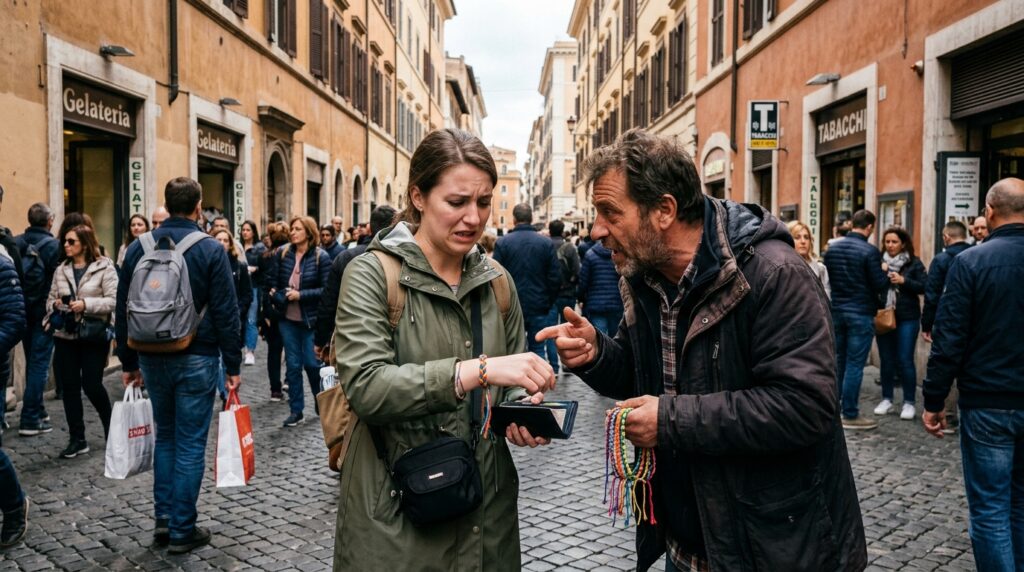
In Rome, Barcelona, Paris, and other major tourist destinations, street vendors have perfected elaborate scams:
The Bracelet Scam: A vendor approaches and quickly ties a “free” bracelet on your wrist before you can refuse. Once it’s on, they demand payment (€5-20) and become aggressive if you refuse.
The Petition Distraction: Someone asks you to sign a petition for a “charity.” While you’re distracted signing, an accomplice picks your pocket or bag.
The Rose/Gift Scam: Someone “gives” you a rose or small gift, then demands payment. If you refuse, they become hostile or claim you stole from them.
Defense Tactics:
- Keep walking and don’t make eye contact
- Keep your hands visible and away from your body
- Never let anyone touch you or your belongings
- Say “No, thank you” firmly in the local language
- Move toward crowds or police if harassed
Fake Tour Guides
Fake tour guides pretend to be official, selling overpriced “VIP access” to attractions. Once you pay, they disappear or give you a useless ticket that won’t even get you in. This is common at the Colosseum in Rome, the Louvre in Paris, and the Alhambra in Granada.
Protection:
- Only book through official attraction websites
- Use verified platforms like Viator or GetYourGuide
- Check for official guide badges and credentials
- Never buy tickets from people on the street
Your Action Plan: How to Avoid Travel Scams
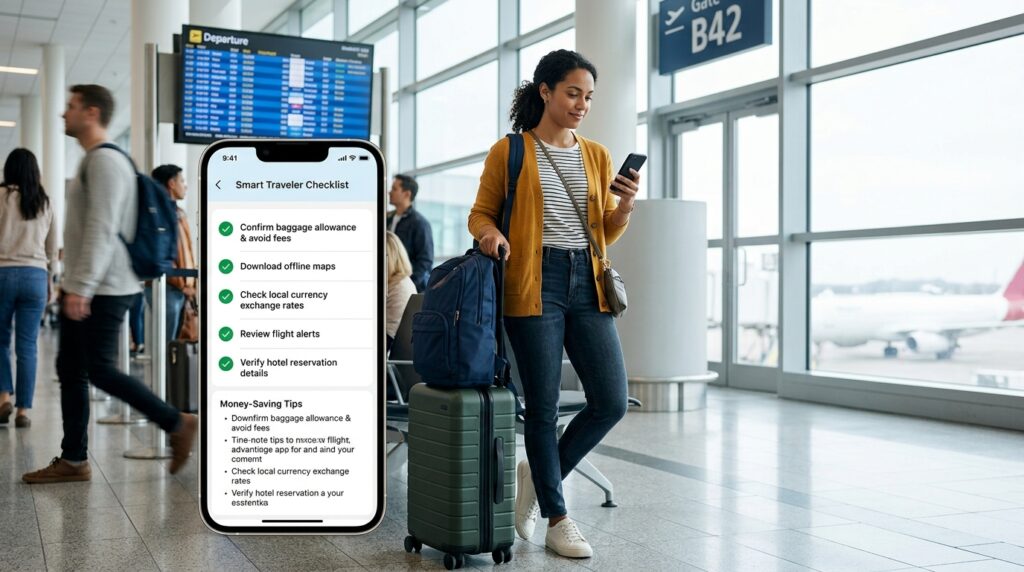
The best way to avoid travel scams is to stay informed and prepared. Here’s your comprehensive action plan:
Before You Book
For Flights:
- Always check what’s included in the base fare
- Use Google Flights or ITA Matrix to see full pricing
- Compare budget airlines vs. traditional carriers with baggage included
- Read the fare rules carefully—especially change and cancellation policies
- Book directly with airlines when possible (easier to resolve issues)
For Hotels:
- Search for “resort fee” in reviews before booking
- Use booking sites that show total prices upfront (like Booking.com’s “total price” filter)
- Call the hotel directly and ask about all mandatory fees
- Join loyalty programs for fee waivers
- Consider alternative accommodations (vacation rentals, hostels, boutique hotels)
At Your Destination
Transportation:
- Download local ride-sharing apps before you arrive
- Research official taxi rates and flat fees
- Use public transportation when safe and practical
- Never accept rides from unsolicited offers
Dining:
- Walk away from tourist traps (3+ blocks minimum)
- Check menus posted outside for prices
- Look for places filled with locals
- Ask your hotel concierge for authentic recommendations
- Avoid restaurants with “tourist menus” in multiple languages
Shopping & Services:
- Research fair prices before buying souvenirs
- Haggle respectfully where appropriate
- Never hand over money until you have the product
- Use ATMs inside banks, not on the street
- Decline dynamic currency conversion (always pay in local currency)
When Scammed: Fight Back
Challenge Hidden Fees: Many hotels will remove resort fees or other charges if you politely complain at checkout. Mention that the fee wasn’t clearly disclosed during booking.
Document Everything: Take photos of unexpected charges, save emails, record conversations (where legal), and keep all receipts.
File Complaints:
- Airlines: Department of Transportation (US), CAA (UK), EASA (Europe)
- Hotels: Better Business Bureau, state attorney general, FTC
- Credit Card Disputes: Challenge unauthorized or undisclosed charges
- Review Sites: Post detailed reviews on TripAdvisor, Google, Yelp
Join Class Actions: Some hidden fee lawsuits have resulted in millions in refunds. Search for ongoing litigation related to your airline or hotel.
The Bottom Line: Travel Smart, Not Sorry
The travel industry’s hidden fee epidemic isn’t going away anytime soon. But armed with knowledge, you can protect yourself and keep more money where it belongs—in your pocket.
Remember: If a deal seems too good to be true, it probably is. Always read the fine print. Always check reviews. Always ask about fees before you commit. And never be afraid to walk away or complain when you’re being taken advantage of.
Your dream vacation shouldn’t become a financial nightmare. By following these strategies, you’ll not only save money but also reduce stress and enjoy your travels more. After all, the best travel memories aren’t about how much you spent—they’re about the experiences you had.
Ready to travel smarter? Share this guide with fellow travelers, bookmark it for your next trip, and join the movement to make the travel industry more transparent and fair for everyone.