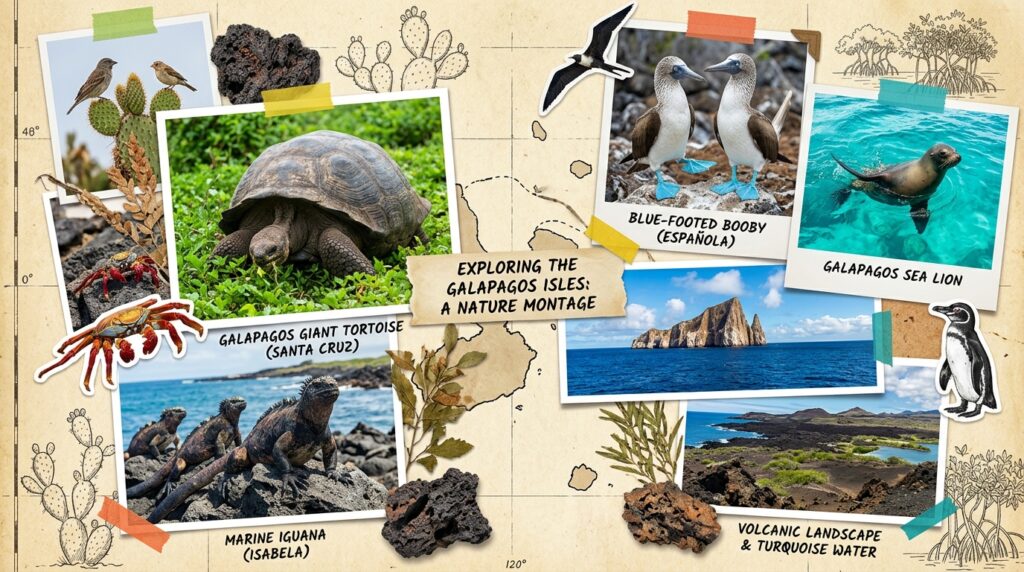

Stepping onto the Galapagos Islands feels like entering a living museum where nature reigns supreme. Located approximately 600 miles off Ecuador’s Pacific coast, this remote volcanic archipelago stands as one of Earth’s most pristine and biodiverse destinations. These legendary islands, which inspired Charles Darwin’s groundbreaking theory of evolution, continue to captivate adventurers, researchers, and nature enthusiasts eager to witness untouched ecosystems and extraordinary wildlife in their natural environment.
10. Volcanic Landscapes That Redefine Earth’s Beauty
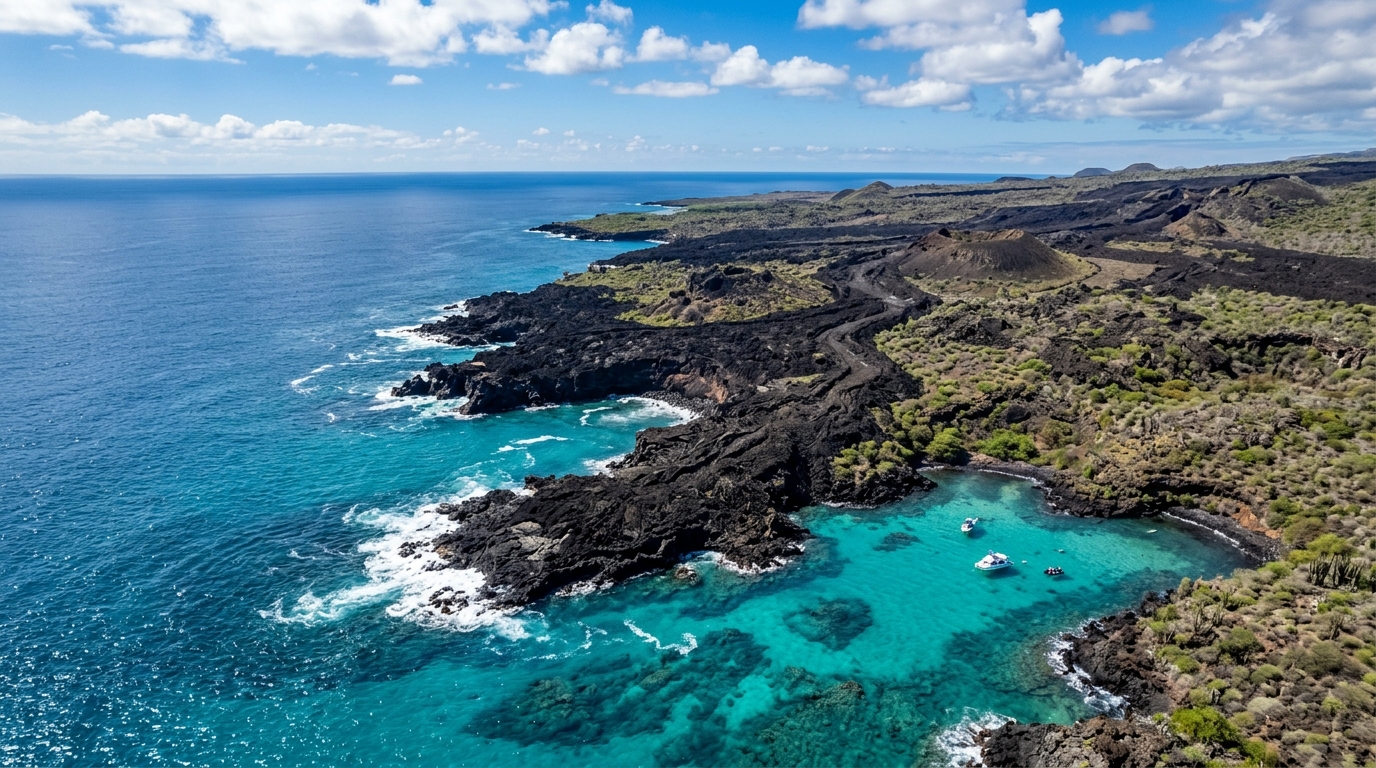
Your first impression upon arriving will be the otherworldly terrain that surrounds you. The Galapagos showcases raw volcanic power in its most spectacular form. Each island in this chain emerged from volcanic activity, creating a geographical mosaic unlike anything else on the planet. From the obsidian-black lava fields of Santiago Island to the massive Sierra Negra volcano crater on Isabela Island, these landscapes narrate geological stories spanning millions of years.
Trekking across cooled lava formations feels like walking on an alien planet—one sculpted by fire and time. Pinnacle Rock on Bartolomé Island, arguably the most iconic geological formation in the archipelago, rises dramatically above crystal-clear turquoise waters, serving as a powerful reminder of the volcanic forces that birthed this remarkable island chain.

9. Multicolored Beaches That Team with Life
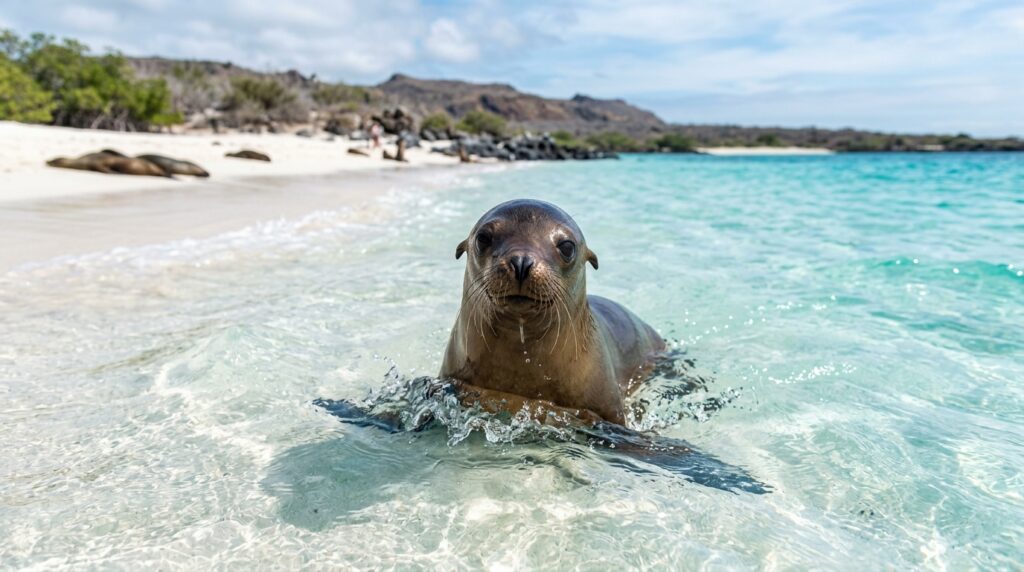
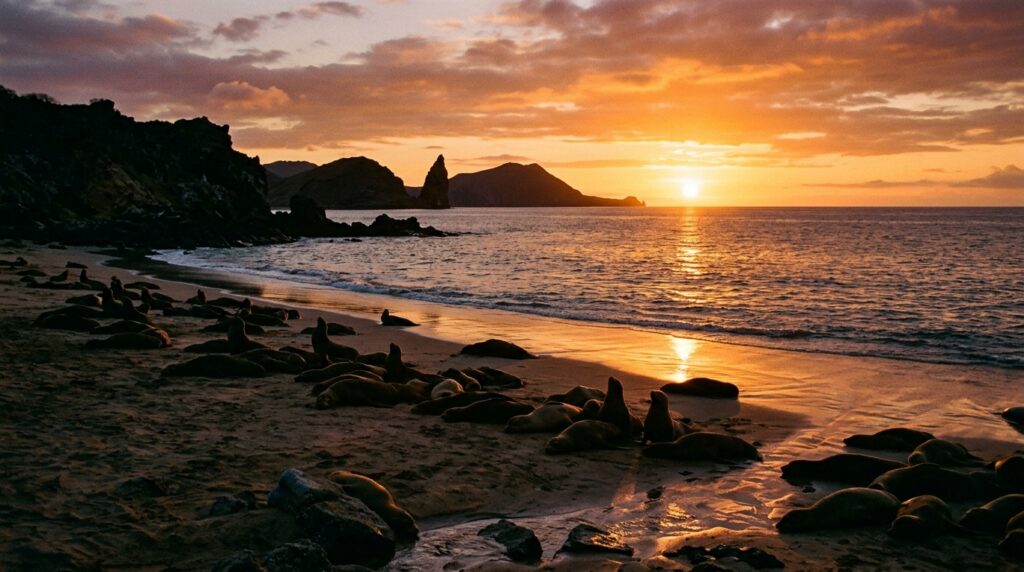
Beyond the dramatic volcanic rock formations lie beaches that defy conventional expectations. Imagine shores of crimson red, olive green, jet black, and pristine white sand—each carrying its own unique character and ecological story. At Gardner Bay on Española Island, brilliant white sand stretches alongside relaxed sea lions basking in the equatorial sun.
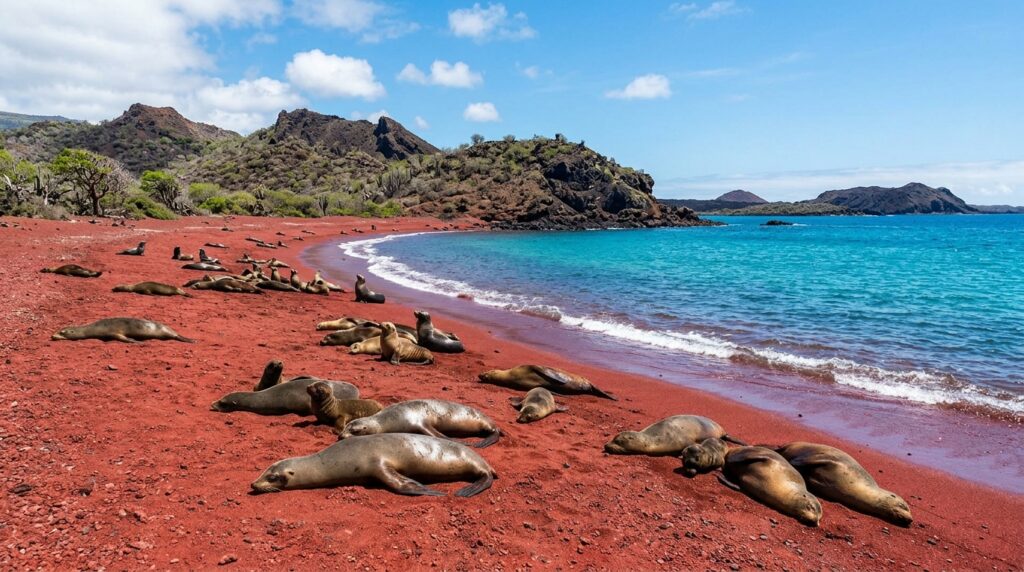
Rábida Island astonishes visitors with its striking red sand beaches, created by oxidized iron deposits in the volcanic soil. Then there’s the remarkable olive-green beach on Floreana Island, colored by microscopic olivine crystals washed ashore over millennia. These beaches serve as far more than picturesque backdrops—they function as vital ecological hubs where diverse life forms converge and thrive.
8. Snorkeling in a Real-Life Aquarium
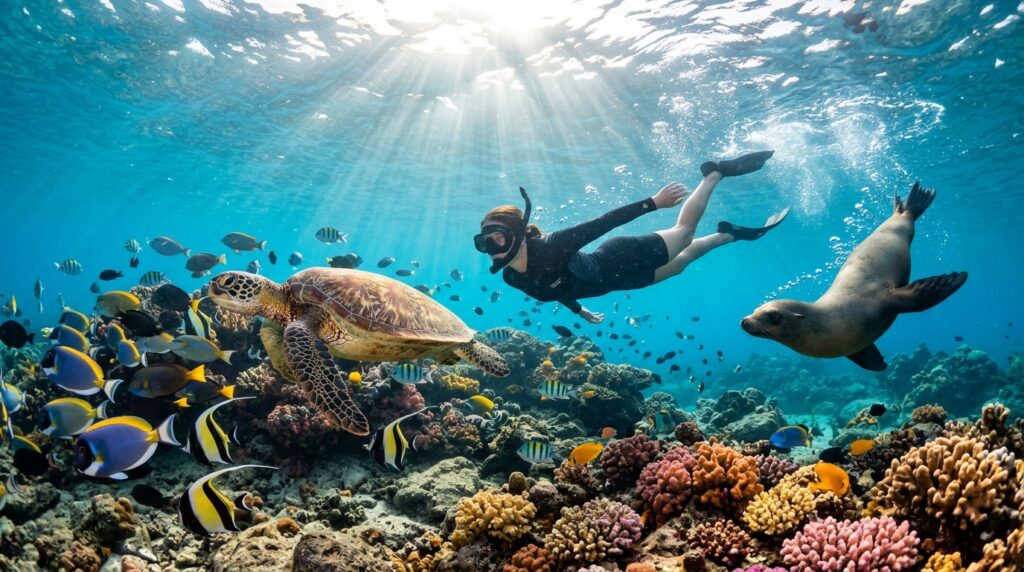
For countless travelers, snorkeling in the Galapagos represents the defining moment of their entire journey. Beneath the surface lies an even more vibrant ecosystem than what exists on land. The convergence of warm tropical and cold nutrient-rich ocean currents creates an explosion of marine biodiversity that transforms the waters into a living aquarium.
You’ll glide alongside ancient sea turtles that appear prehistoric, swim within mesmerizing schools of shimmering tropical fish that move in perfect unison, and encounter playful sea lions that twirl and tumble around you with curious enthusiasm. Galapagos penguins—the only penguins found north of the equator—dart past like underwater rockets. At renowned locations like Kicker Rock (León Dormido) or Devil’s Crown, snorkeling transcends into an almost spiritual experience where the thrill of observing a reef shark glide beneath you matches the profound serenity of drifting weightlessly in the deep blue.
7. Guided Adventures That Enlighten and Inspire
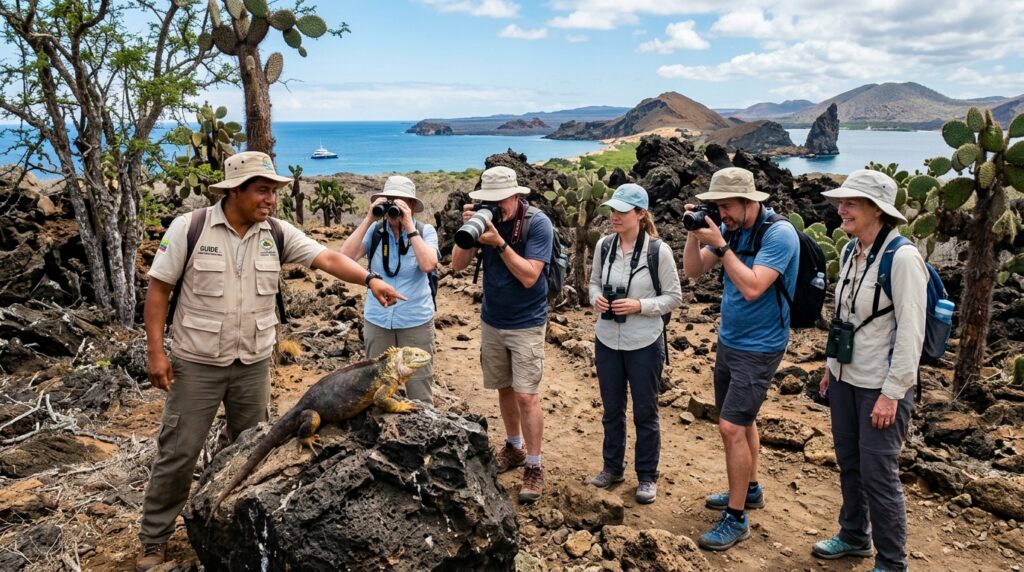
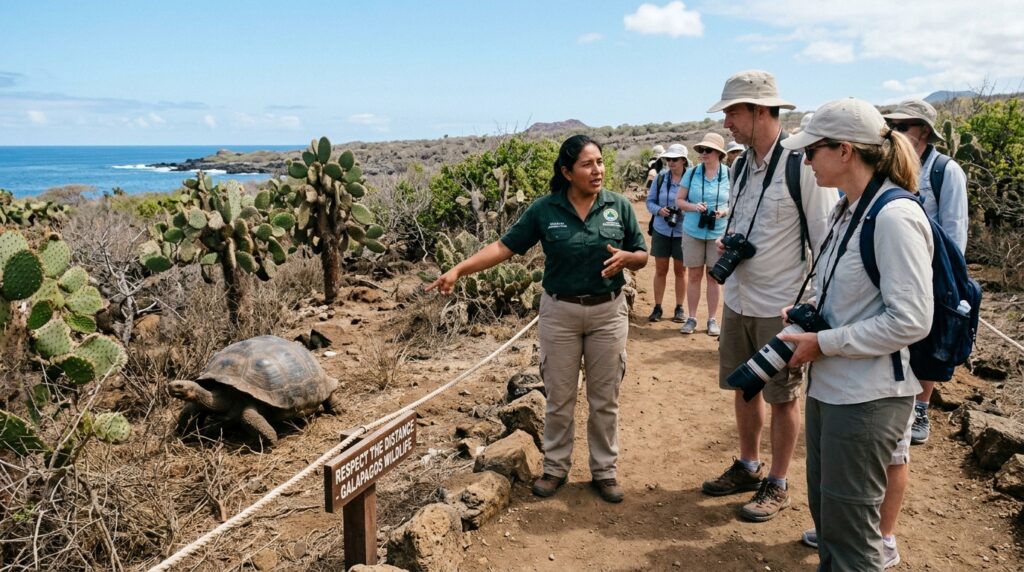
Unlike most travel destinations, exploring the Galapagos isn’t about wandering independently—it’s about guided discovery. Every visitor must explore the islands with a certified naturalist guide, and this requirement forms part of what makes the experience so profoundly educational and meaningful.
These expert guides don’t merely point out animals; they illuminate the evolutionary narratives behind each species. You’ll discover how Darwin’s finches inspired the theory of natural selection, understand why certain birds lost their ability to fly over generations, and learn about the unique adaptations that allowed species to survive in isolation. The guides also speak candidly about the conservation challenges the islands face—from invasive species to climate change—and explain how ongoing conservation efforts work to protect this fragile paradise.
Each hike, boat excursion, and snorkeling adventure transforms into a living lesson in biology, ecology, and the delicate balance that sustains life on these remote islands.
6. The Majestic Marine Iguanas
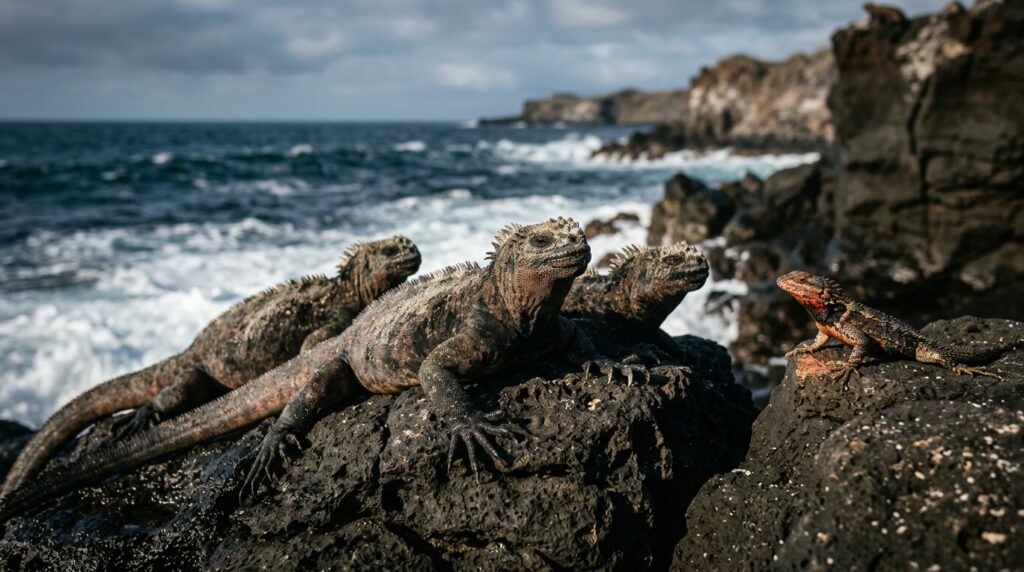
One of the most unforgettable creatures you’ll encounter is the marine iguana—the only lizard in the world that has adapted to life in the sea. Found nowhere else on Earth, these remarkable reptiles resemble living relics from the age of dinosaurs. With their spiny backs, powerful claws, and specialized salt-excreting noses, they look more like mythical dragons than lizards.
During daylight hours, you’ll find them basking on dark lava rocks, often piled together in communal heaps as they absorb the equatorial sun before returning to the cold ocean to graze on algae. These fascinating creatures scatter across beaches and boardwalks throughout the islands, remarkably indifferent to human presence—a testament to their lack of natural predators and the protected status of their habitat.
5. Birds That Will Make You Rethink Evolution
The avian life of the Galapagos proves extraordinary, not only for its remarkable diversity but for the unique behaviors exhibited by its feathered inhabitants. Unlike birds in most regions worldwide, Galapagos species display no natural fear of humans, offering unprecedented close-up observations.
You can sit just feet away from a nesting blue-footed booby as it feeds its chick, or witness the elaborate courtship rituals of the magnificent waved albatross. Darwin’s finches—the famous poster children of evolutionary theory—flit from branch to branch, each species sporting a beak precisely tailored to its specific food source. Then there’s the flightless cormorant, whose wings have shrunk over countless generations because flight became unnecessary in this predator-free environment.

4. Sea Lions: The Playful Locals
If one animal captures the joyful spirit of the Galapagos, it’s undoubtedly the Galapagos sea lion. These charismatic creatures are everywhere—lounging on beaches, perched on piers, and even draped over park benches in Puerto Ayora like lazy sunbathers enjoying the equatorial warmth.
Their naturally curious nature makes them perfect companions for snorkelers and swimmers. In the water, they’ll approach with playful enthusiasm, mimicking your movements with graceful twists and flips. Young sea lions prove especially eager to interact, and encounters with them feel more like playful games than traditional wildlife viewing.
On land, they form tight-knit colonies where you can observe fascinating social dynamics unfold: mothers nursing their pups, dominant males patrolling their territory, and the occasional spirited dispute over a favorite sunbathing spot.
3. Walking Among Giants: The Tortoise Experience
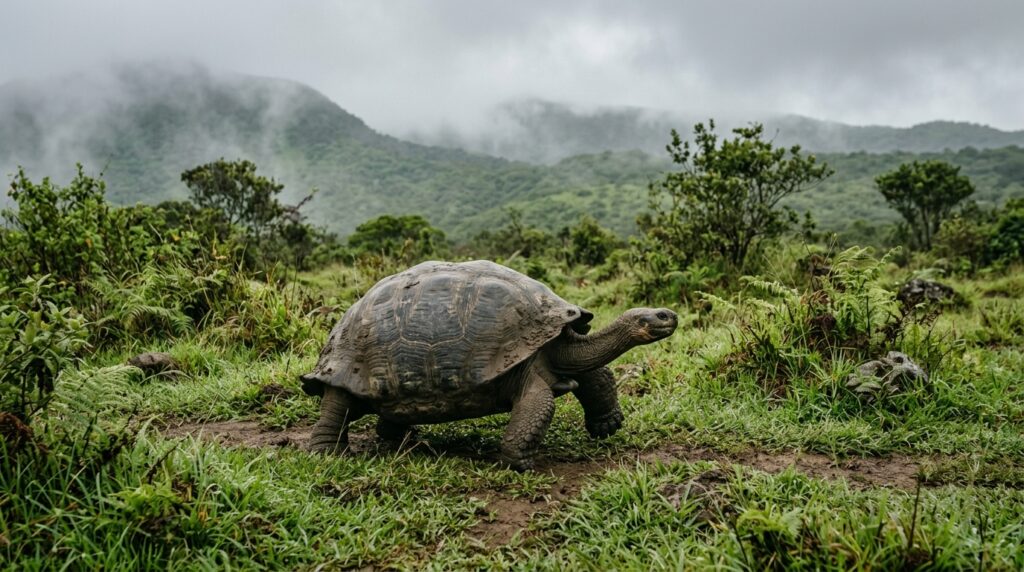
Nothing quite prepares you for your first glimpse of a Galapagos giant tortoise. These ancient reptiles can live well over 100 years and weigh up to 500 pounds. Watching one slowly make its way through the highland grasslands of Santa Cruz or Isabela feels like witnessing a living piece of history.
Their eyes appear calm and wise, almost dinosaur-like, and their movements, though deliberately slow, possess a grace that suggests both patience and immense power. Some tortoises reside in protected reserves while others roam freely in the wild highlands. You’ll also learn about species that faced near-extinction and the remarkable conservation efforts working to restore their populations—most famously through the story of Lonesome George, the last of his particular subspecies.
2. A Rare Opportunity to Disconnect from the Modern World
What makes the Galapagos even more magical is what it lacks. You won’t find skyscrapers, billboards, or bustling highways here. Internet connectivity remains spotty, and cell service is limited across most islands. But in place of constant digital connectivity, you gain something far more valuable: a genuine connection with nature.
You’ll wake with the sunrise and fall asleep to the rhythmic sound of waves crashing against volcanic shores. Your days fill with meaningful encounters—with remarkable animals, knowledgeable guides, and fellow travelers who share your appreciation for the natural world. This digital detox allows for a level of presence and mindfulness that proves increasingly rare in our hyperconnected age.
1. A Life-Changing Journey That Stays With You Forever
Ultimately, what truly defines a visit to the Galapagos Islands is how deeply the experience embeds itself in your memory and consciousness. These islands are not merely beautiful—they are sacred in their own unique way. They remind us of what the world once was and what it could still become. They demonstrate that peaceful coexistence is possible, that animals need not fear humans, and that we possess the power to protect what truly matters.
Whether it’s the curious eyes of a sea lion pup, the flapping wings of a dancing booby performing its courtship ritual, or the slow, deliberate crawl of a century-old tortoise, every memory from the Galapagos feels more like a precious gift than a simple sightseeing opportunity.
Planning Your Galapagos Adventure
Best Time to Visit
The Galapagos Islands enjoy a subtropical climate year-round, making them accessible in any season. The warm season runs from December through May, featuring calmer seas, warmer water temperatures ideal for snorkeling, and occasional tropical showers that bring lush vegetation to life. This period proves perfect for swimming and seeing nesting sea turtles.
The cool, dry season from June through November brings nutrient-rich waters that attract abundant marine life, including whales and whale sharks. While seas can be rougher and water temperatures cooler, this season offers exceptional wildlife viewing opportunities, particularly for bird watchers as many species begin their breeding cycles.
Getting There and Transportation
Reaching the Galapagos requires flying into Ecuador’s mainland cities of Quito or Guayaquil, then connecting to one of two Galapagos airports: Seymour Airport on Baltra Island or San Cristóbal Airport. The flight from the mainland takes approximately 90 minutes.
Once in the islands, transportation between islands occurs via small aircraft, speedboats, or multi-day cruise vessels. Most visitors choose organized tours that handle all inter-island logistics. On individual islands, buses, taxis, and pickup trucks serve as the primary transportation methods.
Where to Stay
Accommodation options range from budget-friendly hostels in Puerto Ayora, Puerto Baquerizo Moreno, and Puerto Villamil to luxury eco-lodges and expedition cruises. Staying on inhabited islands allows for more flexible, independent exploration, while liveaboard cruises provide access to more remote visitor sites and maximize your time in the archipelago.
What to Eat
Galapagos cuisine features fresh seafood caught daily, including ceviche, grilled fish, and lobster (in season). Local specialties include “encebollado” (fish soup), “patacones” (fried plantains), and fresh tropical fruits like mango, papaya, and passion fruit. Most restaurants source ingredients from the mainland, though farm-to-table dining is growing in popularity on the islands.
Essential Packing List
- Lightweight, quick-dry clothing
- Sturdy hiking shoes or boots
- Water shoes for beach landings
- High-SPF reef-safe sunscreen
- Binoculars for wildlife viewing
- Waterproof camera or housing
- Light rain jacket
- Motion sickness medication if prone to seasickness
- Cash (USD is Ecuador’s currency) as ATMs are limited
Conservation and Responsible Tourism
The Galapagos National Park requires all visitors to pay an entrance fee (currently $100 for international adults), which funds conservation efforts. Strict regulations protect the fragile ecosystem: maintain a 6-foot distance from wildlife, never touch or feed animals, stay on marked trails, don’t bring foreign organic materials to the islands, and always follow your naturalist guide’s instructions.
Your Unforgettable Galapagos Journey Awaits
The Galapagos Islands represent far more than a typical travel destination—they offer a transformative experience that reshapes your understanding of nature, conservation, and our planet’s incredible biodiversity. From volcanic landscapes that tell ancient geological stories to beaches painted in nature’s most unexpected colors, from underwater worlds teeming with life to encounters with creatures found nowhere else on Earth, every moment in the Galapagos creates memories that last a lifetime.
This unique archipelago reminds us of nature’s resilience, evolution’s ingenuity, and the profound importance of conservation. As you plan your journey to this extraordinary corner of the world, remember that you’re not just visiting a destination—you’re stepping into a living laboratory, a sanctuary of biodiversity, and a place where the natural world reigns supreme. The Galapagos Islands await, ready to inspire, educate, and transform you in ways you never imagined possible.