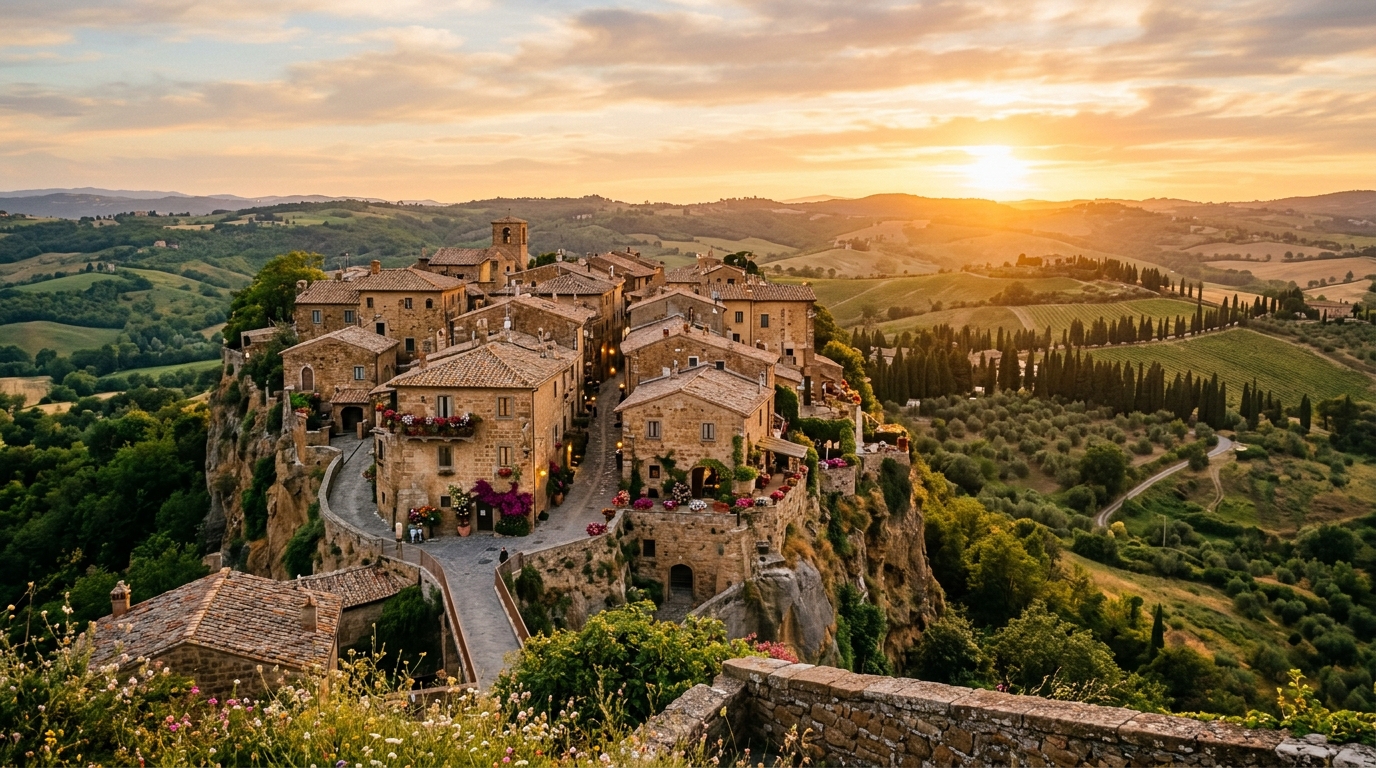

Think you’ve seen all of Italy? Think again. Beyond the headline acts of Rome, Venice, and Florence lies a quieter, more romantic Italy — a mosaic of ancient stone houses, cobblestone lanes, and sun-washed piazzas where the scent of fresh-baked bread and blooming wisteria hangs in the air. These are Italy’s borghi, the small villages where time slows down, where nonna’s recipes still rule the menu, and where every sunset feels like it was painted just for you.
While the famous cities attract millions of visitors each year, the true magic of Italy lives in these hidden gems — places that embody centuries of history, culture, and tradition. Exploring them means immersing yourself in authentic Italian charm, away from the crowds and straight into the heart of the country’s soul. In this guide, we count down the ten most beautiful villages in Italy, from the cliff-top “dying town” of Civita di Bagnoregio to the glamorous harbor of Portofino, complete with practical tips on how to get there, what to eat, how long to stay, and when to go. Grab an espresso — let’s wander.
10. Civita di Bagnoregio — The “Dying Town” of Lazio
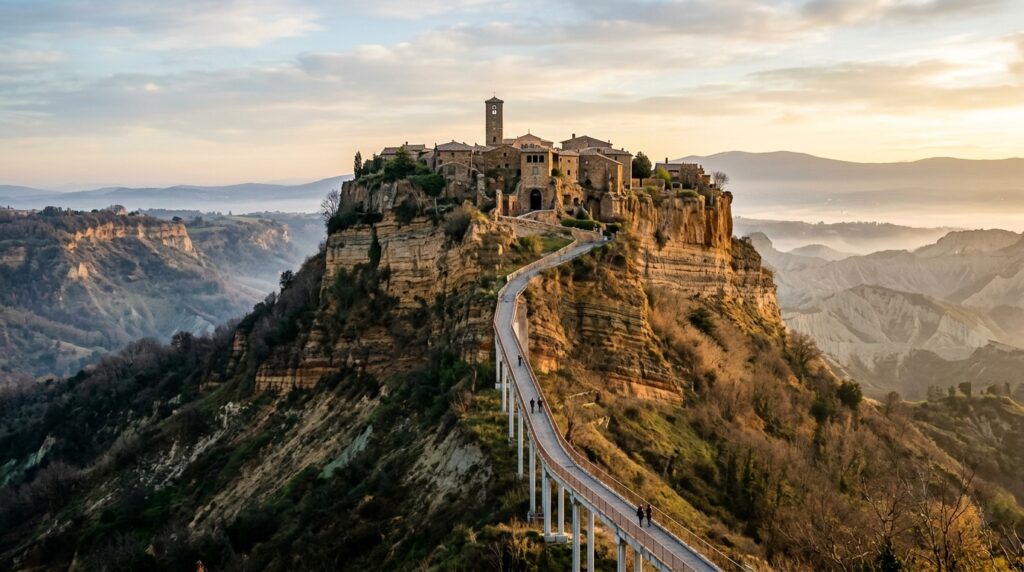
Perched atop a crumbling volcanic plateau in the Lazio region, Civita di Bagnoregio is often called the “dying town” (la città che muore) because the soft tuff rock beneath it has been slowly eroding for centuries. The village is accessible only by a slender footbridge, and the moment you step onto it, you feel like you’re entering a fairy tale — a medieval island floating above a surreal valley of eroded badlands known as the calanchi.
Wander narrow streets lined with charming stone houses draped in geraniums, peek into the tiny church of San Donato on the main piazza, and linger at the belvederes where the views stretch to the horizon. Despite its nickname, Civita is very much alive: a handful of residents keep the village beating, and cozy trattorias serve slow, traditional lunches that make the climb utterly worthwhile.
Don’t miss: Crossing the footbridge right at opening time for crowd-free photos; the golden-hour glow over the badlands.
Eat & drink: Handmade tonnarelli and porchetta in Bagnoregio, paired with a glass of nearby Est! Est!! Est!!! di Montefiascone white wine.
Getting there: Regional train from Rome to Orvieto (about 1 h 20 min), then a local bus or taxi to Bagnoregio (about 20 min); cross the footbridge on foot (about 10 min).
Time needed: 3–4 hours as a half-day trip from Rome or Orvieto.
Best season: April–June and September–October; arrive early morning or late afternoon for magical light.
9. Castelmezzano — The Jewel of Basilicata
Hidden among the jagged peaks of the Lucanian Dolomites, Castelmezzano is a stunning village carved into the cliffs themselves, its stone houses stacked like swallows’ nests against a dramatic mountain backdrop. It is one of the most picturesque — and most adrenaline-charged — destinations in all of Italy.
Adventure seekers come for the Volo dell’Angelo (Flight of the Angel), a zip line that launches you from Castelmezzano to the sister village of Pietrapertosa, soaring more than a kilometer over the dolomites at speeds of up to 120 km/h. It’s a minute or so of pure, glorious flight — followed by a gentle wander back through ancient ruins, stairway alleys, and panoramic terraces. Whether you’re enjoying a plate of homemade pasta or simply breathing in the views, Castelmezzano captures the heart.
Don’t miss: The zip line (book ahead in summer); the belvedere behind the church of Santa Maria dell’Olmo; the old stone stairways of the historic center.
Eat & drink: Ferricelli pasta with peperoni cruschi — Basilicata’s beloved sweet dried peppers — and hearty pecorino from the Lucanian hills.
Getting there: Best by car (about 1 h from Potenza, about 2 h from Bari); otherwise train to Potenza plus a local bus.
Time needed: A full day; stay overnight if you want to zip at first light.
Best season: May–September, when the zip line operates.

8. Tellaro — A Secret Escape on the Italian Riviera
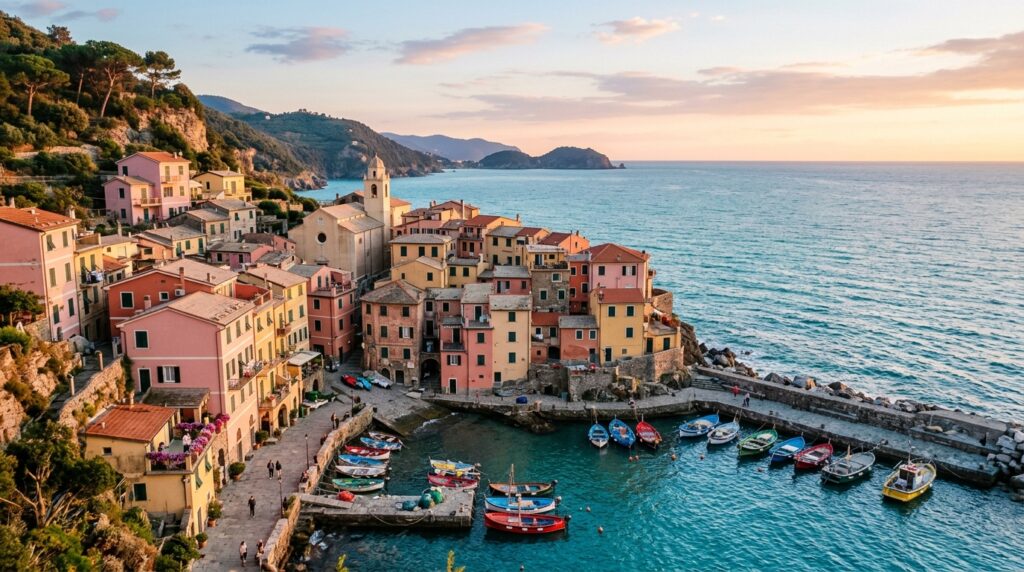
While Cinque Terre attracts countless tourists, Tellaro remains one of the Ligurian coast’s best-kept secrets, tucked into the Gulf of the Poets near Lerici. This pastel-colored fishing village clings to the cliffs above the glistening Mediterranean, its tiny harbor guarded by a pink church that seems to dive straight into the sea.
Winding alleyways, peaceful piazzas, and the gentle slap of waves against the rocks make Tellaro an idyllic retreat for those seeking tranquility. Come in the late afternoon, when the light turns honey-gold and the whole village glows, and you’ll understand why poets and painters have long hidden away here. If you’re looking for a soulful alternative to the crowded hotspots, Tellaro is your hidden paradise.
Don’t miss: Sunset from the sea wall; the scenic coastal footpath from Lerici (about 40 min of pure postcard views).
Eat & drink: Fried anchovies, impepata di cozze (mussels), and trofie al pesto at a harbor trattoria; lemon granita for the walk back.
Getting there: Train to La Spezia, then bus or ferry to Lerici; from Lerici take a local bus or the panoramic walking path to Tellaro.
Time needed: Half a day; stay for sunset and a long seafood dinner.
Best season: April–June and September, when the light is soft and the lanes are quiet.
7. Pitigliano — The “Little Jerusalem” of Tuscany
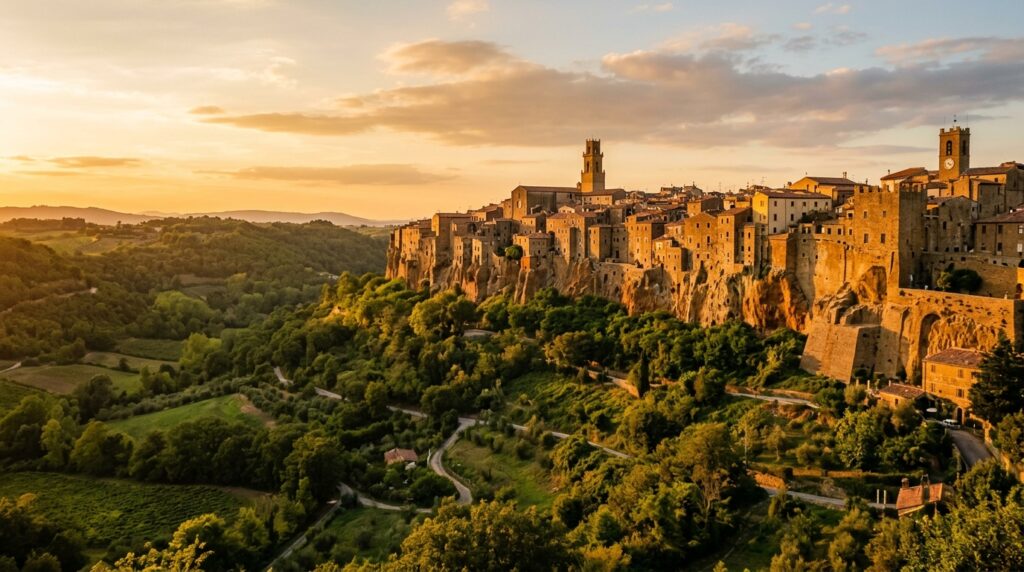
Built atop a volcanic tuff cliff in southern Tuscany’s Maremma, Pitigliano is a golden-hued vision of houses that seem to grow straight out of the rock. Thanks to its centuries-old Jewish heritage, historic synagogue, and preserved Jewish quarter, the village earned the nickname “Little Jerusalem” — a testament to its rich cultural history.
But beyond its past, Pitigliano enchants with labyrinthine streets, panoramic terraces over the Lente valley, and the vie cave — mysterious Etruscan sunken roads carved deep into the stone just outside town. At sunset, the village’s tuff buildings glow amber, making it one of Tuscany’s most captivating sights.
Don’t miss: The synagogue and Jewish quarter; the Orsini Fortress; the San Giuseppe via cava; the classic postcard view from the bridge on the road into town.
Eat & drink: A glass of crisp Bianco di Pitigliano DOC wine, schiacciata flatbread, and the honey-and-nut sfratto sweet.
Getting there: By car about 2 h from Rome; by public transport, bus from Orbetello or Albegna station.
Time needed: Half a day; combine with neighboring Sovana and Sorano for a full “Tuff Area” day.
Best season: Spring and autumn; sunset is the golden hour.
6. Monte Isola — The Car-Free Island Village of Lake Iseo
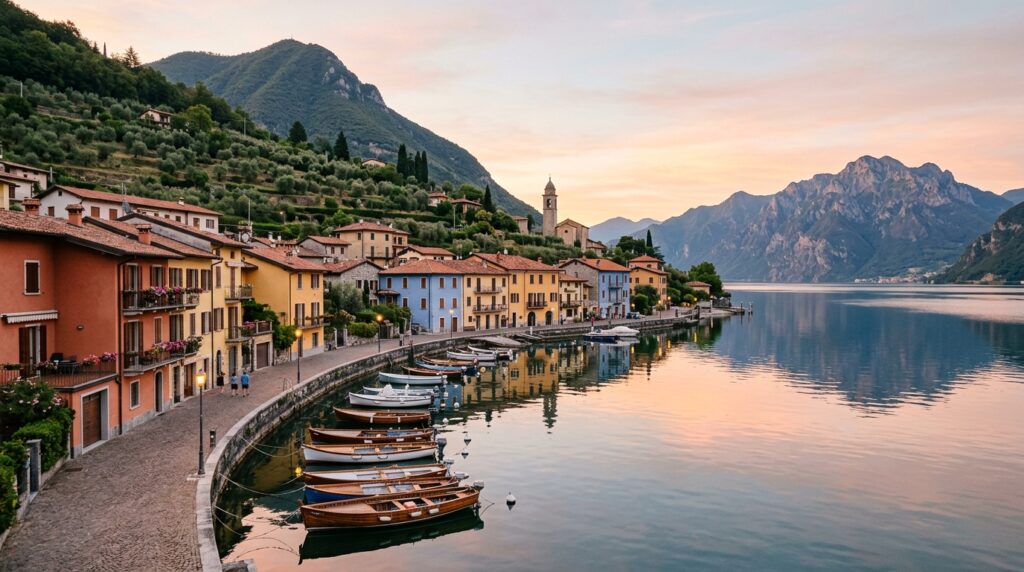
Floating in the middle of Lake Iseo in Lombardy, Monte Isola is Italy’s largest lake island — and a hidden gem few international travelers know about. With no cars allowed, the village offers a peaceful, timeless atmosphere where bicycles, boats, and your own two feet are the primary modes of transport.
Narrow streets climb through olive groves and fishing hamlets up to the Sanctuary of Madonna della Ceriola, perched at the island’s highest point with sweeping views over the lake and mountains. Down at the water’s edge, charming waterfront cafés in Peschiera Maraglio and Sensole invite you to slow down with a spritz and a plate of lake fish. Monte Isola is a dream for lovers of slow travel — a slice of authentic Italian life surrounded by water and peaks.
Don’t miss: Cycling the island’s roughly 9 km loop (about 1.5–2 h); the pilgrimage walk to the sanctuary; a sunset aperitivo on the lakeside promenade.
Eat & drink: Grilled perch and the island’s famous dried sardines (a Slow Food presidium), served with polenta.
Getting there: Train to Brescia or directly to Sulzano; ferry from Sulzano to Peschiera Maraglio (about 10 min).
Time needed: One relaxed full day; rent a bike upon arrival.
Best season: May–September; autumn brings mirror-calm lake colors.
5. San Gimignano — The Medieval Town of Towers
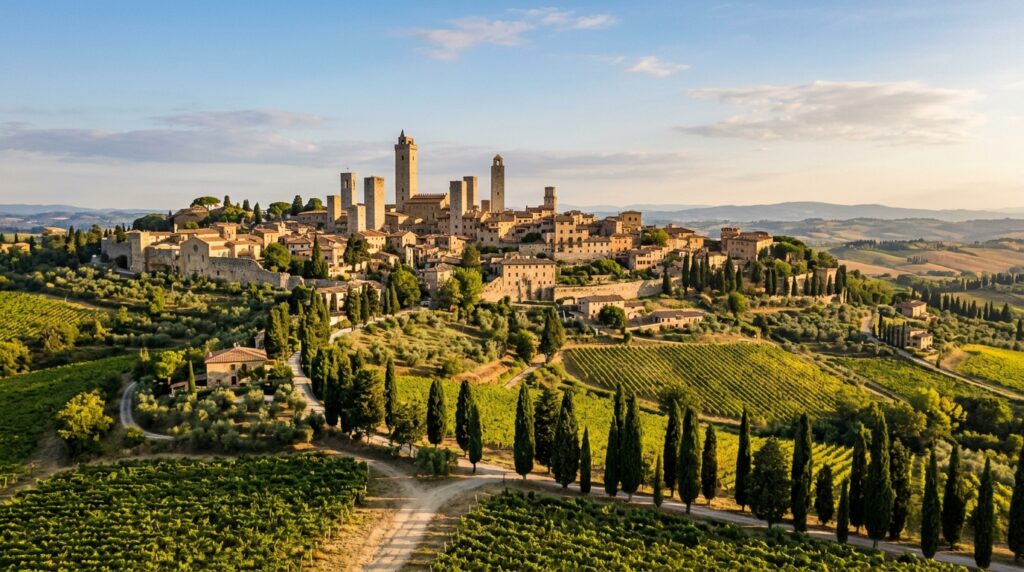
Tuscany is home to many beautiful villages, but San Gimignano stands apart with its unmistakable medieval skyline. Known as the “Town of Towers,” this UNESCO-listed village was once home to 72 towers; today 13 remain, rising dramatically against the rolling hills like a Manhattan of the Middle Ages.
Walking through its ancient gates feels like stepping onto a medieval film set — charming piazzas, artisan workshops, and the scent of waffle cones drifting across Piazza della Cisterna. Climb the Torre Grossa for sweeping views of the Tuscan countryside, then join the friendly debate over which gelato flavor deserves the crown.
Don’t miss: The Torre Grossa climb; Piazza della Cisterna at golden hour; the frescoed Collegiate Church; an evening stroll after the day-trippers leave.
Eat & drink: Saffron risotto (the town’s prized zafferano), Vernaccia di San Gimignano white wine, and a world-famous gelato on the piazza.
Getting there: By car about 1 h from Florence or Siena; by public transport, train to Poggibonsi plus bus (about 25 min).
Time needed: Half to full day; stay overnight for the magical, crowd-free evening.
Best season: April–June and September–October; arrive before 10 am to beat the crowds.
4. Alberobello — The Fairy-Tale Village of the Trulli
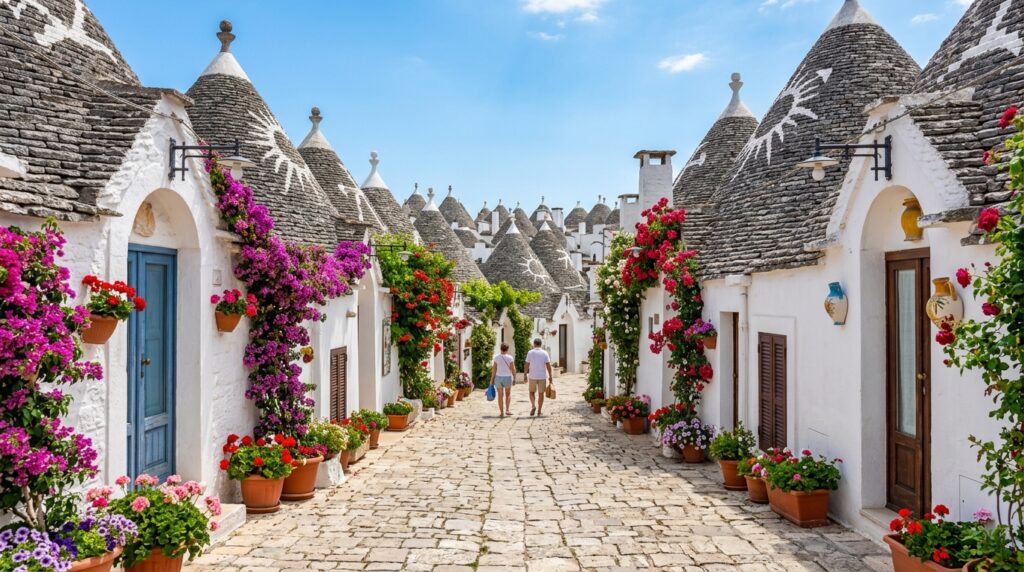
Deep in Puglia’s Itria Valley, Alberobello looks like a storybook illustration come to life: more than 1,500 whitewashed trulli, the iconic cone-shaped stone houses built without mortar, topped with gray stone pinnacles and mysterious painted symbols. These ancient dwellings have stood for centuries and today form a UNESCO World Heritage Site.
Strolling the winding streets of Rione Monti feels like walking through a magical village — charming courtyards, flower-filled balconies, and artisan shops selling olive wood and hand-woven baskets. For the full fairy tale, spend the night in a trullo turned guesthouse; waking up inside one of Italy’s most distinctive dwellings is an unforgettable experience.
Don’t miss: Trullo Sovrano (the largest, two-story trullo); the panoramic terrace behind the Church of Sant’Antonio; an overnight stay in a trullo.
Eat & drink: Orecchiette with turnip tops, focaccia barese, and a sweet pasticciotto custard tart with your coffee.
Getting there: By car about 1 h from Bari; or the charming Ferrovie del Sud Est railway from Bari Centrale (about 1.5–2 h).
Time needed: Half a day for the village; overnight to enjoy it after the tour buses leave.
Best season: April–June and September–October, when the olive groves glow.
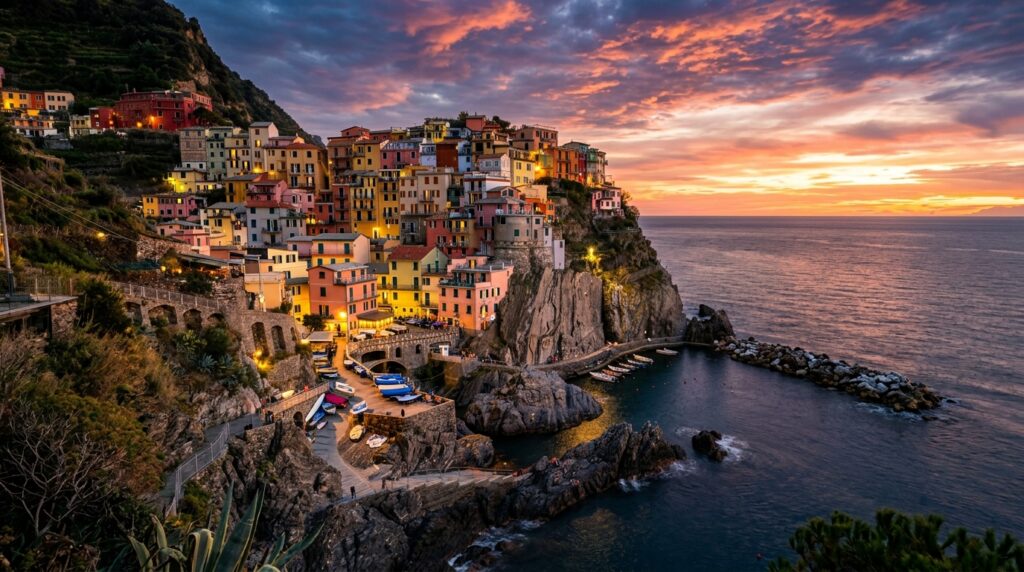
3. Manarola — The Most Colorful Village of Cinque Terre
Cinque Terre is famous worldwide, but among its five villages, Manarola is the one that steals hearts. Nestled on a steep hillside overlooking the Ligurian Sea, it’s a postcard-perfect cascade of ochre, rose, and terracotta houses stacked upon one another, with narrow alleys leading to breathtaking viewpoints and fishing boats bobbing in the tiny harbor.
Vineyards cling to the terraced cliffs, and hiking the Via dell’Amore — the scenic coastal path connecting Manarola to Riomaggiore — offers some of the most stunning views in all of Italy. As the sun sets and the village lights up, the beauty of Manarola becomes truly mesmerizing.
Don’t miss: The classic sunset viewpoint on the Punta Bonfiglio path; the Via dell’Amore coastal walk (check current access before your trip); seeing the village from the sea on a boat ride.
Eat & drink: Trofie al pesto, fried anchovies, and a glass of sweet sciacchetrà dessert wine.
Getting there: Leave the car behind — the Cinque Terre Express links Manarola with La Spezia and the other villages in minutes; park in La Spezia if driving.
Time needed: Half a day minimum; stay overnight for the sunset and starlit harbor.
Best season: April–May and September–October for mild light and thinner crowds.
2. Matera — The Ancient Cave City
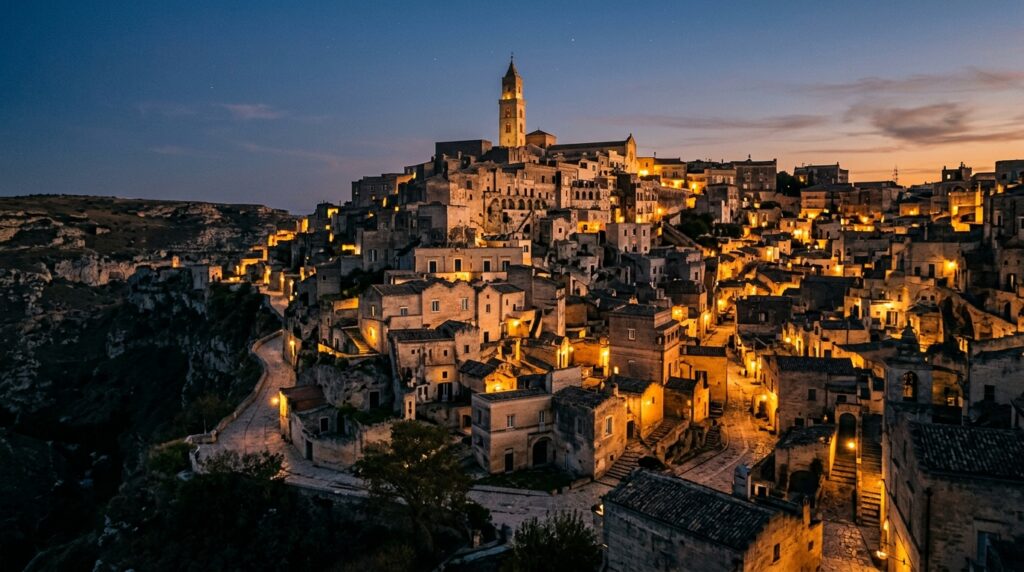
Matera is one of the oldest continuously inhabited settlements in the world, with origins dating back more than 9,000 years. The village is famous for its sassi — ancient cave dwellings carved into the limestone cliffs — creating a breathtaking, surreal amphitheater of honey-colored stone that has earned UNESCO World Heritage status and starred in films including The Passion of the Christ.
Today, many of these caves have been transformed into boutique hotels, candlelit restaurants, and museums, offering you the chance to sleep inside history itself. Wander the labyrinth of stairways and rock-hewn churches by day, then return after dark, when the sassi glow like a sky full of fallen stars — an unforgettable experience.
Don’t miss: A night in a cave hotel; the Casa Grotta furnished cave house; the view from Belvedere di Murgia Timone across the gorge; an evening passeggiata through Sasso Caveoso.
Eat & drink: Pane di Matera IGP bread, cialledda (bread and vegetable salad), and crapiata legume soup.
Getting there: Fly into Bari, then train or bus to Matera (about 1.5 h); the station is a short walk from the historic center.
Time needed: 1–2 nights — the village is at its most magical after dark.
Best season: March–May and October; summers are hot on the stone.
1. Portofino — The Crown Jewel of the Italian Riviera
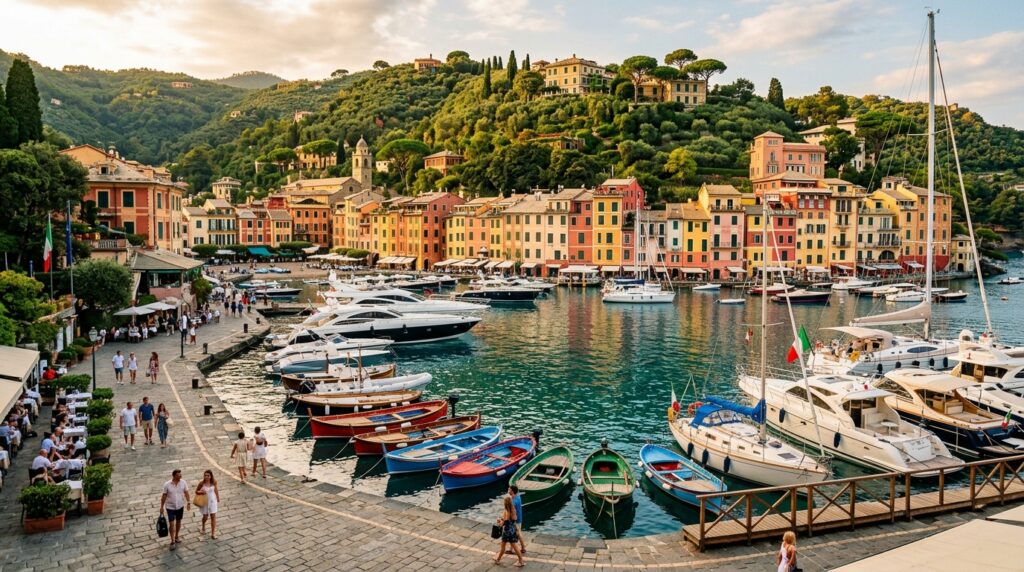
Topping the list is Portofino, the most glamorous village in Italy. Located on the Ligurian coast, this jewel-box fishing village is a haven for luxury travelers, celebrities, and yachting enthusiasts — yet it has never lost its soul. Pastel-colored houses fold around a picture-perfect harbor, lush greenery rises behind, and life still revolves around a morning espresso in the iconic Piazzetta.
Despite its popularity, Portofino retains its charm: hidden hiking trails wind through the Regional Natural Park to the Abbey of San Fruttuoso, secluded pebble beaches like Paraggi invite a swim, and 16th-century Castello Brown watches over it all. Whether you’re exploring the castle, sipping espresso, or simply admiring the view, Portofino is the ultimate Italian dream come to life.
Don’t miss: Espresso in the Piazzetta; the harborfront at sunrise; the trail up to Castello Brown (about 20 min); a ferry to San Fruttuoso.
Eat & drink: Grilled Ligurian catch, trofie al pesto, and focaccia col formaggio from nearby Recco.
Getting there: Train to Santa Margherita Ligure, then a 15-minute bus, scenic ferry, or waterfront walk; driving is possible but parking is limited and pricey — the ferry is the fun part anyway.
Time needed: A day trip from Genoa or Santa Margherita; overnight for the harbor at dusk.
Best season: May–June and September for warm seas and thinner crowds.
How to Plan It: A Village-Hopping Itinerary
Days 1–2 — Rome & the Dying Town: Arrive in Rome, then day-trip to Civita di Bagnoregio. Cross the footbridge early, wander the lanes, and linger over a long lunch before sunset on the badlands.
Day 3 — The Tuff Area: Pick up a rental car and drive to Pitigliano. Explore the synagogue, the Jewish quarter, and the Etruscan vie cave, then sleep in a tuff-stone guesthouse.
Day 4 — Medieval Tuscany: Drive north to San Gimignano (about 2 h). Climb Torre Grossa, browse artisan shops, and claim your gelato trophy at sunset; overnight at a countryside agriturismo.
Day 5 — The Colorful Coast: Drop the car and take the train to La Spezia. Base yourself in Manarola and catch the sunset from Punta Bonfiglio.
Day 6 — Gulf of the Poets: Morning in Tellaro via Lerici — swim off the rocks, lunch on fried anchovies — then an easy evening on the waterfront at Lerici.
Day 7 — The Glam Finale: Head to Santa Margherita Ligure and ferry into Portofino for the perfect final afternoon: castle, espresso, harbor glow.
Southern extension (add 4–5 days): A Monte Isola day trip from Milan or Bergamo, then fly or rail to Bari for Matera (one night), the Flight of the Angel at Castelmezzano (one day), and a trullo sleepover in Alberobello (one night).
Transportation Tips for Village Hopping
- Rent a car for the hill villages — Civita di Bagnoregio, Pitigliano, Castelmezzano, and Alberobello are far easier with wheels. Book an automatic early if you don’t enjoy manual gearboxes on hairpin roads.
- Respect ZTL zones. Many historic centers have limited-traffic cameras; park outside the walls and walk in. Your wallet will thank you.
- Trains shine on the coast. The Cinque Terre Express hops between villages in minutes, and regional lines serve Santa Margherita Ligure (for Portofino) and La Spezia (for Lerici and Tellaro).
- Ferries are the most scenic “roads” in this guide: Sulzano to Monte Isola, Santa Margherita to Portofino, and Lerici to Tellaro in season.
- Validate regional tickets before boarding, and always double-check timetables. A quick note: flight routes, train schedules, entry fees, and trail access (like the Via dell’Amore) can change over time, so confirm details shortly before you travel.
Weather & the Best Time to Go
- Spring (April–June): Wildflowers, mild 18–26°C days, and villages at their freshest — the overall sweet spot.
- Summer (July–August): Hot (30°C+ inland and in the south), lively festivals, but busy coasts. Start early, embrace the midday siesta, and book everything ahead.
- Autumn (September–October): Harvest season, golden light, and a sea that stays warm into September. Perfect for Tuscany and Puglia.
- Winter: Quiet, atmospheric, and deeply authentic — Matera’s glowing stone and misty tuff towns are magical — but some attractions, like the Flight of the Angel, close for the season.
Cultural Highlights & Little Rituals
- Join the passeggiata: The evening stroll is a national ritual. Dress a little nicer than you think you need to and walk slowly — that’s the point.
- Master aperitivo hour: Around 6–7 pm, order a spritz or a glass of Vernaccia and enjoy the small bites that come with it.
- Time your trip with a sagra: Village festivals celebrate everything from cruschi peppers in Basilicata to dried sardines on Monte Isola. They’re the tastiest window into local life.
- Mind the small etiquette: Greet shopkeepers with a warm “buongiorno,” cover shoulders in churches, and know that the coperto on your bill is a standard cover charge, not a scam. Tipping remains optional.
Frequently Asked Questions
What is the most beautiful village in Italy?
Portofino tops our list for its flawless harbor glamour, but “most beautiful” depends on your taste: Manarola for color, Matera for ancient drama, Alberobello for pure fairy tale.
Can I visit these villages without a car?
Absolutely. Manarola, Portofino, Monte Isola, and San Gimignano (by bus) work beautifully car-free. A car helps most for Civita di Bagnoregio, Pitigliano, Castelmezzano, and Alberobello.
How many days do I need?
A 7-day sampler covers the north and center comfortably; add 4–5 days for the southern gems. Two weeks lets you savor all ten without rushing.
Final Thoughts
Italy is a country filled with incredible beauty, but its true magic lies in its villages — places where history, nature, and culture blend seamlessly into everyday life. Whether you’re seeking adventure on a zip line over the Lucanian Dolomites, relaxation on a car-free lake island, or romance in a candlelit cave city, these villages promise unforgettable memories and a deeper connection to the heart and soul of Italy. So slow down, order one more espresso, and let the borghi work their ancient magic on you. Buon viaggio!