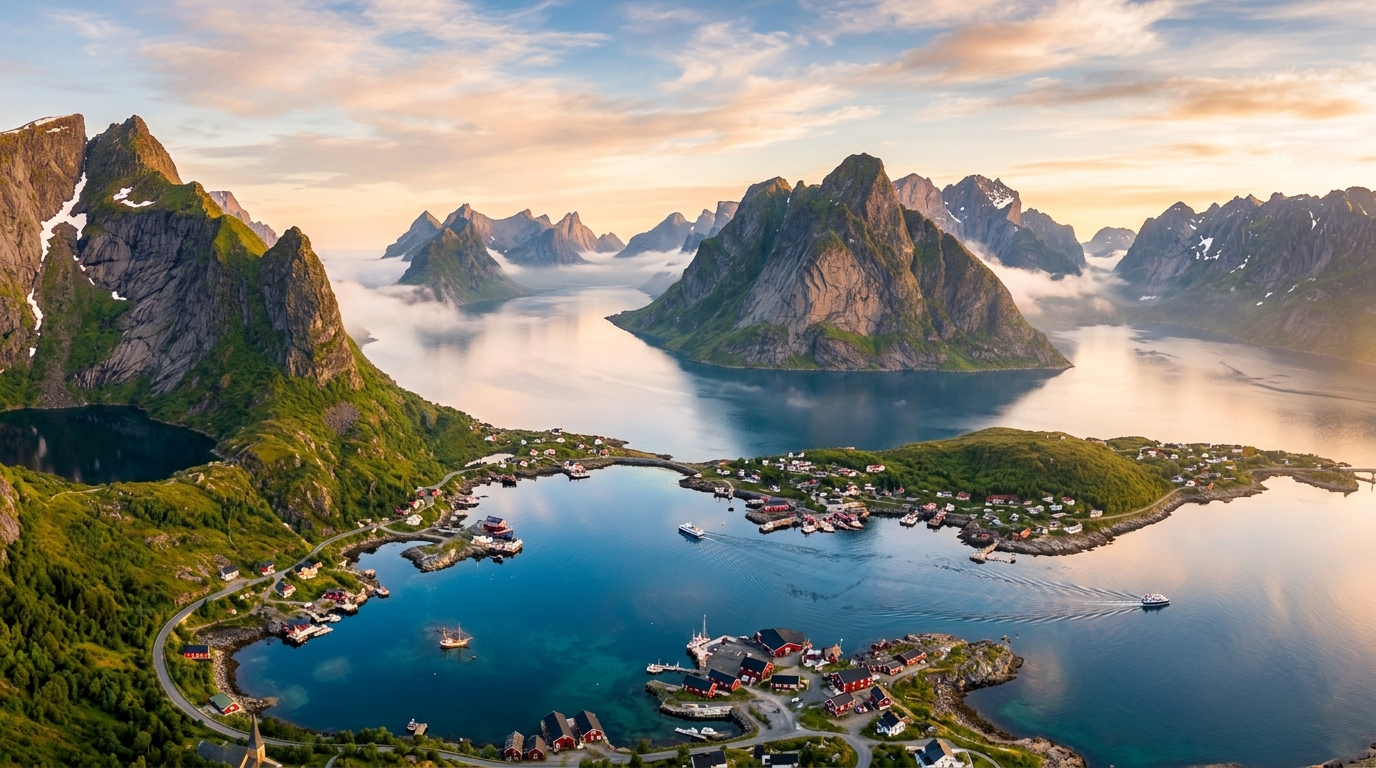

Norway’s fjords stand among the most spectacular natural wonders on our planet. Imagine towering cliffs that pierce the sky, crystal-clear waters reflecting dramatic landscapes, and scenery so breathtaking it seems pulled straight from a dream. These ancient glacial valleys, carved over millions of years and flooded by the sea, create some of the world’s most awe-inspiring vistas.
Whether you’re an adrenaline-seeking adventurer eager to conquer iconic peaks or a traveler who simply wants to soak in serene beauty from a cozy village café, Norway’s fjords deliver unforgettable experiences. From UNESCO World Heritage sites to hidden gems tucked away from tourist crowds, this comprehensive guide explores the ten must-visit fjord destinations that showcase Norway’s raw natural power and delicate beauty.
10. Trollheimen: The Mystical Land of Trolls
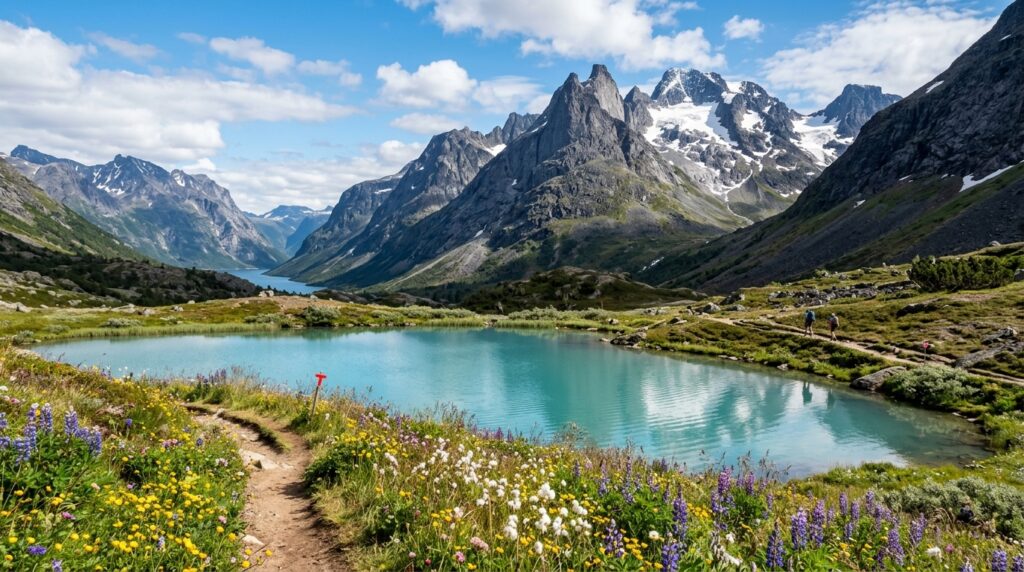
Trollheimen, which translates to “the land of trolls,” represents one of Norway’s most rugged and remote fjord landscapes. This mountain range captivates visitors with its dramatic beauty, rich folklore steeped in Norse mythology, and exceptional hiking trails that wind through pristine wilderness.
While Trollheimen may not carry the same international fame as some of Norway’s larger fjords, it offers something increasingly precious in today’s world: peaceful solitude away from tourist crowds. Adventurers who venture here discover deep valleys carved by ancient glaciers, crystal-clear alpine lakes that mirror the sky, and snow-capped peaks that challenge even experienced hikers.
The Surnadalsfjord and Stolsheimen areas within Trollheimen provide particularly scenic landscapes that create unforgettable memories. The region’s name itself evokes images of mythical trolls hiding behind waterfalls and beneath overhanging cliffs, adding an element of magical realism to your outdoor adventures.
Best Time to Visit: Late June through September offers the most accessible hiking conditions, though winter brings its own enchanting beauty for experienced winter sports enthusiasts.
Must-Do Activities:
- Multi-day hiking traverses across the mountain plateau
- Wild camping beside pristine alpine lakes
- Photography of dramatic peak reflections in still waters
- Exploring traditional mountain farms and cultural heritage sites
9. Lofoten Islands: Arctic Fjords Above the Circle
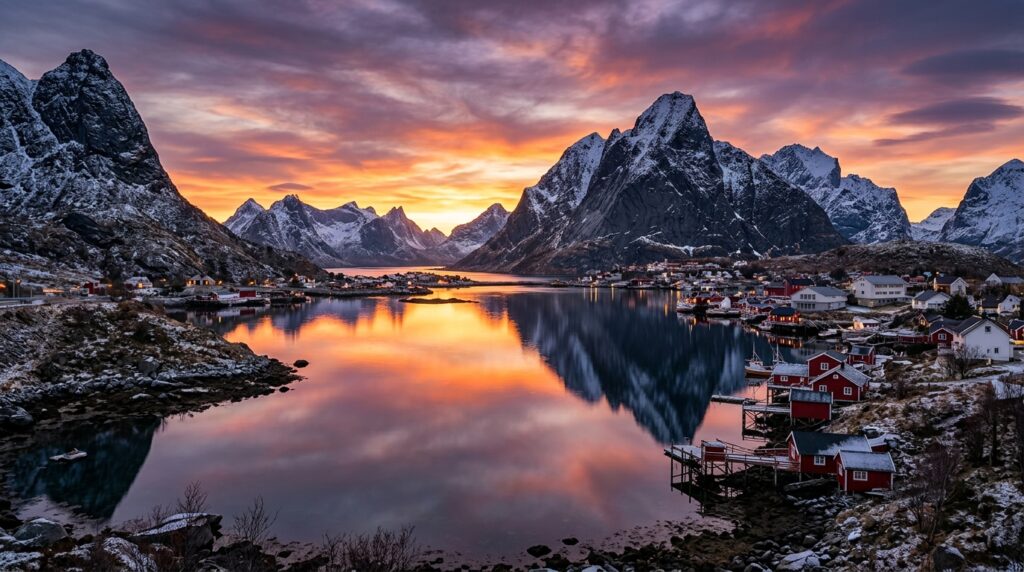
Located dramatically above the Arctic Circle, the Lofoten Islands provide a truly unique fjord experience that combines Arctic wilderness with surprisingly mild coastal climates. These islands are renowned for their rugged peaks that rise directly from the sea, unexpected sandy beaches framed by dramatic mountains, and picturesque fishing villages that have remained largely unchanged for centuries.
The fjords here, including Reinefjorden and Kjerkefjorden, rank among Norway’s most spectacular. They offer opportunities to explore crystal-clear waters surrounded by towering granite mountains that seem to emerge vertically from the sea. The remote and pristine nature of these Arctic fjords makes them perfect for travelers seeking secluded adventures away from mainstream tourism.
What truly sets Lofoten apart is the magical phenomenon of either the Northern Lights dancing across winter skies or the Midnight Sun bathing the landscape in golden light during summer months. This Arctic location creates photography opportunities that simply don’t exist further south.
Best Time to Visit:
- June-July for Midnight Sun and midnight hiking
- September-March for Northern Lights
- May-June and August-September for fewer crowds
Must-Do Activities:
- Sea kayaking through calm fjord waters
- Hiking to Reinebringen for iconic panoramic views
- Photography of traditional rorbuer (fishermen’s cabins)
- Arctic wildlife watching including sea eagles and orcas
- Surfing at Unstad Beach with mountain backdrop
8. Hardangerfjord: Norway’s Fruit Basket
Nicknamed “Norway’s fruit basket” thanks to its remarkably fertile apple orchards that bloom spectacularly each spring, Hardangerfjord beautifully combines raw natural beauty with rich cultural heritage. This fjord region has cultivated fruit for centuries, taking advantage of the unique microclimate created by the surrounding mountains and gulf stream-influenced waters.
The crown jewel of Hardanger is undoubtedly the stunning Vøringsfossen waterfall, which plunges a breathtaking 182 meters into a deep gorge, creating one of Norway’s most photographed natural spectacles. The sheer power and beauty of this waterfall, especially during spring snowmelt, leaves visitors speechless.
Beyond the waterfalls, charming villages like Utne offer authentic glimpses into traditional Norwegian life. Here, you can experience centuries-old farming traditions, taste locally-produced apple cider and aquavit, and stay in historic hotels that have welcomed travelers for over a hundred years.
The fjord itself provides excellent opportunities for boat cruises that navigate between fruit-laden orchards and steep mountain walls, scenic hiking trails that range from gentle walks to challenging mountain ascents, or simply the pleasure of relaxing and absorbing the serene beauty that surrounds you.
Best Time to Visit:
- May for apple blossom season
- June-August for warm weather and fruit harvesting
- September for autumn colors and harvest festivals
Must-Do Activities:
- Boat cruise through blooming orchards in spring
- Hike to Vøringsfossen viewpoint
- Visit traditional fruit farms and cider producers
- Cycle the Hardanger Bridge route
- Explore Folgefonna National Park and glacier
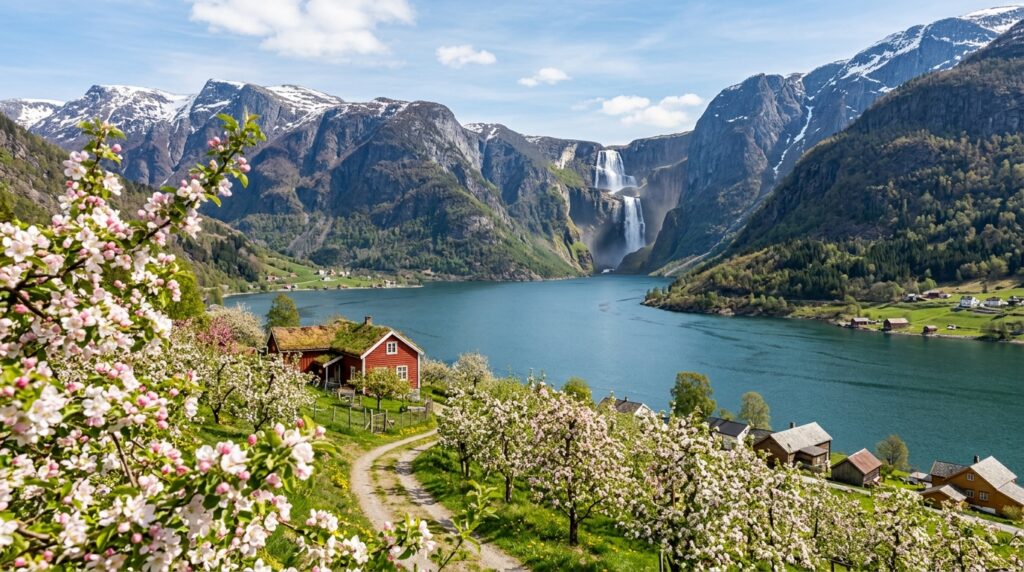
7. Lysefjord: Home of the Iconic Pulpit Rock
Lysefjord claims international fame as the home of Preikestolen, or Pulpit Rock, one of Norway’s most iconic natural landmarks. This flat, horizontal rock ledge sits 604 meters above the fjord, offering spectacular panoramic views that attract adventurous travelers from every corner of the globe. The hike to Pulpit Rock has become something of a pilgrimage for nature lovers, rewarding the approximately two-hour ascent with views that photographs simply cannot capture.
Beyond the famous rock formation, Lysefjord impresses with its towering granite cliffs that rise vertically from the dark waters, creating a dramatic corridor of stone and sea. The fjord’s crystal-clear waters reflect the surrounding mountains, creating mirror-like surfaces that photographers dream of capturing.
For those seeking an additional challenge beyond Pulpit Rock, Kjerag offers another iconic peak in the area. This mountain features the famous Kjeragbolten, a massive boulder wedged precariously between two cliffs, creating one of Norway’s most thrilling photo opportunities for brave souls willing to stand on the suspended stone.
Best Time to Visit:
- June-September for accessible hiking trails
- July-August for warmest weather and longest days
- May and September for fewer crowds
Must-Do Activities:
- Hike to Preikestolen (Pulpit Rock)
- Conquer the Kjeragbolten boulder challenge
- Fjord cruise from Stavanger or Lysebotn
- Visit the charming village of Lysebotn
- Photography at sunrise or sunset for best light
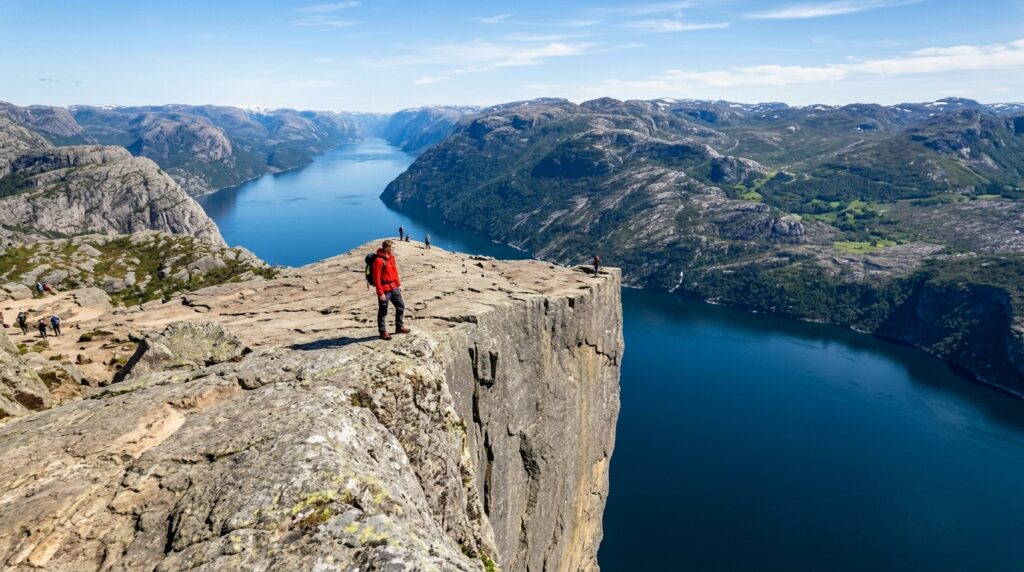
6. Geirangerfjord: A UNESCO World Heritage Gem
As one of Norway’s most famous fjords and a designated UNESCO World Heritage site, Geirangerfjord needs little introduction. This spectacular waterway is celebrated for its dramatic scenery that seems almost too perfect to be real. Towering mountains, lush green vegetation clinging to impossible slopes, and spectacular waterfalls including the famous Seven Sisters and the delicate Bridal Veil create a landscape that rivals any fairy tale illustration.
The fjord’s beauty has earned it recognition as one of the world’s most spectacular natural attractions. Visitors can take leisurely boat cruises that navigate the narrow waterway while providing close-up views of cascading waterfalls, hike up to the Dalsnibba Skywalk for breathtaking panoramic views from 1,500 meters above sea level, or simply sit and enjoy the tranquil beauty of the fjord’s crystal-clear waters.
The abandoned mountain farms of Skageflå and Knivsflå, perched precariously on steep cliffsides, tell stories of the incredible resilience and determination of those who once called this dramatic landscape home.
Best Time to Visit:
- June-August for warmest weather and all facilities open
- May-June for maximum waterfall flow from snowmelt
- September for autumn colors and fewer tourists
Must-Do Activities:
- Fjord cruise from Geiranger village
- Drive or cycle the famous Geiranger-Trollstigen National Tourist Route
- Hike to Skageflå mountain farm
- Visit Dalsnibba viewpoint
- Kayak the calm fjord waters
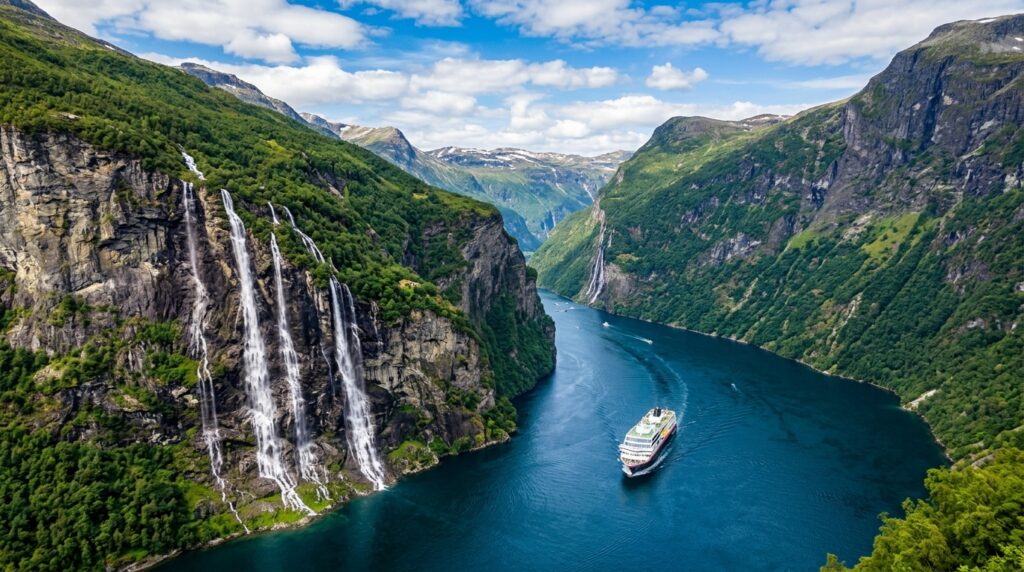
5. Sognefjord: The King of Norway’s Fjords
Stretching over 200 kilometers inland from the coast, Sognefjord reigns as the longest and deepest fjord in Norway, rightfully earning its title as the “King of Fjords.” This massive waterway is surrounded by steep mountains that rise dramatically from the water’s edge, picturesque villages that seem to cling to the landscape, and charming towns like Balestrand and Flåm that serve as perfect bases for exploration.
From Flåm, visitors can embark on the famous Flåm Railway, one of the world’s most spectacular train journeys, climbing from sea level to mountain plateaus while passing waterfalls, steep valleys, and traditional mountain farms. The railway itself has become a major attraction, drawing visitors who might not otherwise venture into Norway’s fjord country.
Within the greater Sognefjord system lies the stunning Nærøyfjord, itself a UNESCO World Heritage site known for its exceptionally narrow and dramatic landscape. At its narrowest point, the fjord measures just 250 meters wide, creating an intimate and awe-inspiring experience as towering cliffs rise on both sides.
Best Time to Visit:
- May-September for optimal weather and open facilities
- June-July for longest days and midnight sun effects
- September for autumn colors and harvest season
Must-Do Activities:
- Ride the Flåm Railway
- Cruise the Nærøyfjord
- Visit Borgund Stave Church
- Explore the village of Balestrand
- Hike in Jotunheimen National Park nearby
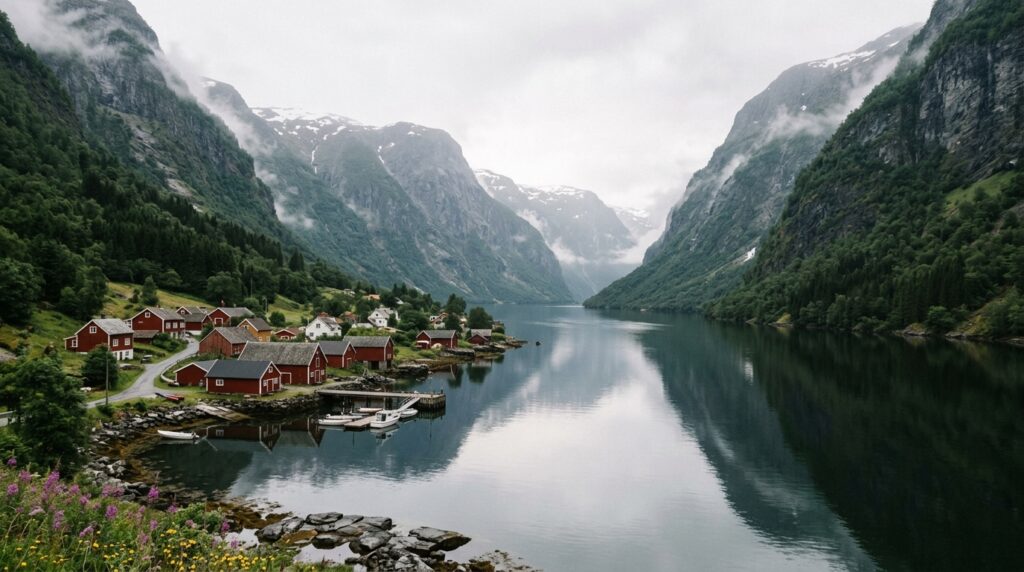
4. Nærøyfjord: A UNESCO Treasure Within Sognefjord
Nestled within the greater Sognefjord system, Nærøyfjord stands out as one of the most scenic and unique fjords in all of Norway. This narrow, winding waterway is flanked by steep cliffs that rise dramatically from the water’s surface, creating an intimate and overwhelming sense of nature’s grandeur. At points, the fjord narrows to just 250 meters across, with mountains soaring over 1,700 meters above the water.
The fjord’s exceptional beauty and geological significance have earned it UNESCO World Heritage status, recognizing it as a site of outstanding universal value. The combination of narrow waters, towering cliffs, waterfalls, and traditional mountain farms creates a landscape that feels both wild and culturally significant.
Visitors can take scenic boat cruises that navigate the narrow waterway, providing intimate views of waterfalls cascading down sheer rock faces and traditional farms clinging to impossible slopes. Hiking the surrounding trails offers unparalleled views of the fjord from above, revealing the full scale and majesty of this natural wonder.
Best Time to Visit:
- June-August for boat access and hiking
- May-June for powerful waterfalls
- September for peaceful autumn atmosphere
Must-Do Activities:
- UNESCO fjord cruise from Flåm or Gudvangen
- Kayak the narrow waterways
- Hike from Gudvangen to Bakka
- Visit the historic Bakka Church
- Photography from multiple viewpoints
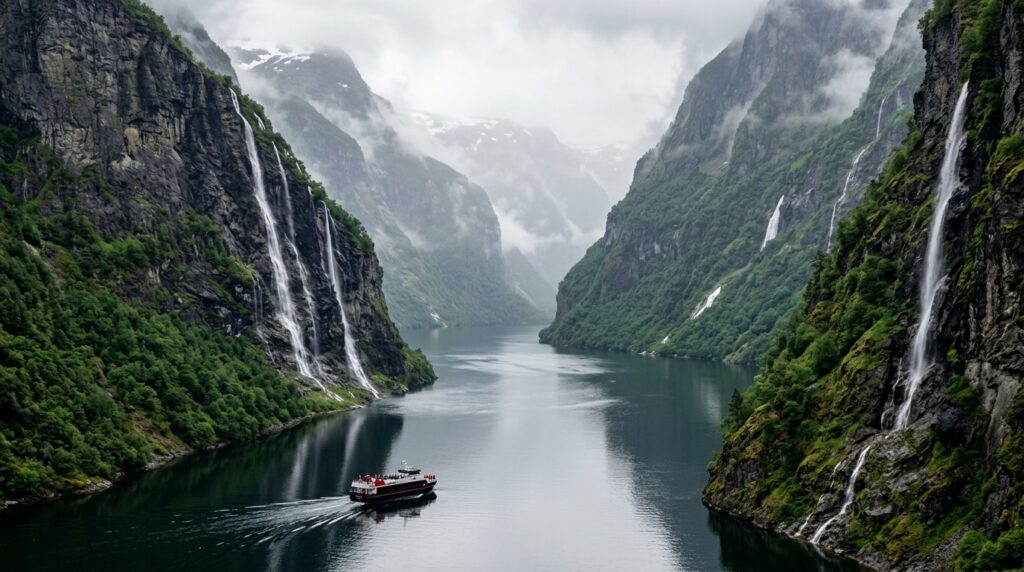
3. Romsdalen: Majestic Peaks and Thundering Waterfalls
Known for its dramatic peaks and breathtaking waterfalls, Romsdalen stands as one of Norway’s most scenic fjord valleys. The area surrounding the fjord is a hiker’s paradise, with trails leading to stunning viewpoints including the famous Trollveggen, or Troll Wall, which holds the distinction of being Europe’s tallest vertical rock face. This massive cliff rises 1,100 meters almost straight up from the valley floor, attracting climbers and sightseers alike.
The fjord itself is dotted with charming villages like Åndalsnes, which serves as an excellent base for exploring the region. From here, visitors can take boat tours that navigate the calm waters, kayak at their own pace through stunning scenery, or simply sit and soak in the incredible surroundings that seem to change with every shift of light and weather.
Romsdalen offers some of the most awe-inspiring mountain landscapes in all of Norway, making it an essential destination for outdoor enthusiasts and photographers seeking dramatic scenery without the crowds found at more famous locations.
Best Time to Visit:
- June-September for hiking and climbing
- July-August for warmest temperatures
- May-June for waterfall volume
Must-Do Activities:
- View Trollveggen from the visitor center
- Hike to Rampestreken viewpoint
- Take the Raumabanen railway
- Rock climbing for experienced adventurers
- Explore Åndalsnes town and harbor
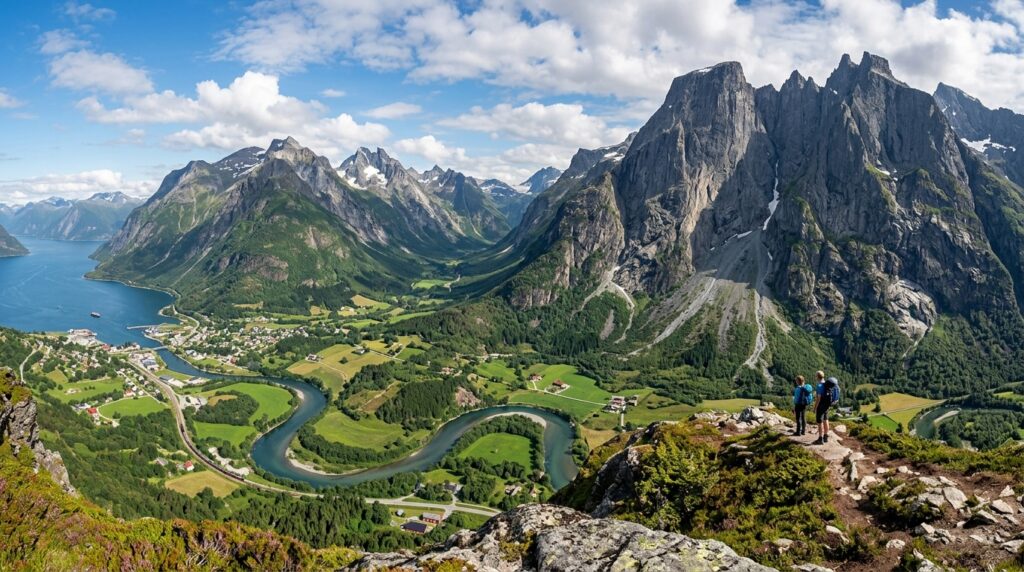
2. Jølsterfjord: The Hidden Gem of Western Norway
Tucked away from the more popular and crowded fjords, Jølsterfjord represents a hidden gem that offers a more peaceful, intimate experience with Norway’s dramatic landscape. This lesser-known fjord is surrounded by the stunning Sunnmøre Alps, creating a spectacular backdrop for exploration and outdoor activities.
Jølsterfjord remains less touristy than its famous counterparts, making it an excellent choice for travelers seeking solitude and authentic natural beauty without the crowds. The small village of Skei serves as a perfect base for exploring the fjord by boat or on foot, offering local hospitality and stunning views without the commercialization found in more popular destinations.
The region is home to some of the best hiking and cycling routes in Norway, with trails that wind through traditional farming landscapes, past glacier-fed streams, and up to viewpoints that reveal the full majesty of the surrounding peaks.
Best Time to Visit:
- June-September for outdoor activities
- July for warmest weather
- September for autumn colors and tranquility
Must-Do Activities:
- Hike in the Sunnmøre Alps
- Glacier walking on nearby ice caps
- Cycling around the fjord
- Photography of unspoiled landscapes
- Experience authentic Norwegian rural life
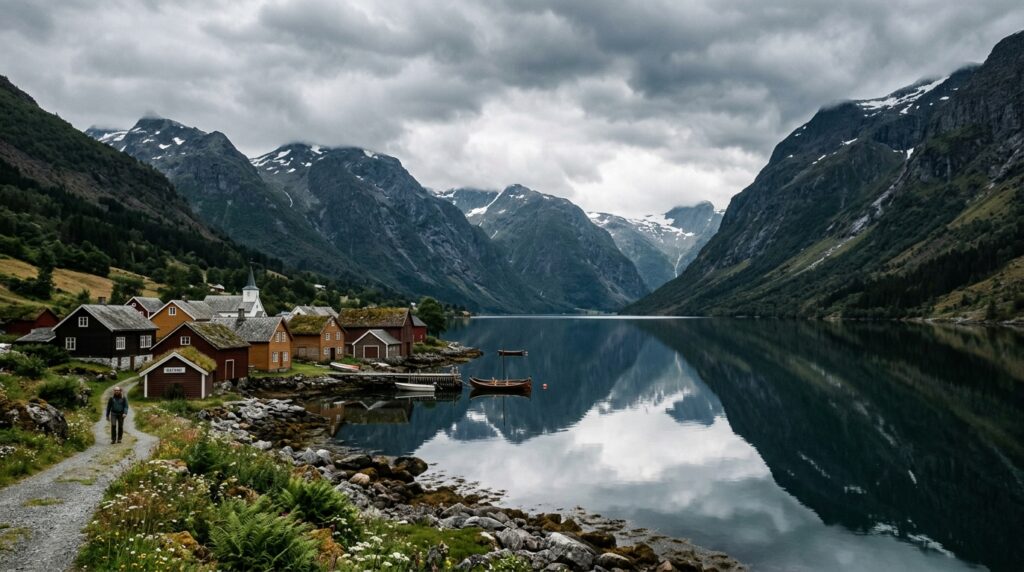
1. Aurlandsfjord: Where Serenity Meets Spectacular Beauty
Topping our list is Aurlandsfjord, a branch of the mighty Sognefjord that offers some of the most tranquil and scenic fjord experiences in all of Norway. This narrow fjord is surrounded by lush green hills that cascade down to the water’s edge, steep cliffs that create dramatic vertical walls, and small villages including the charming town of Flåm that have welcomed travelers for generations.
Aurlandsfjord serves as an excellent destination for those seeking serenity combined with ample opportunities for outdoor activities. Hiking trails wind through forests and up to mountain viewpoints, cycling routes follow the water’s edge through picturesque landscapes, and boat tours provide intimate access to waterfalls and hidden coves that larger vessels cannot reach.
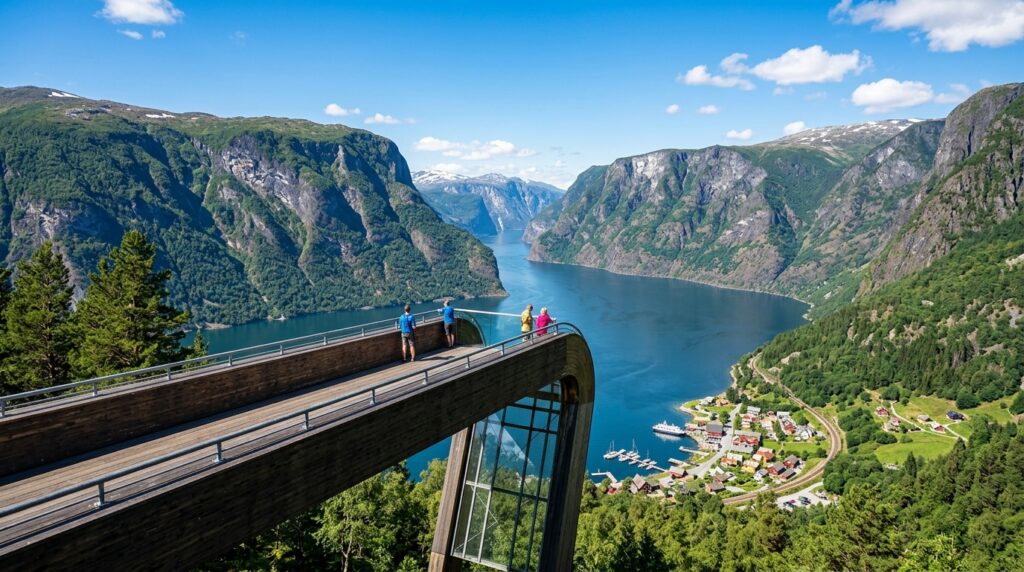
For a truly breathtaking view of the fjord, make the journey to the Stegastein viewpoint, which juts out dramatically over the fjord, offering a panoramic perspective of the valley below and the water stretching toward distant mountains. This architectural marvel frames the landscape perfectly, creating one of Norway’s most photographed viewpoints.
Best Time to Visit:
- May-October for optimal conditions
- June-August for warmest weather
- May for blooming fruit trees and waterfalls
Must-Do Activities:
- Visit Stegastein viewpoint
- Cruise from Flåm to Aurland
- Hike the Rallarvegen cycling path
- Explore the villages of Flåm and Aurland
- Visit the Norwegian Mountain Center
Essential Planning Tips for Your Norway Fjord Adventure
Getting Around
Norway’s fjord region is well-connected by an extensive network of ferries, buses, and trains. The famous Norway in a Nutshell tour combines several transportation modes to showcase multiple fjords efficiently. However, renting a car provides maximum flexibility for exploring at your own pace and discovering hidden viewpoints.
Where to Stay
Accommodation options range from luxury hotels in larger towns like Flåm and Geiranger to cozy mountain cabins and traditional farms. Booking well in advance is essential, especially for summer months when demand far exceeds supply. Consider staying in smaller villages for a more authentic experience and better value.
What to Pack
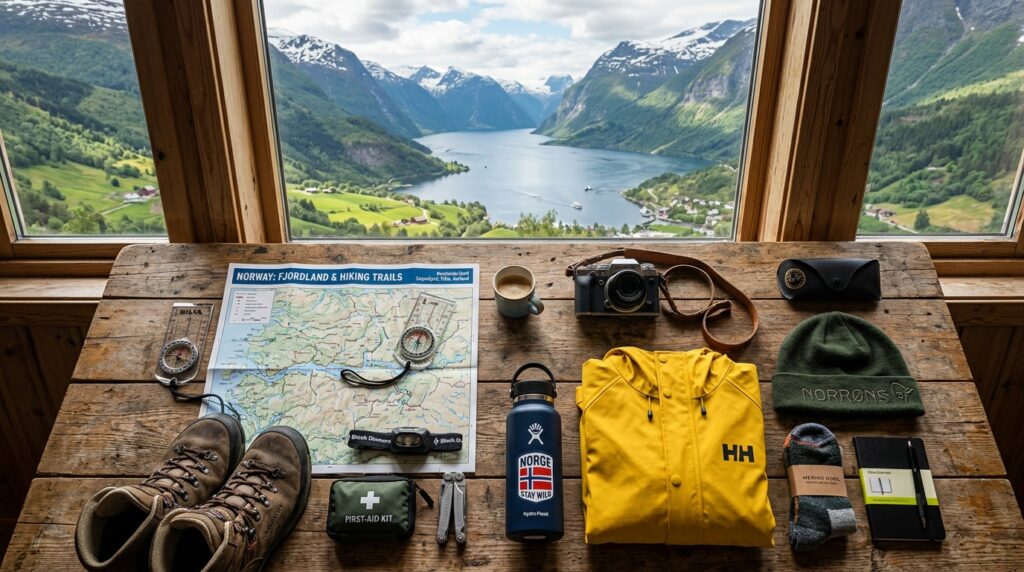
Norwegian weather can change rapidly, especially in mountain and fjord regions. Pack layers including waterproof outer shell, warm fleece, sturdy hiking boots, and sun protection even in summer. The midnight sun means evenings stay bright, so bring an eye mask for sleeping.
Budget Considerations
Norway ranks among the world’s most expensive destinations. Budget accordingly for accommodation, dining, and activities. However, many of the best experiences—hiking, swimming, and simply enjoying the views—cost nothing. Self-catering accommodation and picnics with local ingredients can significantly reduce costs.
Sustainable Tourism
Norway takes environmental protection seriously. Respect marked trails, follow Leave No Trace principles, use public transportation when possible, and support local businesses. The fjords are fragile ecosystems that require our protection for future generations.
Conclusion: Your Fjord Adventure Awaits
Norway’s fjords offer some of the most spectacular landscapes on Earth, from towering cliffs and dramatic waterfalls to tranquil waters and charming villages that seem frozen in time. Whether you’re an adventurer seeking to hike to iconic peaks like Pulpit Rock or a traveler who simply wants to relax and take in views that defy description, the Norwegian fjords deliver experiences that will stay with you forever.
From the world-renowned Geirangerfjord to the hidden gem of Jølsterfjord, these stunning natural wonders are waiting for you to explore. Each fjord offers its own unique character, activities, and memories, ensuring that no two visits are ever the same. The combination of raw natural power, delicate beauty, and Norwegian hospitality creates travel experiences that transcend typical tourism.
Start planning your Norwegian fjord adventure today, and prepare to witness landscapes that will take your breath away and create memories that will last a lifetime. The fjords are calling—are you ready to answer?