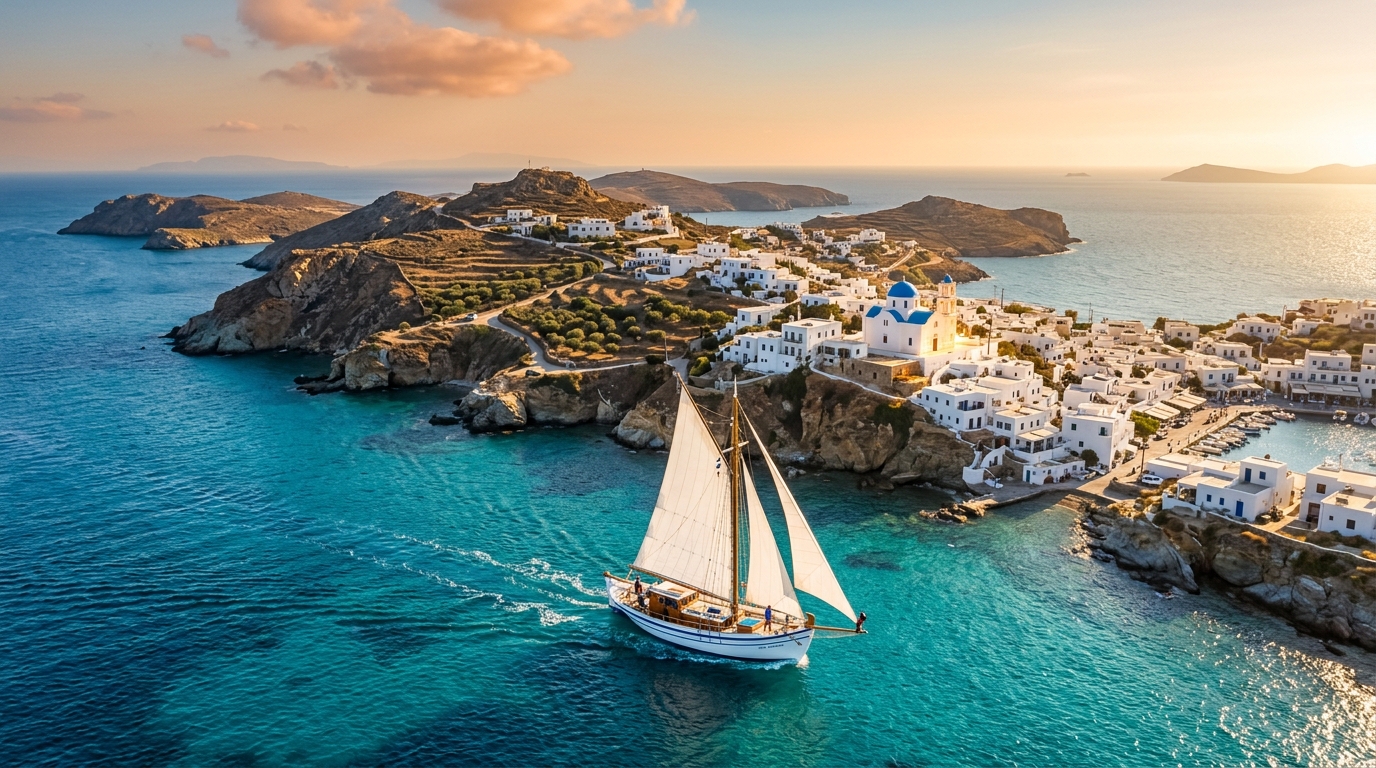

Dreaming of crystal-clear turquoise waters, charming whitewashed villages, and endless golden sunsets? From Santorini’s iconic caldera views to hidden gems waiting to be discovered, island hopping in Greece is the adventure of a lifetime. Whether you’re an experienced sailor or a first-time explorer, a Greek sailing adventure promises an unforgettable journey through some of the world’s most breathtaking destinations.
Welcome to your complete guide to sailing through the Greek Islands—an experience that combines freedom, history, natural beauty, and culinary delights into one extraordinary vacation.
1. The Unmatched Freedom of the Open Sea
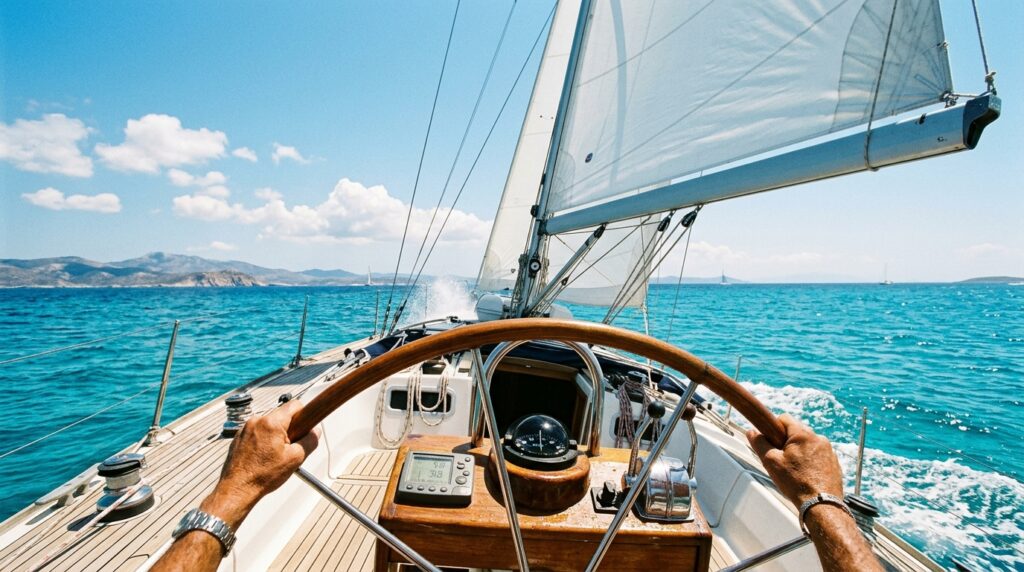
One of the most exhilarating aspects of sailing through the Greek Islands is the unparalleled freedom it provides. Unlike conventional travel where strict schedules and tour buses dictate your pace, sailing allows for complete flexibility and spontaneity. You decide whether to linger in a secluded bay for an extra swim, explore an uninhabited islet, or spontaneously dock at a bustling port village.
Imagine waking up to the gentle sway of your boat, the rhythmic sound of waves lapping against the hull, and an endless horizon stretching before you. This creates a profound sense of peace and adventure simultaneously. Most sailors recommend spending 7-14 days exploring the islands, allowing 2-3 days per island group to truly immerse yourself without feeling rushed.
Transportation Tip: If you’re new to sailing, consider a skippered charter for your first trip. Companies like Dream Yacht Charter and The Moorings offer excellent options where you can learn the basics while enjoying a stress-free journey. Experienced sailors can opt for bareboat charters, which provide ultimate freedom but require proper certification (ICC or equivalent).
2. The Cyclades: Whitewashed Perfection and Island Diversity
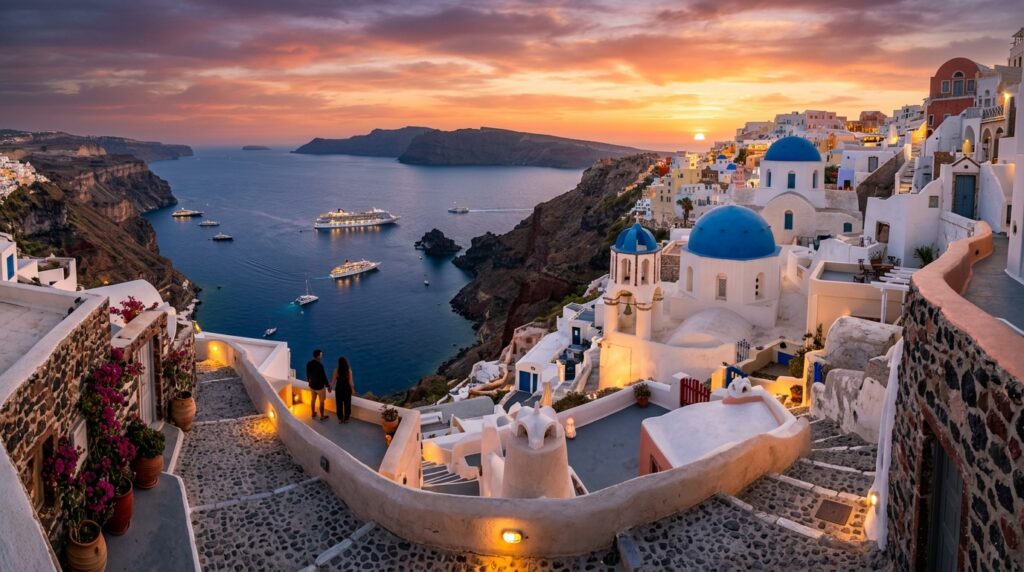
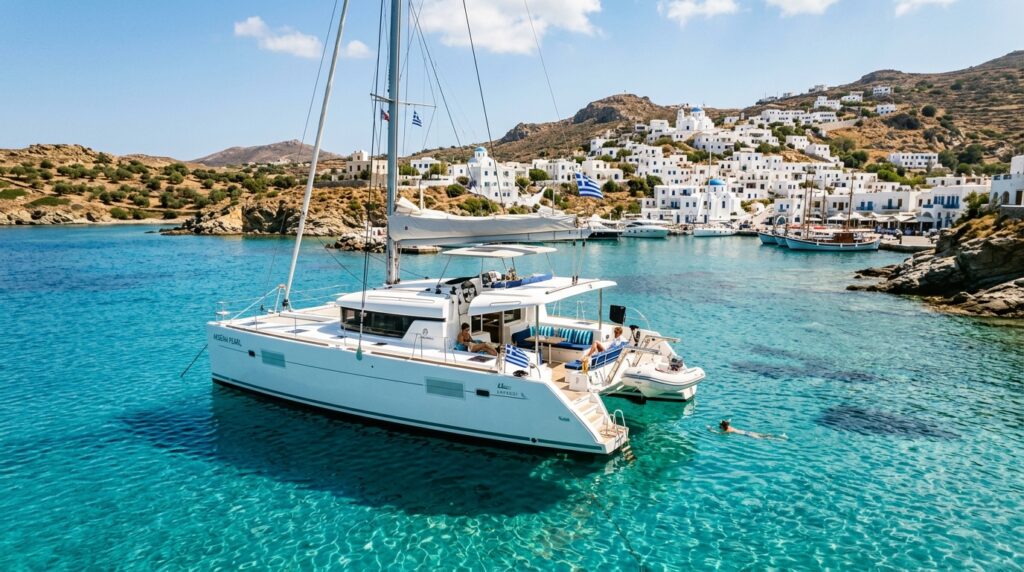
The Cyclades are among the most famous Greek island groups, instantly recognizable by their whitewashed houses, narrow cobblestone alleys, and iconic blue-domed churches. This archipelago in the southern Aegean Sea offers incredible diversity, from vibrant party islands to tranquil traditional villages.
Mykonos, often called the “Island of the Winds,” is a haven for luxury seekers and party lovers. Spend 2-3 days exploring high-end shopping in Mykonos Town, lounging at famous beach clubs like Paradise Beach or Super Paradise, and experiencing the vibrant nightlife that lasts until dawn. Don’t miss the iconic windmills of Kato Myli and the picturesque Little Venice waterfront.
Santorini needs little introduction. With its breathtaking caldera views, stunning sunsets, and charming villages like Oia and Fira, it’s one of the world’s most romantic destinations. Allocate 3-4 days here to explore the ancient ruins of Akrotiri, visit traditional wineries producing unique Assyrtiko wine, and watch the legendary sunset from Oia Castle. For a less crowded experience, explore the villages of Pyrgos and Megalochori.
Beyond the Famous: While Mykonos and Santorini steal the spotlight, lesser-visited Cycladic islands like Folegandros and Sifnos offer more authentic experiences with traditional Greek hospitality and stunning natural beauty. Folegandros features dramatic clifftop Chora with medieval architecture, while Sifnos is a foodie paradise with excellent hiking trails and pottery villages.
3. Secret Beaches and Hidden Coves Accessible Only by Sea
Sailing gives you exclusive access to some of the most secluded and pristine beaches in Greece—places that remain untouched by mass tourism and can only be reached by boat.
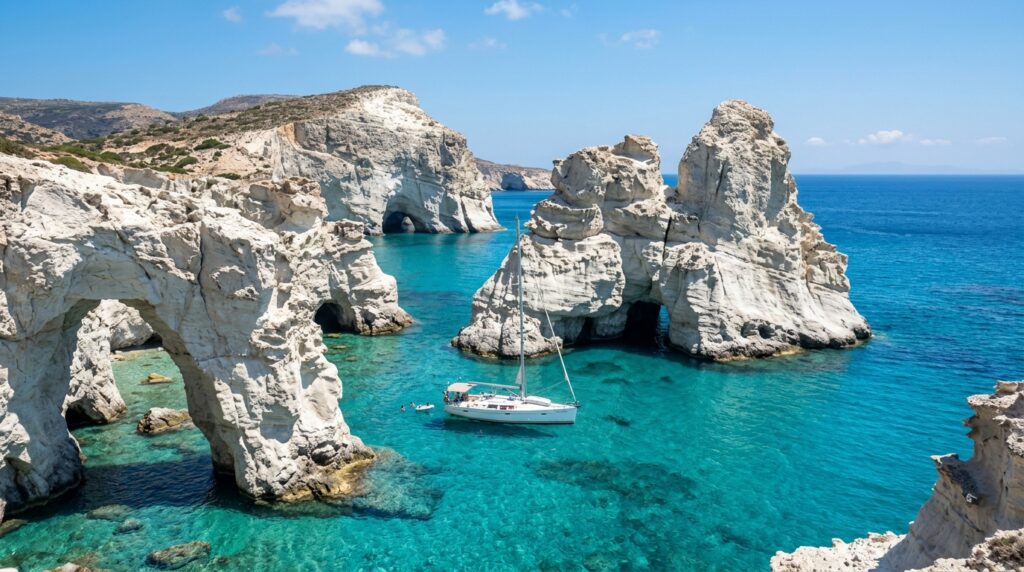
Milos is a geological wonder and beach lover’s paradise. The island boasts over 70 unique beaches, but Kleftiko stands out as absolutely unmissable. This mesmerizing spot features dramatic white rock formations, sea caves, and crystal-clear waters that can only be reached by boat. Spend 3-4 hours here swimming through caves and snorkeling in the transparent waters.
Zakynthos (Zante) in the Ionian Sea is home to the world-famous Navagio Beach (Shipwreck Beach), nestled between towering limestone cliffs. This iconic beach, accessible only by sea, features a rusting smuggler’s ship on pristine white sand and turquoise waters. Arrive early morning (before 10 AM) or late afternoon to avoid the crowds.
Hidden Gems: The Aegean and Ionian seas are full of hidden coves where you can drop anchor, dive into crystal-clear waters, and enjoy pure serenity. Try Sarakiniko Beach in Milos with its lunar-like white volcanic landscape, or the secluded Porto Katsiki in Lefkada, consistently ranked among Europe’s best beaches.
Daily Schedule Example for Beach Hopping:
- 8:00 AM: Depart from main port
- 10:00 AM: Arrive at first secluded beach, swim and snorkel (2 hours)
- 12:30 PM: Light lunch on board
- 2:00 PM: Sail to second location, explore sea caves
- 4:30 PM: Sunset swimming and photography
- 7:00 PM: Anchor in protected bay for dinner
4. The Rich History of the Dodecanese Islands
Beyond their natural beauty, the Greek Islands are steeped in millennia of history. The Dodecanese islands, including Rhodes and Kos, are filled with ancient ruins, medieval castles, and fascinating historic sites.
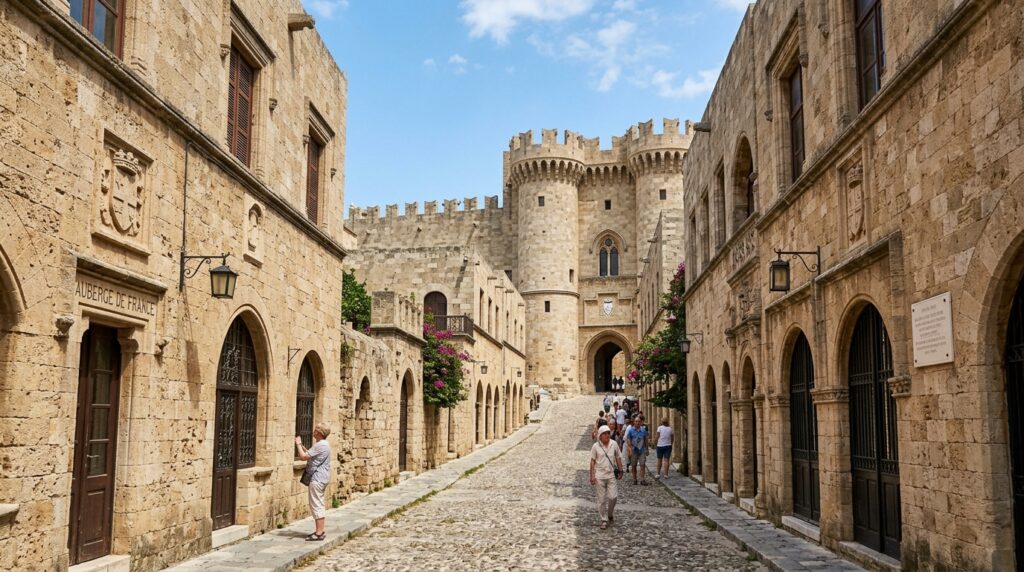
Rhodes boasts the best-preserved medieval town in Europe, a UNESCO World Heritage Site. Spend a full day wandering through cobblestone streets, exploring the Palace of the Grand Master, and walking along ancient fortification walls. The Street of the Knights, built in the 15th century, transports you back to the era of the Knights Hospitaller.
Patmos offers a deeply spiritual experience. The Cave of the Apocalypse is believed to be where Saint John wrote the Book of Revelation. This sacred site, combined with the stunning Monastery of Saint John the Theologian perched atop the island’s highest point, makes Patmos a unique cultural destination. Allocate at least one full day to explore these religious monuments.
Kos features impressive ancient ruins including the Asklepieion (ancient healing temple), a well-preserved Roman odeon, and the Tree of Hippocrates under which the father of medicine allegedly taught.
5. Incredible Greek Cuisine and Local Specialties
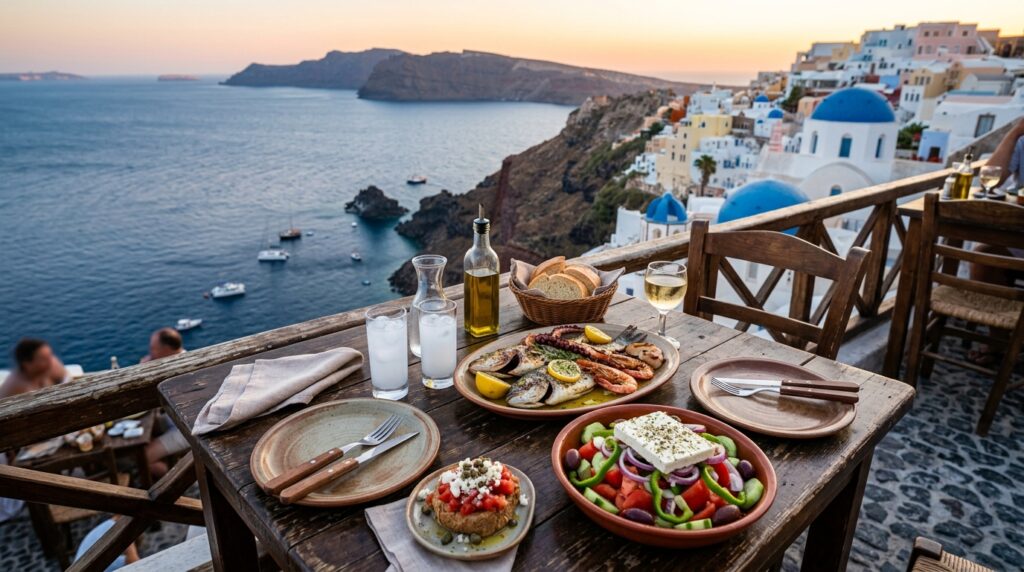
Greek cuisine is one of the absolute highlights of any sailing journey through the islands. Each island has its own specialties influenced by unique history, geography, and local ingredients.
Must-Try Island Specialties:
Crete: Enjoy dakos, a traditional barley rusk topped with fresh tomato, feta cheese, olives, and oregano. Freshly grilled seafood at tavernas in Chania or Rethymno is exceptional. Don’t miss gamopilafo (wedding rice) and antikristo (slow-cooked lamb).
Ionian Islands: With strong Venetian influences, these islands offer unique dishes like pastitsada from Corfu—a rich, flavorful pasta dish with rooster or beef in tomato and spice sauce. Try sofrito (veal in white wine and garlic sauce) and bourdeto (spicy fish stew).
Cyclades: Sample chlorotyri (fresh goat cheese) in Sifnos, kopanisti (spicy cheese spread) in Mykonos, and revithada (chickpea stew) traditionally cooked in clay pots.
Every island has charming family-run tavernas where you can enjoy traditional meals, fresh olives, local cheeses, and of course, a glass of ouzo or local wine as the sun sets over the sea. Budget approximately €25-40 per person for a full traditional meal with wine.
Food Tour Recommendation: Dedicate one evening per island to a food-focused experience. Many islands offer cooking classes where you learn to make traditional dishes using local ingredients—a wonderful cultural immersion activity.
6. Unforgettable Sunsets at Sea
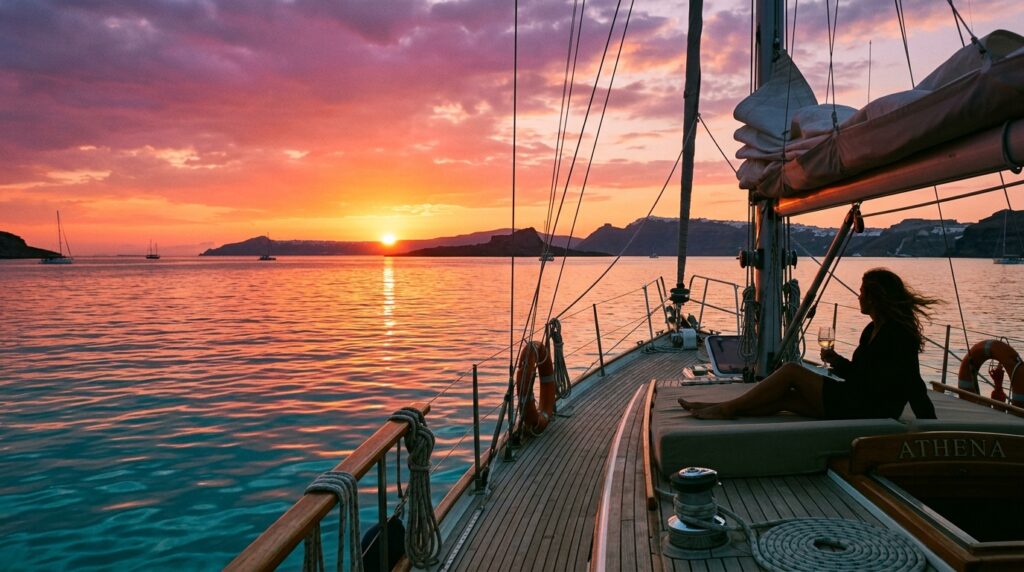
There’s something truly magical about watching the sunset from the deck of a sailboat. While Santorini is famous for its golden hour views (and the crowds they attract), nothing compares to the serenity of being in the middle of the sea, away from tourist masses.
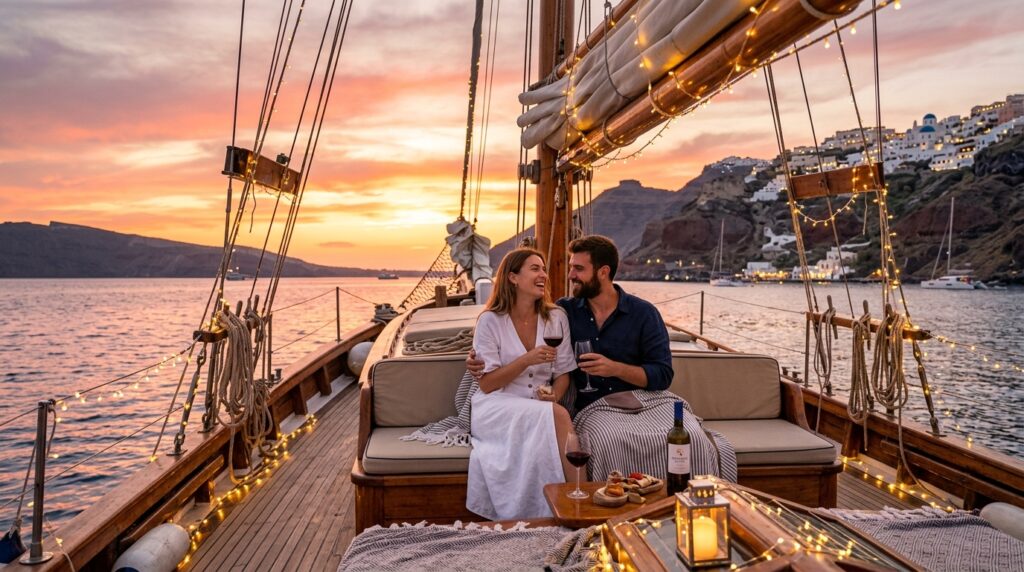
Watch as the sky explodes into spectacular hues of orange, pink, purple, and gold. The reflection of the sunset dancing on the water, combined with the gentle rocking of the boat, creates an experience of pure tranquility. Each evening offers a new perspective, a new sky, and a new memory to cherish.
Best Sunset Sailing Spots:
- Santorini Caldera: Sail around the volcanic crater for 360-degree views (book sunset catamaran cruises in advance)
- Mykonos: Sail to Delos island for sunset among ancient ruins
- Milos: Kleftiko at golden hour is absolutely spectacular
- Lefkada: Porto Katsiki beach sunset is unforgettable
Pro Tip: Position your boat on the western side of islands around 7:00-8:30 PM (depending on season) for optimal sunset viewing. Bring a light jacket—even summer evenings can be breezy on the water.
7. The Thrill and Challenge of Sailing
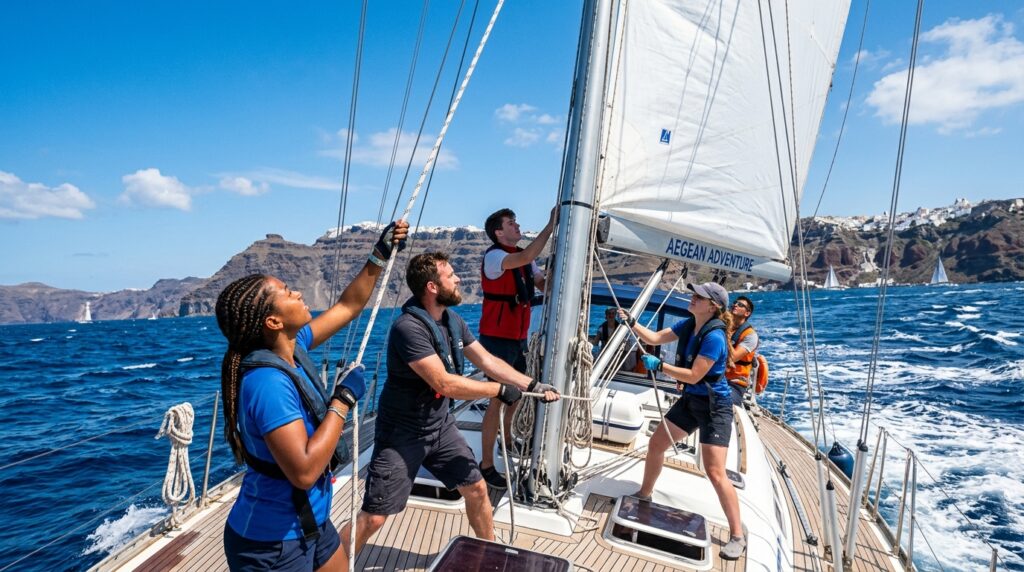
Sailing itself is an adventure, whether you’re an experienced sailor or a complete beginner. The challenge of harnessing the wind, navigating between islands, and feeling the power of the sea is genuinely exhilarating.
For Beginners: Many travelers opt for a skippered charter where a professional captain handles navigation while you learn the basics. This allows you to participate as much or as little as you like while ensuring a safe, relaxing journey. Expect to pay €150-250 per day for a skipper.
For Experienced Sailors: Renting a bareboat charter provides the ultimate sense of freedom and adventure. The Greek winds, particularly the famous Meltemi in the Cyclades (strong northern winds peaking July-August), add an element of excitement, making each journey between islands dynamic and unforgettable.
Sailing Routes: Popular itineraries include:
- 7-day Cyclades route: Athens → Mykonos → Paros → Naxos → Santorini → Milos → Athens
- 10-day Ionian route: Corfu → Paxos → Antipaxos → Lefkada → Kefalonia → Zakynthos
- 14-day Dodecanese route: Rhodes → Symi → Kos → Patmos → Leros → Kalymnos
8. Ancient Ruins and Mythological Wonders
Greece is a land of myths and legends, and its islands are filled with sites that tell these ancient stories. Sailing allows you to visit these archaeological treasures at your own pace.
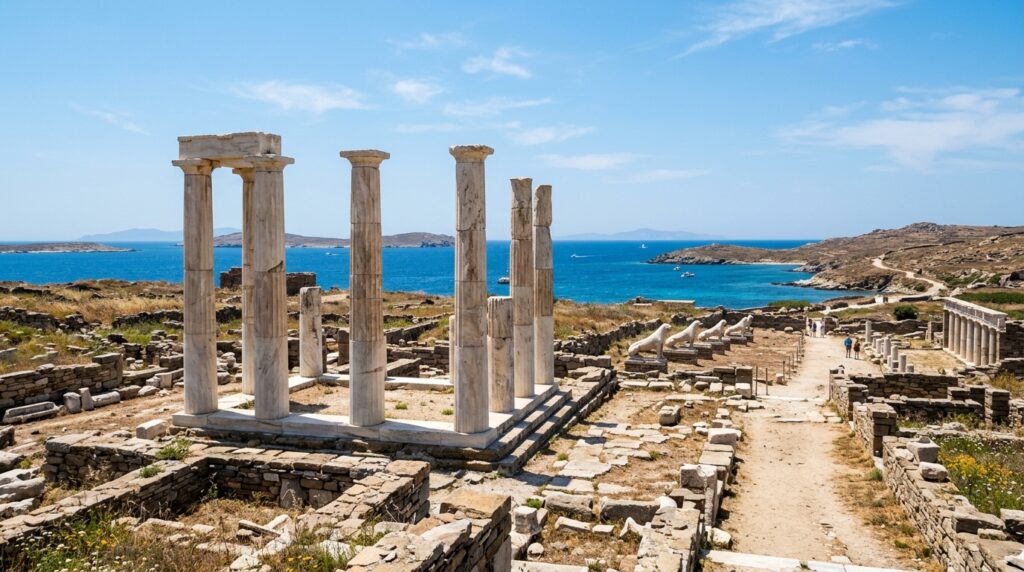
Delos: Considered the mythical birthplace of Apollo and Artemis, Delos is a must-visit for history enthusiasts. This uninhabited island is essentially an open-air museum. Walking through the ruins of temples, theaters, and ancient marketplaces, you can almost feel the presence of the past. Allocate 3-4 hours to explore properly. Note: Delos has no accommodations or restaurants, so plan accordingly.
Naxos: This mythologically significant island is home to the massive Portara—the entrance to an unfinished Temple of Apollo that stands as a striking landmark against the sunset. According to legend, this is where Theseus abandoned Ariadne.
Crete: Explore the Palace of Knossos, Europe’s oldest city, and the mysterious Minoan civilization. The archaeological site requires at least half a day to appreciate fully.
Weather Advice: The best time to visit archaeological sites is early morning (8:00-10:00 AM) or late afternoon (after 4:00 PM) to avoid midday heat, especially in July and August when temperatures can exceed 35°C (95°F).
9. Deep Connection with Nature
Sailing through the Greek Islands fosters a profound connection with nature. The sea becomes your home, the wind your guide, and the sun your constant companion.
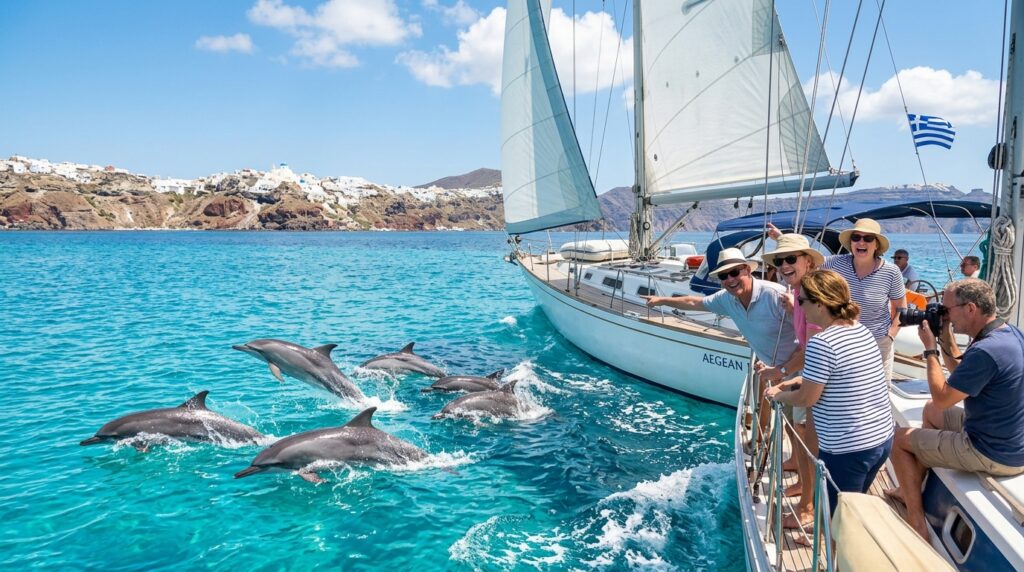
Wildlife Encounters: Dolphins often swim alongside boats, jumping playfully in the waves. Keep your camera ready! Seabirds glide overhead, and if you’re lucky, you might spot monk seals in remote areas.
Sea Turtles: Zakynthos is famous for the Caretta-Caretta loggerhead turtles that nest on protected beaches. If visiting between June and August, you might witness these magnificent creatures.
Island Wildlife: The islands are home to diverse fauna, from wild goats of Samothrace to rare flora in protected areas.
Environmental Responsibility: Practice sustainable sailing by using eco-friendly products, respecting marine life, avoiding anchoring on seagrass beds, and minimizing plastic use. Many charter companies now offer eco-conscious boats with solar panels and water makers.
Waking up to the sound of waves, swimming in the open sea, and sleeping under a sky full of stars creates a profound appreciation for the natural world that stays with you long after your journey ends.
10. Practical Planning Guide
Best Time to Sail
- May-June: Ideal weather, fewer crowds, moderate prices, nature in bloom
- July-August: Peak season, strong Meltemi winds, highest prices, crowded
- September-October: Excellent weather, warm sea, fewer tourists, great value
What to Pack
- Lightweight, breathable clothing
- Sun protection (hat, sunglasses, reef-safe sunscreen)
- Non-slip boat shoes
- Light jacket for evenings
- Swimwear (multiple sets)
- Waterproof bag for electronics
Budget Considerations
- Bareboat charter: €1,500-4,000/week depending on boat size and season
- Skippered charter: Add €1,000-1,750/week
- Provisioning: €200-400/person/week
- Marina fees: €20-50/night (many anchor for free)
- Fuel: €150-300/week
Required Documentation
- Valid sailing certification (ICC for EU waters)
- VHF radio license
- Passport/ID
- Sailing CV for charter companies
Final Thoughts: An Indelible Mark on Your Soul
At the heart of this journey is the feeling it leaves behind—an indescribable blend of excitement, peace, and wonder. Sailing through the Greek Islands is more than just a vacation; it’s an adventure that stays with you forever.
The combination of stunning landscapes, rich history, vibrant culture, and the boundless freedom of the sea makes this the ultimate experience for any traveler. Whether you spend one week or one month exploring, the Greek Islands leave an indelible mark on your soul, calling you back again and again.
For those seeking the perfect blend of adventure, relaxation, and cultural immersion, there is no better way to experience Greece than by sailing through its enchanting islands. The memories you’ll create, the friends you’ll make, and the sense of accomplishment from navigating these ancient waters will last a lifetime.
Ready to set sail? Start planning your Greek islands adventure today, and prepare for the journey of a lifetime. The Aegean is waiting!
Visa requirements, charter policies, and flight availability may change over time. Always check current regulations and book with reputable charter companies. Travel insurance is strongly recommended for all sailing adventures.