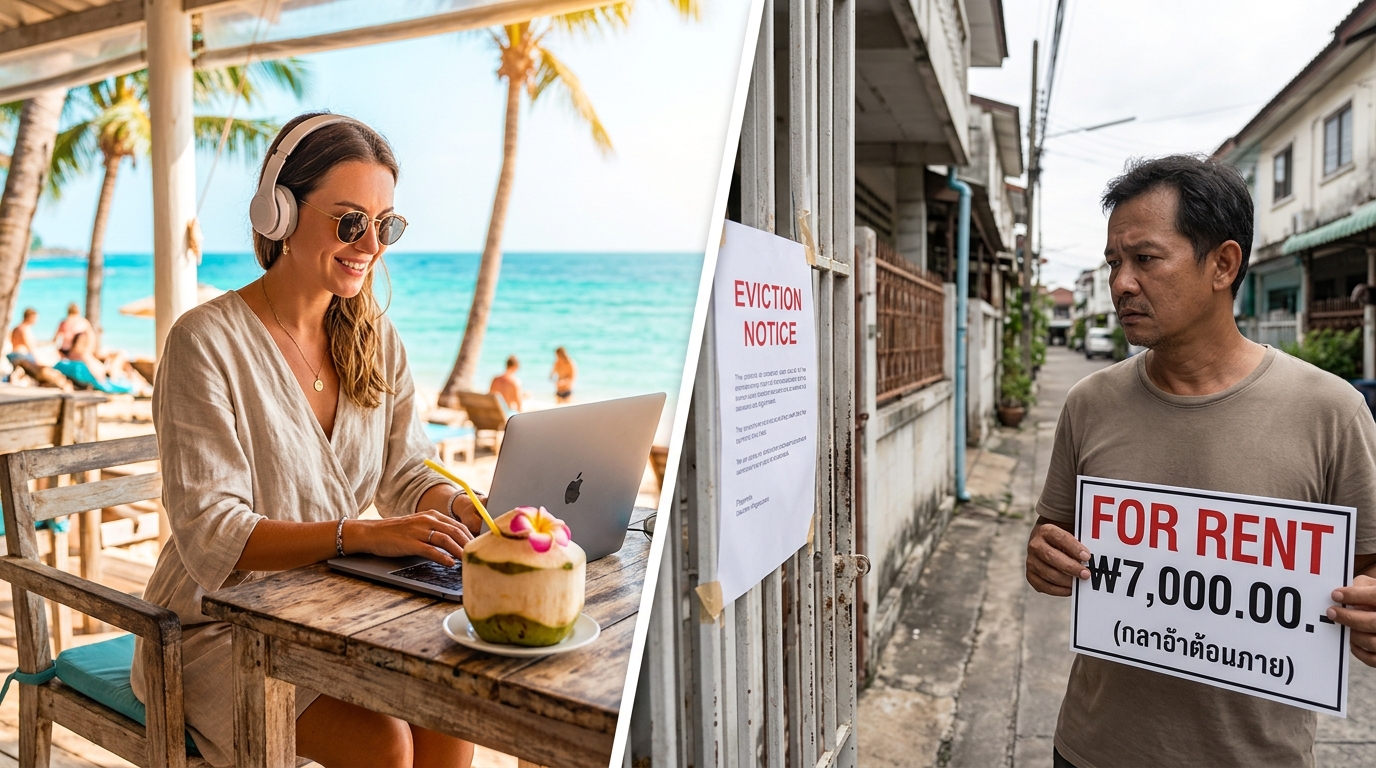

The digital nomad lifestyle has been glamorized as the ultimate dream: working from exotic beaches, sipping coconuts, and exploring the world while earning a living. Social media is flooded with images of laptops overlooking rice terraces, coworking spaces with ocean views, and nomads living their best life in paradise. But behind the Instagram filters and viral TikToks lies a darker truth that locals in popular destinations are starting to voice loudly and clearly.
From skyrocketing rents to cultural clashes, the influx of digital nomads is creating tension in communities worldwide. Why are locals increasingly frustrated with this growing trend? What does this mean for the future of remote work and travel? In this comprehensive exploration, we dive into the untold story of why digital nomads are not always welcome and what can be done to create a more harmonious relationship between remote workers and the communities they temporarily call home.
The Housing Crisis: When Remote Work Prices Out Locals
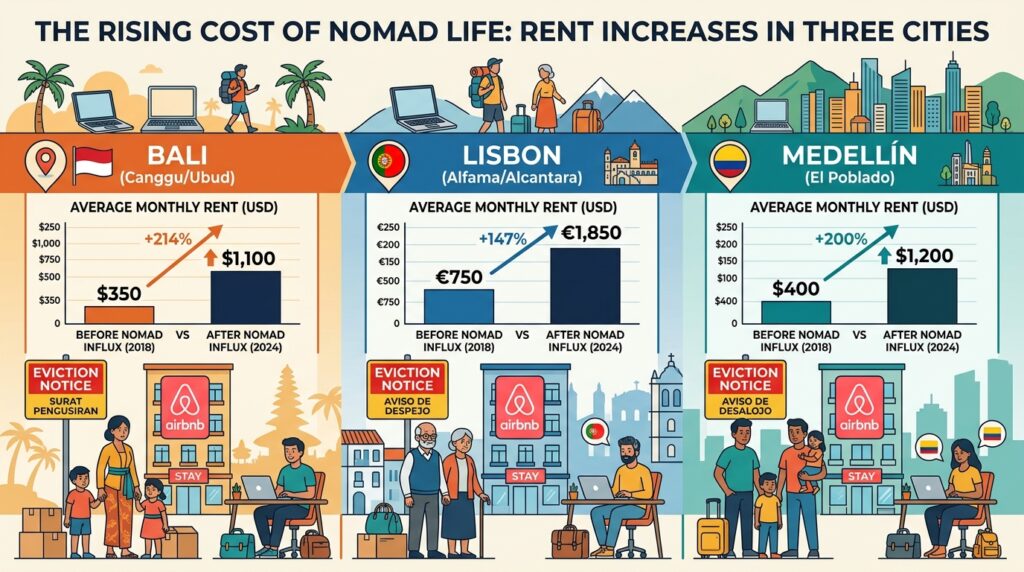
When digital nomads arrive in a new city, they often seek out affordable living, reliable Wi-Fi, and a vibrant community. What seems like a win-win situation—nomads get a cheap place to live, and locals benefit from increased tourism—can quickly turn sour. In places like Bali, Lisbon, and Medellín, the sudden surge of remote workers has driven up housing prices, pushing locals out of their own neighborhoods.
The Economics of Displacement
Landlords are now prioritizing short-term rentals to cater to nomads, leaving long-term residents struggling to find affordable homes. A studio apartment that once rented for $300 a month in Medellín’s El Poblado district can now fetch $800 or more on Airbnb. In Lisbon, entire neighborhoods like Alfama and Graça have seen rental prices increase by over 40% in just five years, directly correlated with the rise of remote workers and short-term rentals.
This economic displacement is one of the biggest reasons locals are growing resentful. They witness their communities being reshaped to accommodate transient visitors rather than those who call these places home permanently. Young families, students, and elderly residents on fixed incomes find themselves priced out of areas their families have lived in for generations.
Real Stories from Affected Communities
In Canggu, Bali, what was once a quiet surfing village has transformed into a digital nomad hotspot. Local warung (small family-owned eateries) struggle to compete with trendy cafes charging $6 for avocado toast. Traditional markets are being replaced by boutique stores selling yoga mats and organic smoothie bowls to foreigners. The monthly rent for a simple room has tripled in less than a decade, forcing many Balinese families to move inland, far from their ancestral lands and livelihoods.
The Expat Bubble: Living Parallel Lives
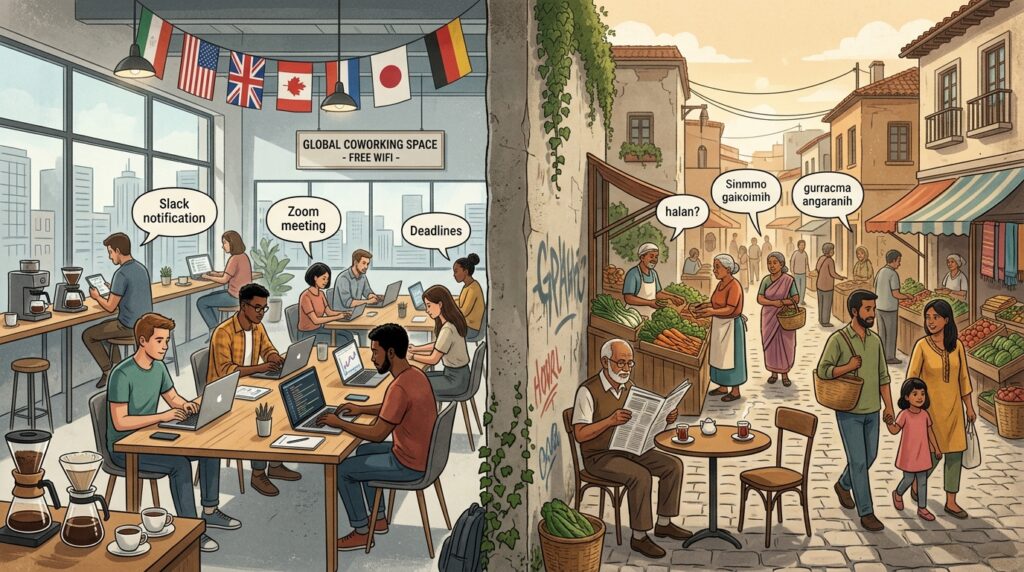
Beyond the housing crisis, digital nomads often unintentionally create a divide between themselves and the local population. Many nomads stick to expat bubbles, frequenting coworking spaces and cafes designed for foreigners rather than integrating into the community.
The Comfort Zone Trap
These expat enclaves offer English-speaking staff, Western-style amenities, and a familiar social scene. While comfortable, this lack of engagement can come across as disrespectful. Locals feel their culture and traditions are being ignored or treated as mere backdrop for the nomad experience. While nomads may see themselves as temporary visitors, their presence has a lasting impact on the social fabric of the places they inhabit, often leading to feelings of alienation and cultural erosion among the local population.
In Medellín’s Parque Lleras area, it’s not uncommon to walk through entire blocks hearing only English. Nomads gather in rooftop bars, attend networking events exclusively for foreigners, and date other expats, creating a self-sustaining bubble that requires minimal interaction with Colombian culture beyond surface-level tourism.
Economic Imbalance: Where Does the Money Really Go?
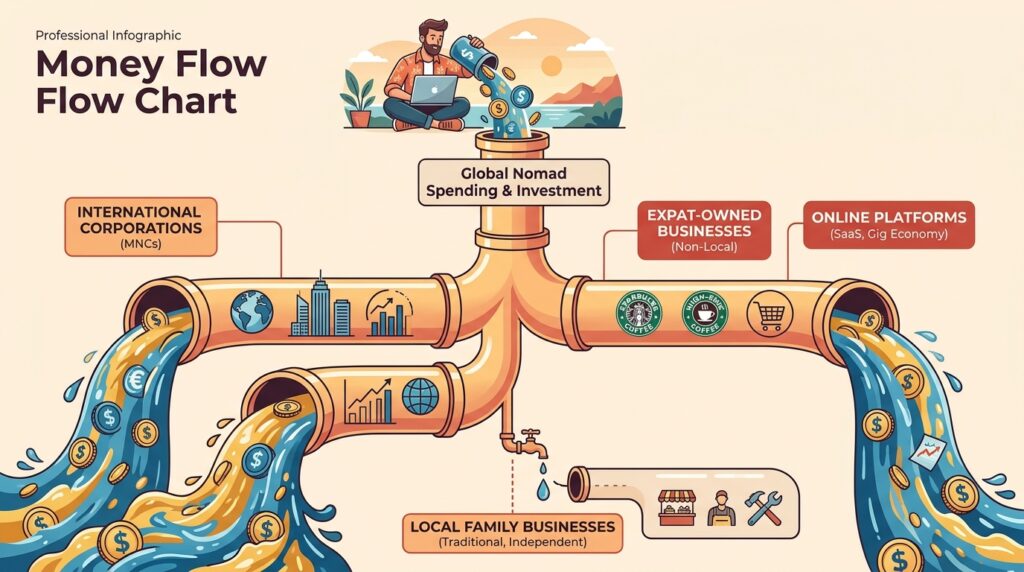
Another major issue is the economic imbalance digital nomads bring. While they may spend money on accommodation, food, and entertainment, their spending habits often bypass local businesses.
The Leakage Effect
Instead of supporting small, family-owned shops, many nomads opt for international chains, online services, or businesses owned by other expats. This means the financial benefits of their presence don’t always trickle down to the local economy, creating a sense of exploitation. Locals watch their cities transform to cater to outsiders while they struggle to make ends meet.
For example, a digital nomad might order groceries through an international delivery app, eat at a restaurant owned by a fellow American, work from a coworking space run by a European company, and book experiences through global platforms like Airbnb Experiences or Viator. The money circulates within the expat economy but rarely reaches the hands of traditional local business owners.
Over time, this dynamic can deepen economic inequalities and foster resentment as the wealth generated by nomads fails to benefit the broader community. The gig economy platforms that nomads rely on often extract value from the local economy without contributing proportionally through taxes or local employment.
Cultural Insensitivity: Unintentional Offenses
Cultural insensitivity is another common complaint. Digital nomads, often unaware of local customs and norms, can unintentionally offend residents.
Common Cultural Faux Pas
Whether it’s dressing inappropriately at sacred sites, disrespecting local traditions, or failing to learn even basic phrases in the local language, these actions can strain relationships between nomads and locals. Such behaviors, even if unintentional, can lead to misunderstandings and create a sense of disrespect among host communities.
In Bali, nomads have been criticized for posing inappropriately at temples, wearing revealing clothing in conservative areas, and treating sacred ceremonies as photo opportunities. In Lisbon, complaints include nomads being loud in residential areas late at night, treating historic neighborhoods as party zones, and showing little regard for local quiet hours and community norms.
While not all nomads are guilty of this, the behavior of a few can tarnish the reputation of the entire community, fueling resentment and hostility that may take years to repair. This cultural divide often highlights the need for greater awareness and education among digital nomads to foster mutual respect and understanding.

Environmental Impact: The Hidden Cost of Paradise
The environmental impact of digital nomads is another growing concern. Popular destinations are already grappling with issues like overcrowding, pollution, and strained infrastructure. The influx of remote workers only exacerbates these problems.
Resource Strain and Waste
As nomads consume resources like water and electricity while contributing to waste, the pressure on local systems intensifies. In places like Bali, where waste management systems are already overwhelmed, the environmental footprint of nomads is becoming impossible to ignore.
The increased demand for resources often leaves locals struggling to maintain their quality of life as they bear the brunt of environmental degradation. Water scarcity in Bali has reached crisis levels, with some areas experiencing severe shortages while hotels and villas catering to foreigners maintain lush pools and manicured gardens. Single-use plastic consumption has skyrocketed with the arrival of grab-and-go coffee culture and food delivery services that nomads favor.
Locals are left to deal with the consequences, further deepening their frustration and raising questions about the sustainability of long-term nomadism in these regions. The carbon footprint of frequent flights between destinations, the energy consumption of 24/7 coworking spaces, and the waste generated by a consumption-heavy lifestyle all contribute to environmental stress.

Government Responses: Regulations and Visa Policies
Governments in some countries have started to take notice, implementing policies to regulate the digital nomad phenomenon.
Policy Changes Around the World
Portugal, once a digital nomad haven, has introduced a digital nomad visa but with strict requirements to ensure nomads contribute to the local economy. The country has also implemented restrictions on new short-term rental licenses in Lisbon and Porto to address the housing crisis.
Similarly, Bali is cracking down on visa overstays and illegal remote work, aiming to create a more balanced relationship between nomads and residents. Indonesian authorities have increased enforcement of visa regulations, conducted raids on illegal coworking spaces, and introduced a new digital nomad visa that requires proof of substantial income and health insurance.
Mexico, Thailand, and Estonia have also refined their digital nomad visa programs to ensure that remote workers contribute economically without overwhelming local infrastructure. While these measures aim to balance the benefits and drawbacks of nomadism, they also highlight the growing tension between nomads and locals as communities seek to protect their resources and cultural integrity.
These policies reflect a broader effort to address the challenges posed by the digital nomad lifestyle while ensuring that local populations are not disproportionately affected. They represent a shift from unrestricted tourism to more sustainable, regulated long-term stays.

The Responsible Nomad Movement: A Path Forward
Despite these challenges, it’s important to recognize that not all digital nomads are oblivious to their impact. Many are actively working to be more responsible travelers.
Leading by Example
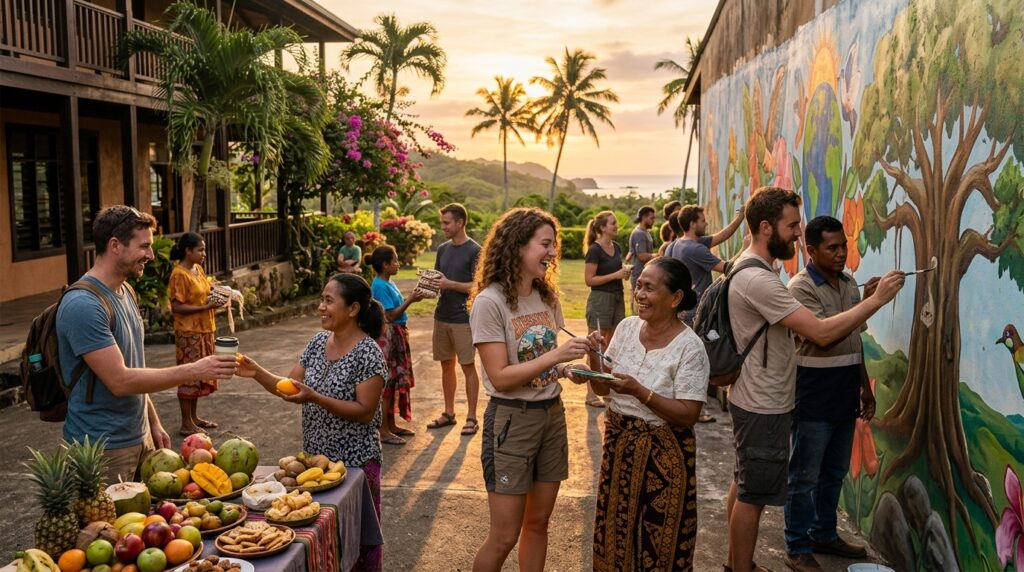
These conscious nomads support local businesses, learn the language, and respect cultural norms. Some even use their skills to give back to the communities they visit, teaching workshops, offering pro bono services, or volunteering with local organizations. These efforts show that it’s possible to be a digital nomad without alienating locals, but it requires mindfulness and a willingness to adapt.
Responsible nomads choose locally-owned accommodations over international chains, eat at family-run restaurants, hire local guides, and make an effort to understand and participate in community life. They recognize that they are guests in someone else’s home and act accordingly.

Solutions for Sustainable Nomadism
So what’s the solution to this growing divide? Creating a sustainable future for digital nomadism requires effort from multiple stakeholders.
For Digital Nomads
- Choose destinations thoughtfully: Research whether a location can handle an influx of visitors. Consider lesser-known destinations that would benefit from tourism without being overwhelmed.
- Support local economies: Prioritize locally-owned businesses, from accommodations to restaurants to services.
- Make an effort to integrate: Learn basic phrases in the local language, respect cultural norms, and participate in community life.
- Be mindful of housing: Consider long-term rentals that don’t displace locals, or stay in areas less impacted by housing shortages.
- Reduce environmental impact: Minimize waste, conserve resources, and offset carbon emissions from travel.
For Governments and Local Organizations
- Create programs that encourage positive interactions: Facilitate cultural exchange events, language exchange programs, and community integration initiatives.
- Implement fair regulations: Balance the benefits of nomadism with protections for local residents, particularly regarding housing and labor markets.
- Invest in infrastructure: Ensure that increased population doesn’t overwhelm local services and resources.
- Foster mutual understanding: Create educational campaigns for both nomads and locals about respectful coexistence.
For Local Communities
- Find ways to adapt: While frustration is understandable, embracing opportunities that digital nomads bring, such as increased tourism and global connections, can lead to positive outcomes.
- Voice concerns constructively: Engage with local government and nomad communities to find mutually beneficial solutions.
- Participate in the economy: Create businesses and services that cater to nomads while maintaining cultural authenticity.
The Future of Remote Work and Travel
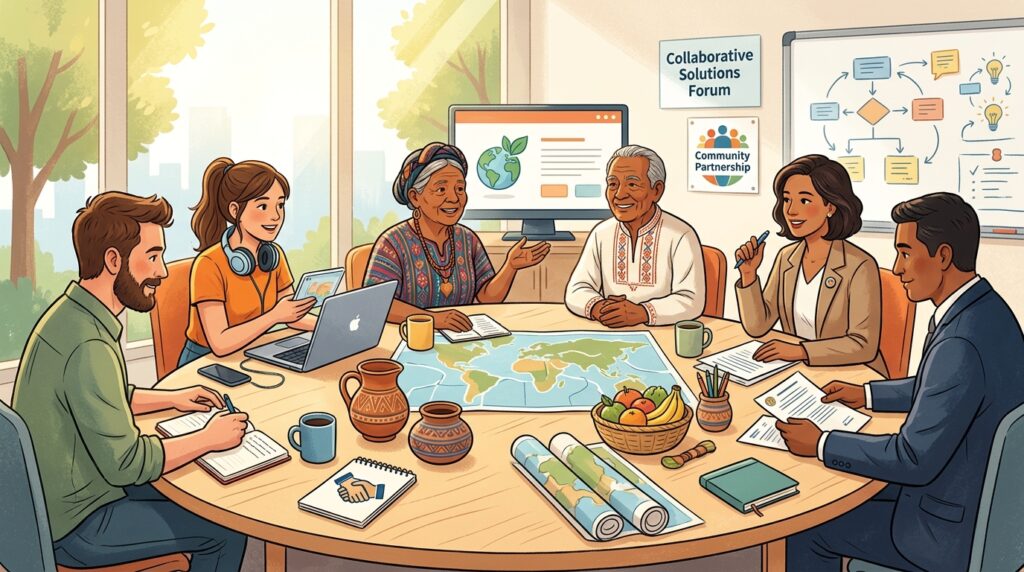
The truth is, the digital nomad lifestyle isn’t going away anytime soon. As remote work becomes more common, the number of people choosing to live and work abroad will only continue to grow. But with this growth comes a responsibility to ensure that the benefits are shared by everyone, not just a privileged few.
It’s up to both nomads and locals to find common ground and build a future where everyone can thrive. The digital nomad phenomenon is a double-edged sword: while it offers incredible opportunities for personal and professional growth, it also comes with challenges that can’t be ignored.
By addressing these issues head-on, we can create a more sustainable and inclusive way of living and working in a globalized world. The key is to strike a balance that respects both the needs of nomads and the rights of locals. This requires ongoing dialogue, mutual respect, and a commitment to ethical travel practices.
Conclusion: A Call for Conscious Nomadism
The digital nomad revolution has opened up unprecedented opportunities for location-independent work and cultural exchange. However, the growing tensions in destinations worldwide serve as a crucial reminder that our travel choices have real consequences for real people.
As we move forward, the question isn’t whether digital nomadism should exist, but how it can evolve to be more equitable, sustainable, and respectful. By acknowledging the challenges, listening to local voices, and committing to responsible practices, we can transform the digital nomad lifestyle from a source of tension into a force for positive global connection.
The future of remote work and travel depends on our collective willingness to prioritize people over convenience, community over comfort, and sustainability over short-term gains. Let’s choose to be not just digital nomads, but global citizens who contribute positively to every place we’re fortunate enough to call home, even temporarily.