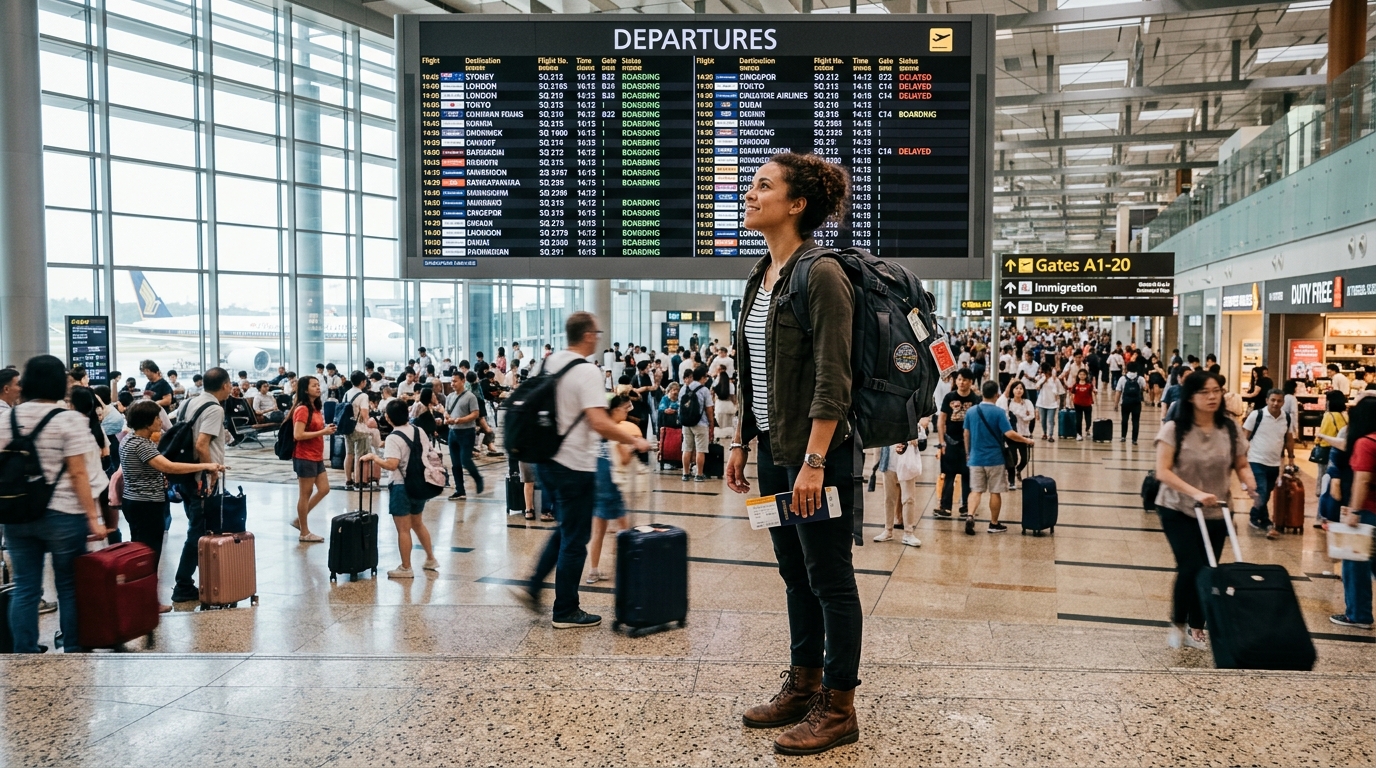

Solo travel is the ultimate freedom. No compromises, no fixed schedules—just you and the world to explore. But that independence comes with a hidden risk that every solo adventurer should be aware of. Scammers are constantly on the lookout for travelers who are alone, unfamiliar with local tricks, and more open to strangers. From overpriced taxi rides to elaborate schemes that prey on trust, solo adventurers are often the easiest targets.
Understanding how scammers operate and why they focus on solo travelers is the key to staying one step ahead and ensuring your journey stays about discovery, not deception. In this comprehensive guide, we’ll explore the most common solo travel scams, why solo travelers are particularly vulnerable, and most importantly, how you can protect yourself while exploring the world on your own terms.
Why Are Solo Travelers More Vulnerable to Scams?
Before diving into specific scams, it’s crucial to understand why scammers specifically target solo travelers. Knowledge is your first line of defense.
The Lack of a Second Opinion
One of the biggest challenges solo travelers face is the lack of a second opinion. When traveling in a group, there’s always someone to spot a red flag, question a suspicious situation, or confirm whether a price is fair. Solo travelers must rely entirely on their own instincts—which scammers know and exploit.
Traveling alone means you don’t have that immediate reality check when something seems off. A scammer might quote an outrageous price for a taxi ride, and without a travel companion to confirm it’s unreasonable, you might second-guess yourself, especially if you’re tired from a long flight or unfamiliar with the local currency.
The Desire for Human Connection
Another key factor is the natural desire for social interaction. Many solo travelers seek to meet new people, experience local culture, and engage with strangers more openly. While this is part of the beauty of solo travel, it also makes them an easy target.
Scammers frequently approach solo travelers under the guise of being friendly locals, helpful strangers, or even fellow tourists. Their goal is to gain trust before leading them into a scam. When you’re traveling alone, that friendly person offering to show you around might seem like a wonderful opportunity to connect with the local culture—until you realize their intentions aren’t genuine.
Language Barriers Create Opportunities
Language barriers also create opportunities for deception. A traveler who doesn’t speak the local language fluently may not fully understand pricing, directions, or what they’re agreeing to. Scammers take advantage of this by inflating costs, misleading tourists, or even tricking them into handing over personal information or credit card details.
Even if you’ve studied the language, regional dialects, slang, and rapid-fire speech can make it difficult to catch every detail in a conversation—especially when someone is intentionally trying to confuse you.

Common Scams That Target Solo Travelers
Scams targeting solo travelers come in many forms, but they all rely on the same principle: taking advantage of isolation, distraction, or lack of awareness. Let’s explore the most prevalent scams you should be aware of.
1. The Taxi Overcharge Scam
One of the most common scams involves taxi drivers overcharging tourists by taking longer routes or claiming that their meter is “broken.” This is especially common at airports or major tourist hubs where travelers are unfamiliar with local pricing.
How it works: You arrive at your destination, exhausted and eager to get to your accommodation. A taxi driver approaches you offering a ride. Instead of using the meter, they quote a fixed price that seems reasonable but is actually 3-5 times the normal fare. Alternatively, they agree to use the meter but take you on an unnecessarily long route, or they claim the meter is broken after you’re already in the taxi and demand an inflated price at your destination.
Red flags: Drivers who approach you inside the airport terminal rather than at the official taxi stand, refusal to use the meter, vague pricing, or drivers who seem overly eager to help with your luggage.
2. Fake Tour Guides and Ticket Sellers
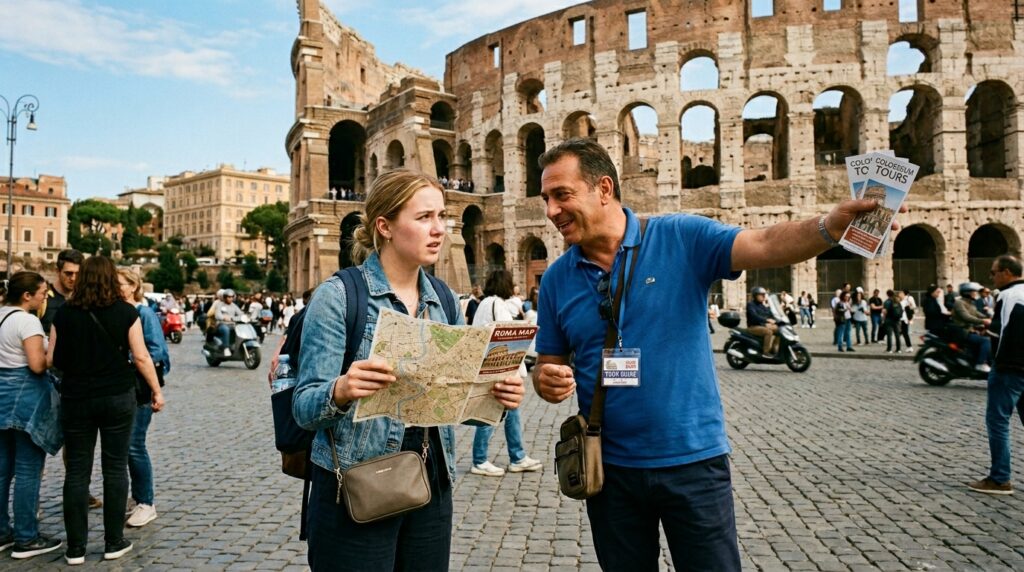
Another widespread scam involves fake tour guides or ticket sellers. A scammer might offer a “special deal” on an attraction, but after paying, the traveler realizes the ticket is fake or the tour never happens.
How it works: Someone approaches you near a popular tourist attraction offering discounted tickets or a “private tour” at a great price. They seem knowledgeable and friendly, perhaps even showing you what looks like official credentials. Once you pay, they disappear, or they lead you to a fake entrance that doesn’t exist. Some fake guides will also take tourists to specific shops or restaurants where they receive a commission while the traveler overpays for inferior products or services.
Red flags: Unsolicited offers near tourist attractions, prices that seem too good to be true, pressure to make an immediate decision, or guides who insist on taking you to specific shops.
3. The Distraction Pickpocketing Technique
Pickpocketing is another major issue, and solo travelers are prime targets because they’re often juggling maps, luggage, or taking photos, leaving them distracted. Scammers sometimes create elaborate distractions to steal belongings.
How it works: While you’re admiring a monument or checking your phone, someone “accidentally” bumps into you, drops something in front of you, or engages you in an animated conversation. While your attention is focused on this person or situation, an accomplice quietly steals your wallet, phone, or bag. Common distraction tactics include someone spilling a drink on you, asking for directions while holding a map or petition, or creating a fake argument or fight nearby.
Red flags: Unexpected physical contact in crowded areas, overly friendly strangers who get too close, people creating commotions or distractions in tourist-heavy zones.
4. The “Friendly Local” Restaurant and Bar Scam
One of the most notorious emotional scams is the “friendly local” scam, where a stranger befriends a solo traveler and offers to show them around. Everything seems fine until they end up at a restaurant or bar where the traveler is forced to pay an outrageous bill.
How it works: A charming, well-spoken local approaches you, perhaps at a café, hostel, or tourist site. They’re genuinely interesting, speak excellent English, and seem eager to show you the “real” local experience away from tourist traps. After building rapport, they suggest going to a specific bar or restaurant they “know.” Once there, they order expensive drinks and food without showing you prices. When the bill arrives, it’s hundreds or even thousands of dollars. If you refuse to pay, intimidating individuals may appear, threatening you until you hand over money or cards.
Some scammers take this further, pretending to develop a romantic interest before asking for money, valuables, or personal details. This type of scam is particularly common in online travel communities and dating apps, where scammers lure travelers into fraudulent schemes before they even arrive at their destination.
Red flags: Strangers who are overly eager to take you to specific establishments, reluctance to let you see menus or prices, pressure to order expensive items, or new “friends” who quickly suggest moving to a second location.

5. ATM and Currency Exchange Scams
Financial scams pose a significant risk in many tourist areas. There are rigged ATMs designed to capture card details, or scammers posing as helpful locals who offer to assist with withdrawing cash only to steal it instead.
How it works: At an ATM, a scammer might install a skimming device that captures your card information and PIN. Or they’ll offer to “help” you navigate a confusing ATM interface, watching you enter your PIN, then stealing your card or cash. Similarly, currency exchange scams are common, with travelers receiving counterfeit bills or being given incorrect change. Some exchange booths advertise great rates but add hidden fees or use confusing math to shortchange you.
Red flags: ATMs in isolated or poorly lit areas, ATMs that look tampered with or have loose parts, strangers offering help at ATMs, currency exchange booths without clear pricing or hidden in back alleys.
6. The Fake Police Officer Scam
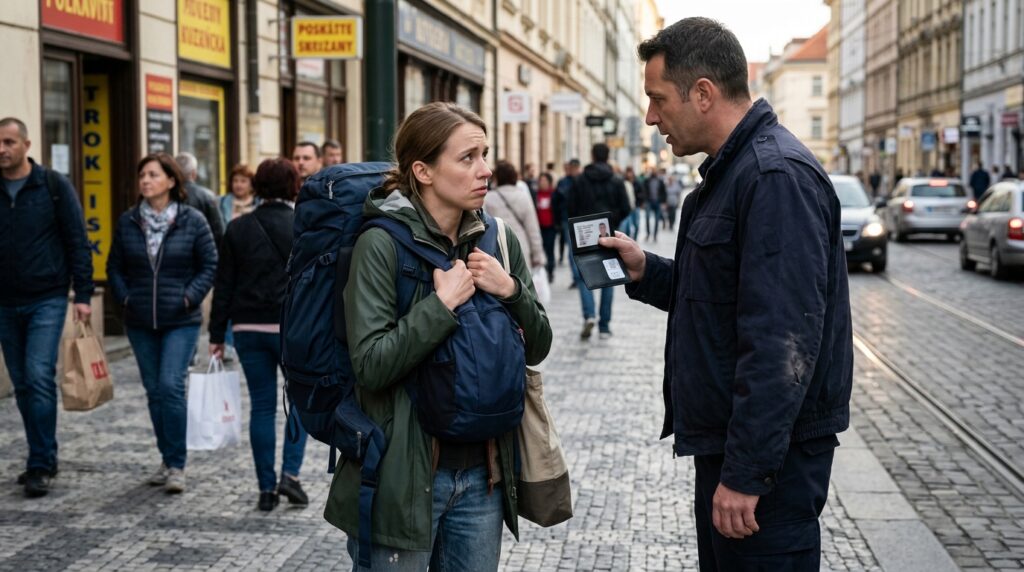
In some destinations, scammers pose as police officers, claiming you’ve committed some violation and demanding to see your passport and wallet. They’ll “inspect” your documents and money, then conveniently disappear with your valuables.
How it works: Someone dressed as a police officer approaches you, showing what looks like an official badge. They claim you’ve violated a local law—perhaps taking photos in a restricted area or possessing illegal substances. They demand to see your passport and wallet to “verify your identity” or “check for counterfeit money.” While examining your belongings, they steal cash or your entire wallet, then make excuses to leave quickly.
Red flags: Officers who approach you on the street rather than in an official capacity, requests to hand over your wallet or passport, reluctance to go to an actual police station, or threats of immediate arrest if you don’t comply.
How Solo Travelers Can Protect Themselves
Despite these risks, solo travel can be safe and enjoyable with the right precautions. Here’s your comprehensive protection strategy.
Research Before You Go
The first step is awareness. Simply knowing that these scams exist makes it easier to spot red flags before falling for them. Before visiting a new destination, research common scams in that area. Many travel forums, blogs, and local tourism websites provide up-to-date information on what to watch out for.
Action steps:
- Read recent traveler reviews on forums like TripAdvisor, Reddit’s solo travel communities, and Lonely Planet’s Thorn Tree
- Join Facebook groups for solo travelers visiting your destination
- Bookmark your country’s embassy or consulate information
- Download offline maps and translation apps before arrival
Guard Your Personal Information
Another key strategy is to avoid oversharing personal details. Scammers often gain a traveler’s trust by casually asking about their plans, where they’re staying, or how long they’ll be in town. This information can be used against them, so it’s best to stay vague when talking to strangers.
What to keep private:
- Your exact accommodation address or room number
- Your complete travel itinerary
- Whether you’re traveling alone or meeting someone
- Details about valuable items you’re carrying
- Your return flight information
Instead of saying “I’m staying at the Hilton downtown alone for two weeks,” try “I’m just visiting for a bit, still exploring the city!”
Choose Reputable Services
Choosing accommodations and transportation wisely plays a crucial role in safety. Book through reputable platforms with verified reviews to reduce the risk of fake listings or scam properties. Likewise, using official transportation services such as registered taxis or ride-hailing apps helps avoid being overcharged or, worse, getting into a dangerous situation.
Best practices:
- Book accommodations through established platforms like Booking.com, Airbnb (with verified hosts), or Hostelworld
- Read recent reviews, especially from solo travelers
- Use official airport taxi stands or pre-book airport transfers
- Download ride-hailing apps like Uber, Grab, or Bolt before arrival
- Verify taxi licenses and meters before getting in

Secure Your Valuables
Keeping valuables secure is another simple but effective precaution. Many solo travelers opt for anti-theft backpacks, money belts, or hidden compartments for storing cash and passports. In crowded areas, keeping a firm grip on belongings and being aware of surroundings can prevent pickpocketing attempts.
Essential gear:
- Anti-theft backpack with lockable zippers and slash-proof material
- Money belt or neck wallet worn under clothing
- RFID-blocking wallet or passport holder
- Portable door lock or door alarm for accommodations
- Luggage locks for hostel lockers
Smart habits:
- Never keep all your money and cards in one place
- Carry only the cash you need for the day
- Keep a digital copy of important documents in secure cloud storage
- Use hotel safes for passports and excess cash
- Keep bags in front of you in crowded areas
Leverage Technology
Technology offers an extra layer of protection. Location-sharing apps allow trusted friends or family to track a traveler’s whereabouts, while mobile banking and contactless payment methods reduce the need to carry large amounts of cash.
Recommended apps:
- Location sharing: Google Maps location sharing, Find My Friends, or Life360
- Safety apps: bSafe, TripWhistle, or RedZone
- Mobile banking with instant card freeze capabilities
- Contactless payment options like Apple Pay or Google Pay
- VPN services for secure internet connections
If booking tours or activities, choose well-reviewed companies and avoid last-minute street deals to minimize the risk of fraud.
Trust Your Instincts
Lastly, trusting your instincts is crucial. Scammers rely on hesitation and politeness, knowing that many people feel uncomfortable saying no. Solo travelers should feel confident in walking away from anything that feels suspicious, even if it means offending someone.
Remember:
- If something seems too good to be true, it probably is
- You don’t owe strangers your time, money, or personal information
- It’s okay to be “rude” if you feel unsafe
- Your safety is more important than being polite
- Walk away from any situation that makes you uncomfortable

The Future of Solo Travel and Scam Prevention
As solo travel continues to grow, so does awareness about the risks. More travelers are sharing their experiences online, making it easier for others to learn about potential dangers before they happen. Governments and tourism boards are also cracking down on scams, increasing security in major tourist areas, and improving traveler support services.
Technology will play a bigger role in scam prevention:
- AI-powered fraud detection in banking apps
- Blockchain-based identity verification for travel bookings
- Biometric authentication at borders and hotels
- Real-time scam alert apps with crowd-sourced data
- Enhanced verification systems for tour operators and accommodations
These advancements in security measures are making it harder for scammers to operate, creating a safer environment for solo travelers worldwide.
Conclusion: Travel Smart, Travel Confidently
Despite the risks, solo travel remains one of the most rewarding ways to explore the world. The freedom to set your own schedule, meet people on your own terms, and discover destinations at your own pace is unparalleled. With the right mindset and precautions, travelers can enjoy the freedom and adventure of solo exploration without falling victim to scams.
Being alert, doing research, and trusting your instincts go a long way in ensuring a safe and enjoyable journey. Remember, the vast majority of people you’ll meet while traveling are genuine, kind, and eager to help. Scammers are the exception, not the rule. By staying informed and prepared, you can confidently navigate your solo adventures while minimizing risks.
The world is waiting for you to explore it. Don’t let fear of scams hold you back—arm yourself with knowledge, stay vigilant, and embark on the solo travel adventure of a lifetime!
Have you encountered any travel scams or have tips for fellow solo travelers? Share your experiences in the comments below to help keep our travel community safe!