
There is a moment on every Kenya safari when time seems to stop. Maybe it is watching a lion pride stretch in the first light of dawn, hearing the thunder of two million wildebeest surging toward the Mara River, or feeling the gentle swipe of a Rothschild’s giraffe tongue as it takes a treat from your open palm. Kenya is that rare destination that exceeds even the wildest dreams you have built around Africa.
Welcome to the ultimate Kenya safari guide — a lovingly curated journey through the country’s ten most breathtaking wildlife destinations and landscapes, packed with practical planning advice on weather, transportation, food, and culture. Whether you have one week or a month, whether you are a first-time visitor or a seasoned explorer, this guide will help you craft the African adventure of a lifetime.
Why Kenya Belongs at the Top of Your Travel List
Kenya is where the spirit of Africa comes alive. Few countries on the planet pack this much diversity into a single border: rolling savannas prowled by big cats, the snow-dusted slopes of Mount Kenya, soda lakes blushing pink with flamingos, a volcanic rift valley, and the vast, mirage-shimmering deserts of the north.
Just as importantly, Kenya is the birthplace of the classic safari. Generations of guiding, conservation, and hospitality expertise mean the infrastructure — from luxury tented camps to community-run conservancies — is among the finest in Africa. Add the warm welcome of its people and the living cultures of tribes like the Maasai and Samburu, and you have a destination that feeds your soul as generously as it fills your memory card.
10. Nairobi — The Gateway to the Wild
Every great Kenya safari begins in Nairobi, the buzzing capital city that is unlike any other on Earth. Nairobi is the only capital in the world with a full-scale national park on its doorstep: at Nairobi National Park, lions, giraffes, and black rhinos roam against a backdrop of city skyscrapers, a surreal juxtaposition you will not see anywhere else on the planet.
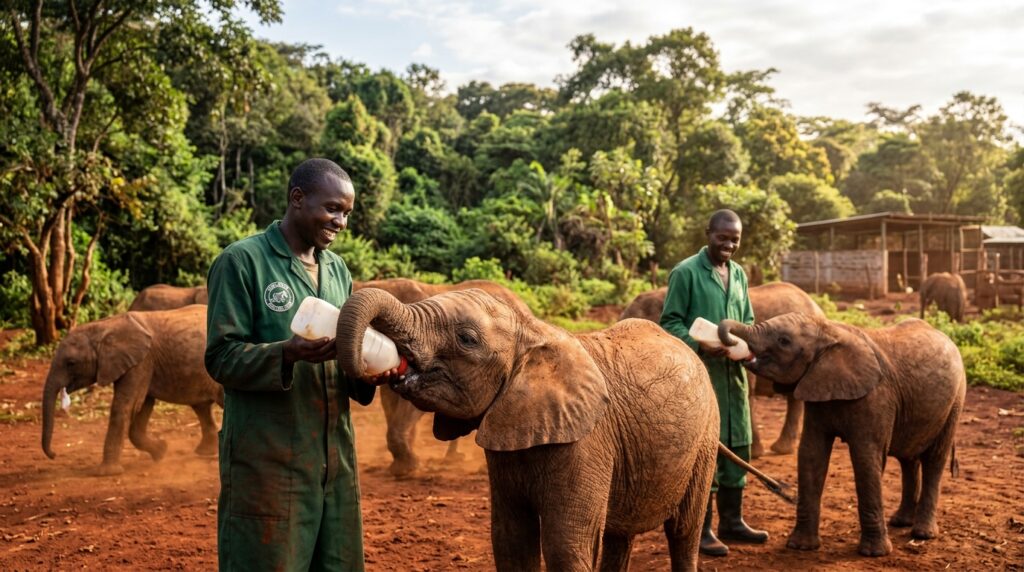
Just beyond the center, the Giraffe Centre lets you come eye-to-eye (and snack-to-snack) with endangered Rothschild’s giraffes, while the David Sheldrick Wildlife Trust rescues and rehabilitates orphaned baby elephants — its daily feeding hour is one of the most heart-melting experiences in African travel. Round out your stay with the Karen Blixen Museum, vibrant markets, a thriving café and coffee culture, and some of East Africa’s best restaurants.
Traveler’s tip: Allow one to two days in Nairobi at the start of your trip to shake off jet lag, and time your Sheldrick Trust visit for the 11 a.m. public feeding.
9. Samburu National Reserve — A Rare Wildlife Haven
While most travelers flock to the famous Maasai Mara, Samburu National Reserve in northern Kenya delivers a completely different, wonderfully raw safari. This semi-arid wilderness, watered by the Ewaso Ng’iro River, is home to a cast of characters you will not find in the southern parks — the celebrated “Samburu Special Five”: Grevy’s zebra, reticulated giraffe, Somali ostrich, beisa oryx, and the impossibly elegant, long-necked gerenuk.
Samburu’s rugged beauty of rust-red earth, rocky outcrops, and doum palm groves, combined with its strong cultural ties to the Samburu people — the proud, colorful cousins of the Maasai — makes it one of Kenya’s most underrated safari destinations. Leopard sightings along the riverbanks are famously reliable here.
Don’t miss: A sunset camel trek with Samburu guides and a cultural visit to a traditional manyatta village.
8. Lake Nakuru — The Flamingo Paradise
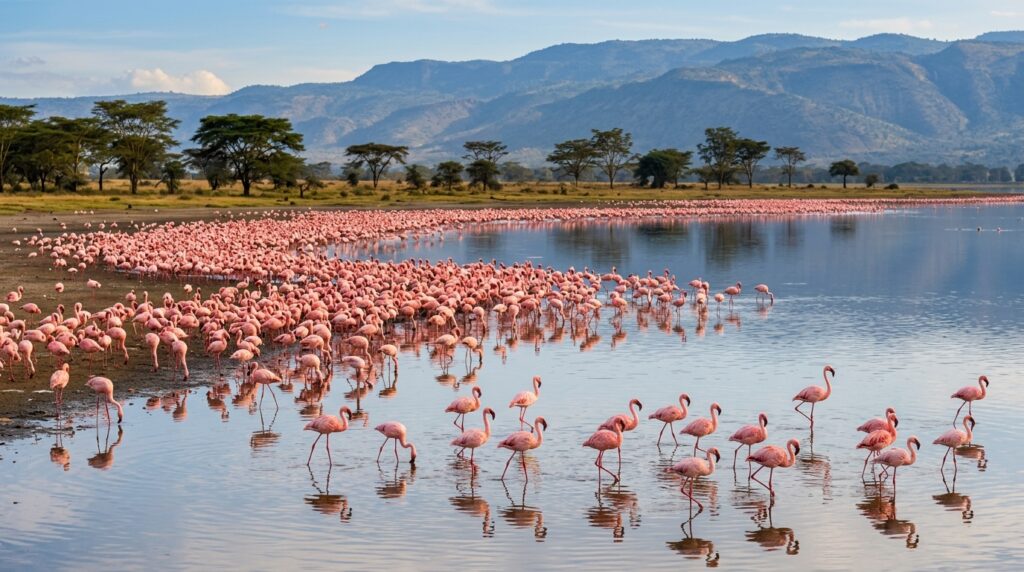
Few sights in Africa can match the shoreline of Lake Nakuru, where thousands of flamingos gather to paint the water’s edge in shifting shades of pink. Set within Lake Nakuru National Park, this soda lake is also one of Kenya’s most important rhino sanctuaries, making it one of the best places in the country to see both black and white rhinos up close.
Beyond the flamingos, the park shelters lions, leopards, water buffalo, endangered Rothschild’s giraffes, and more than 450 bird species, making it pure paradise for wildlife photographers and bird enthusiasts. Drive up to Baboon Cliff for a sweeping viewpoint over the shimmering lake below.
Traveler’s tip: Nakuru sits just two to three hours by road from Naivasha, so it slots easily into any southern-circuit itinerary.
7. Amboseli National Park — Elephants Beneath Kilimanjaro
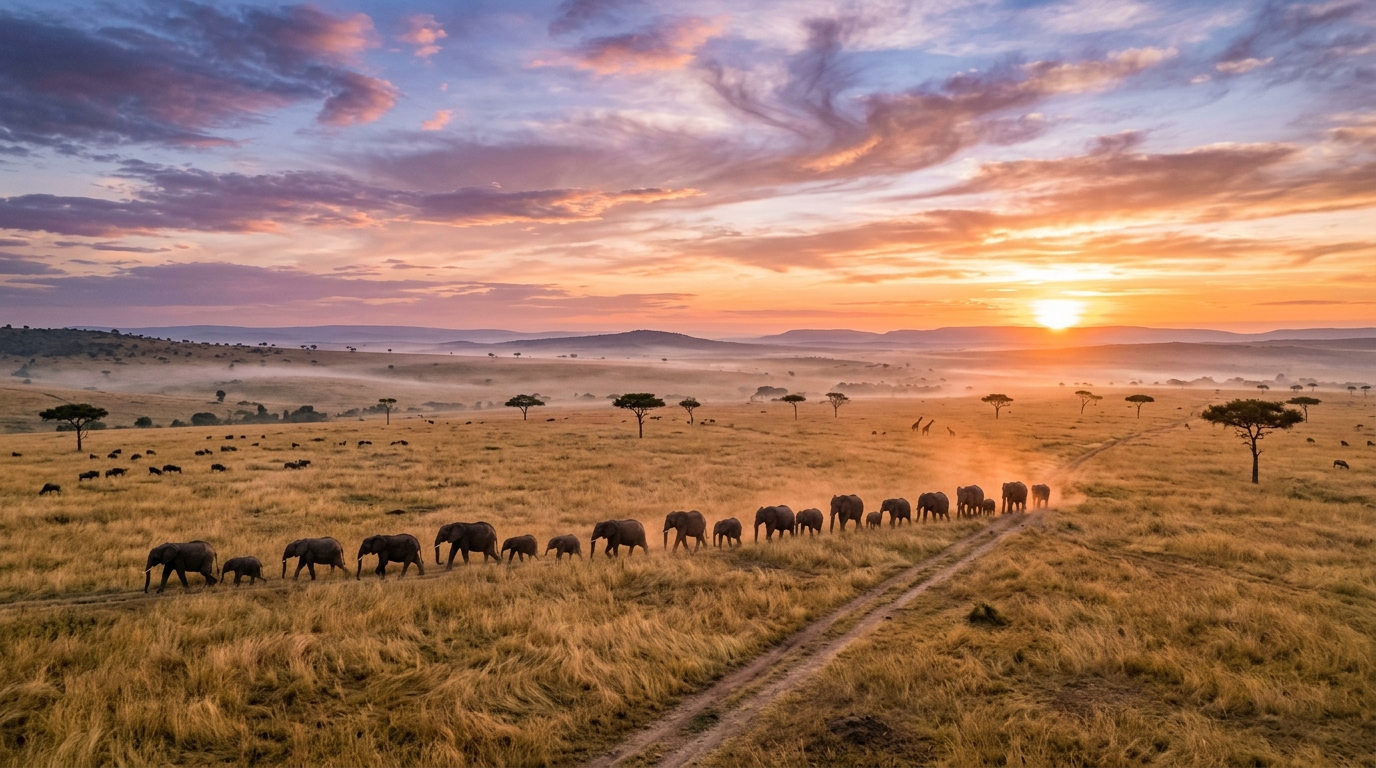
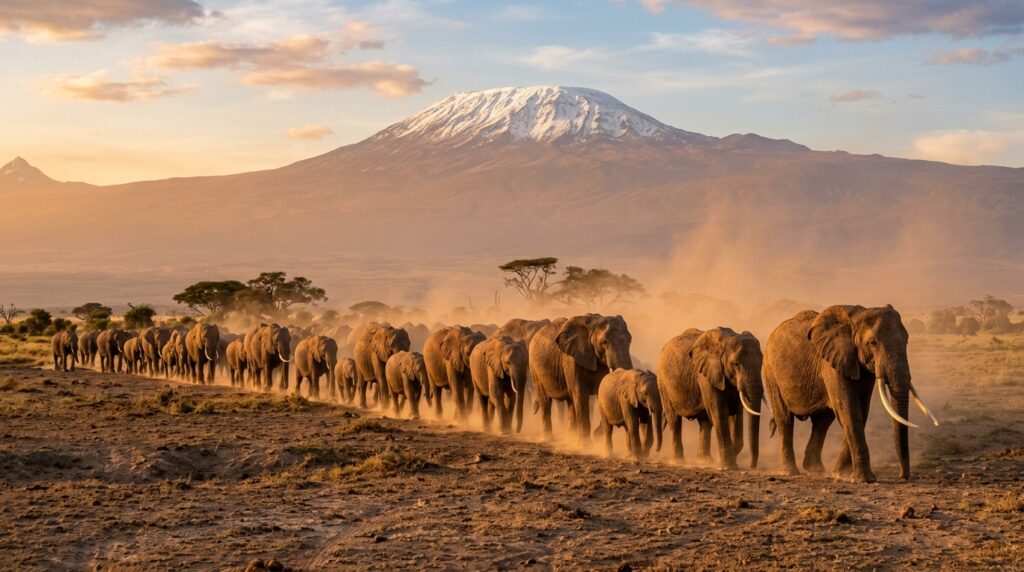
Few places in Africa rival the scenery of Amboseli National Park, where herds of free-ranging elephants stride across dry lake beds beneath the snow-capped peak of Mount Kilimanjaro. Amboseli is famous for hosting some of the continent’s oldest and largest-tusked elephants, and its wide-open plains, papyrus swamps, and swirling dust create dreamlike conditions for photographers.
Climb Observation Hill for a sweeping view over the entire ecosystem, watch hippos and more than 400 bird species in the wetlands, and spend quiet moments with the Maasai communities who have called this land home for centuries.
Don’t miss: The classic postcard shot — elephant herds crossing the plain with Kilimanjaro towering behind — is best captured in the soft light of early morning before clouds veil the summit.
6. Tsavo National Park — The Land of the Red Elephants
Divided into Tsavo East and Tsavo West, Tsavo is Kenya’s largest national park, covering a staggering 22,000 square kilometers of raw wilderness. The park is famous for its “red elephants,” which earn their rusty color from bathing in the iron-rich red soil.
Tsavo’s landscapes are rugged and diverse: the black ribbons of the Shetani lava flows, volcanic craters, the striped cliffs of Mudanda Rock, and Mzima Springs, where crystal-clear pools fed by the Chyulu Hills attract hippos, crocodiles, and darting fish. Unlike the busier parks, Tsavo offers a true sense of solitude — you can drive for hours without meeting another vehicle.
Traveler’s tip: Tsavo lies directly on the Nairobi–Mombasa road and rail corridor, making it the perfect safari stop on a bush-and-beach combo trip to the Kenyan coast.
5. Ol Pejeta Conservancy — A Rhino Conservation Success Story
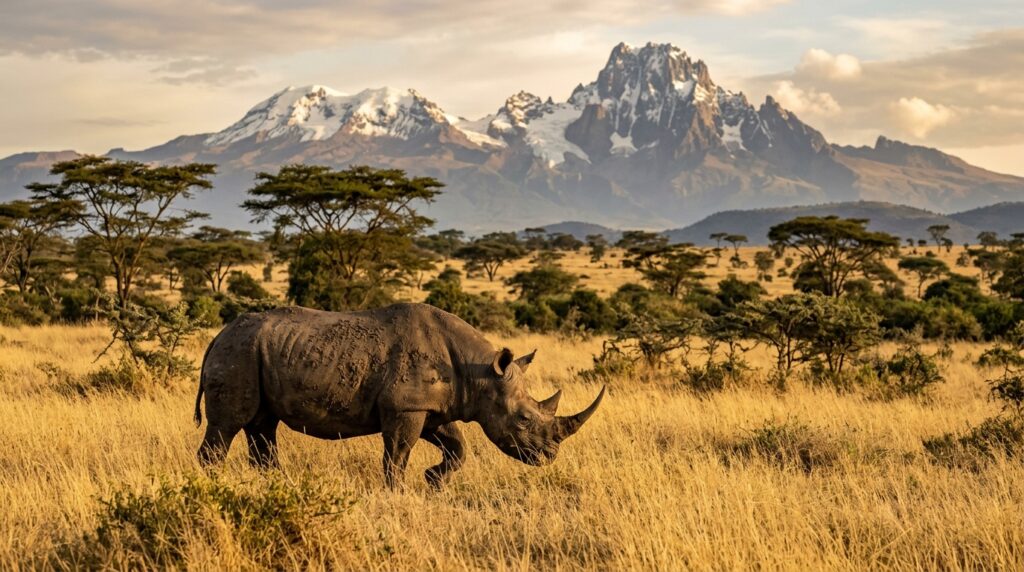
For travelers who want their visit to give back, Ol Pejeta Conservancy near the foothills of Mount Kenya is a must-visit. This private reserve is home to the last two northern white rhinos on Earth and, thanks to tireless conservation work, stands as one of the best places in Kenya to see black rhinos in the wild.
Yet Ol Pejeta is far more than a one-species story: lions, cheetahs, elephants, and African wild dogs roam its grasslands, and the Sweetwaters Chimpanzee Sanctuary provides a refuge for rescued primates. It is a unique blend of luxury safari experiences and meaningful wildlife conservation — every park fee directly funds anti-poaching patrols and community programs.
Don’t miss: The behind-the-scenes conservation experiences, from rhino tracking on foot to sniffer-dog demonstrations.
4. The Great Rift Valley — A Land of Natural Wonders
Stretching across Kenya from north to south, the Great Rift Valley is one of the most geologically significant regions on Earth — a vast trench of lakes, volcanoes, and escarpments that creates some of Africa’s most stunning landscapes.
Come here to watch flamingos wade past spurting geysers at Lake Bogoria’s hot springs, hike the rim of the ancient volcanic crater of Mount Longonot, or unwind on the tranquil shores of Lake Naivasha, where hippos grunt among the papyrus and African fish eagles cry overhead. A guided walking safari on Crescent Island, within arm’s reach of giraffes and zebras, is one of Kenya’s most memorable gentle adventures.
Traveler’s tip: Naivasha makes a wonderful overnight stop between Nairobi and the Mara — fresh grilled tilapia by the lakeshore is the local specialty.
3. The Maasai People — A Living Cultural Treasure
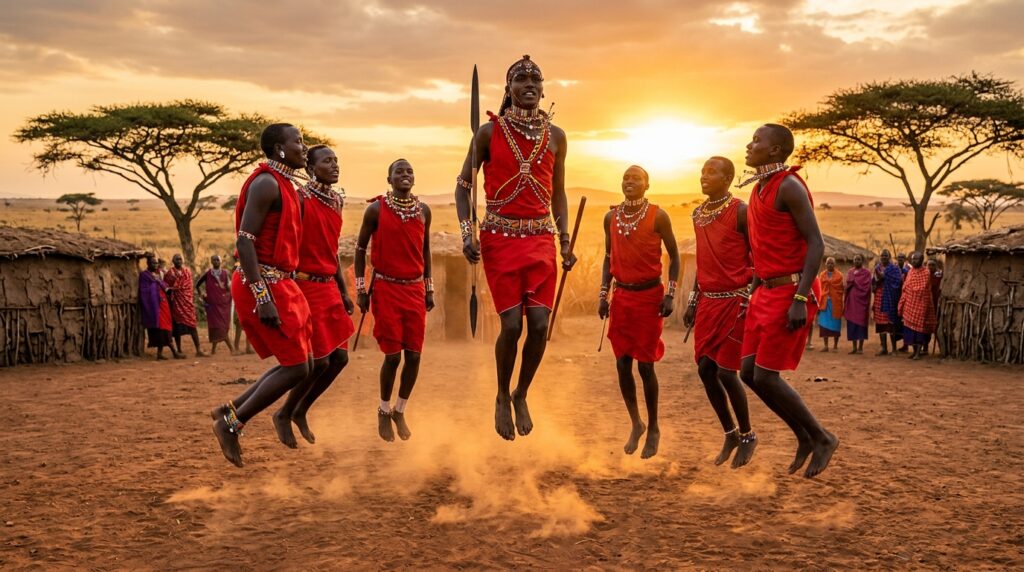
A safari in Kenya is not only about wildlife — it is also about the people. The Maasai, one of Africa’s most famous indigenous tribes, have lived alongside Kenya’s wildlife for centuries, and a visit to a Maasai village adds a profound human layer to any journey.
Learn about intricate beadwork in which every color carries meaning, hear warrior traditions passed down through generations, and discover a deep, practical knowledge of the land and its plants. Watching the Maasai perform the adumu, the traditional jumping dance, is a powerful experience that connects travelers to the living heritage of Kenya.
Traveler’s tip: Choose community-run village visits and women’s beadwork cooperatives so your spending directly supports Maasai families.
2. The Great Migration — Nature’s Greatest Spectacle
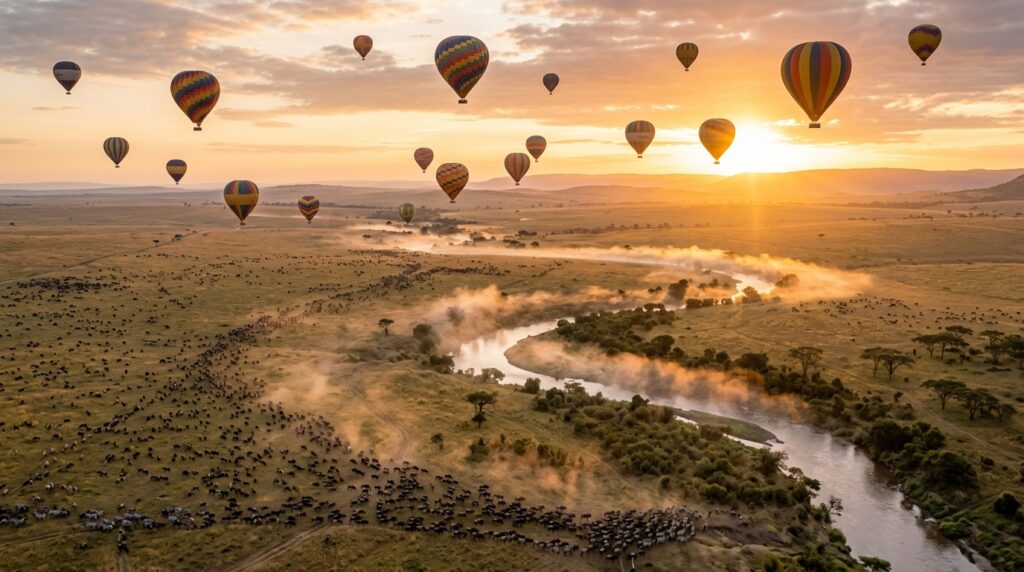
Each year, one of the most incredible wildlife events on the planet unfolds in Kenya’s Maasai Mara: the Great Migration. More than two million wildebeest, zebras, and gazelles make the perilous journey from the Serengeti in Tanzania in search of fresh grazing, shadowed every step of the way by lions, cheetahs, hyenas, and crocodiles.
Witnessing a river crossing — herds hesitating on the bank, then plunging into the crocodile-filled Mara River in a chaos of spray, dust, and thunder — is a once-in-a-lifetime moment that defines the very essence of an African safari.
Don’t miss: Crossings typically happen from July to October; book your camp many months ahead for these peak weeks.
1. Maasai Mara — The Crown Jewel of African Safaris
Topping every list, the Maasai Mara National Reserve is the ultimate safari destination in Kenya. Home to an astonishing density of wildlife, including the Big Five — lion, leopard, elephant, buffalo, and rhino — the Mara offers some of the best game viewing anywhere in Africa.
Its wide-open plains, golden grasslands, and dramatic skies create the iconic African landscape of your imagination. Watch a lion pride hunt at sunrise, spot a leopard lounging in an acacia tree, and float above the savanna in a hot air balloon before landing to a champagne bush breakfast.
Traveler’s tip: Stay in a private conservancy bordering the reserve for exclusive game drives, night safaris, and crowd-free viewing.
Planning Your Kenya Safari: Practical Tips
Best Time to Visit & Weather Advice
Kenya is a year-round destination, but timing shapes your experience. The dry seasons — June to October and January to February — deliver the best game viewing, with animals gathered around waterholes and short, photogenic grass. July to October coincides with the Great Migration in the Maasai Mara. The “long rains” (March to May) and “short rains” (November to December) bring emerald landscapes, baby animals, fewer crowds, and softer prices.
Pack layers: early-morning game drives can dip to around 10°C (50°F), while afternoons warm up to a pleasant 25–28°C (77–82°F). Neutral-colored clothing, a sun hat, and a light rain jacket will serve you well.
Transportation Tips
Most travelers fly into Jomo Kenyatta International Airport (NBO) in Nairobi. From there, small aircraft from Wilson Airport — with carriers such as AirKenya and Safarilink — hop to the Maasai Mara, Amboseli, or Samburu in under an hour. On the ground, safari operators use 4×4 Land Cruisers with pop-up roofs for game viewing, and hiring a professional driver-guide is highly recommended over self-driving. For a scenic budget option, the Madaraka Express railway glides from Nairobi toward Mombasa through Tsavo country. Please note that visa requirements, park fees, and flight schedules can change over time — always confirm before you travel.
Food Recommendations
Kenyan cuisine is hearty and full of flavor. Don’t leave without trying nyama choma (slow-roasted goat or beef), ugali (the maize staple), sukuma wiki (sautéed greens), and kachumbari (fresh tomato-and-onion salad). Breakfast mandazi (sweet fried dough) with milky chai is pure comfort, and Kenyan coffee and tea are world-class. In Nairobi, the famous Carnivore Restaurant serves its “beast of a feast” grilled meat experience, while lakeside kitchens around Naivasha grill superb whole tilapia.
A Classic 7-Day Kenya Safari Itinerary
- Day 1 – Nairobi: Arrive; visit the Giraffe Centre and the David Sheldrick elephant feeding at 11 a.m.; sunset game drive in Nairobi National Park.
- Day 2 – Maasai Mara: Morning flight to the Mara; afternoon game drive across the Musiara Marsh.
- Day 3 – Maasai Mara: Dawn hot-air-balloon safari with champagne breakfast; full-day game drive in search of the Big Five.
- Day 4 – Maasai Mara: Mara River crossing points (in season) and a Maasai village visit; sundowners on a scenic overlook.
- Day 5 – Lake Naivasha: Transfer into the Rift Valley; afternoon boat safari among hippos and fish eagles; optional Crescent Island walking safari.
- Day 6 – Lake Nakuru: Full-day game drive for rhinos, lions, and flamingos; panorama stop at Baboon Cliff; overnight near the park.
- Day 7 – Nairobi & Departure: Return to Nairobi for last-minute coffee and Maasai market souvenirs before your flight home.
Short on time? Swap Days 5–6 for Amboseli to catch Kilimanjaro sunrises. Have ten days or more? Add Tsavo or Samburu for a truly complete portrait of Kenya.
Quick Kenya Safari FAQ
How many days do I need for a Kenya safari?
Seven days covers the classic southern circuit comfortably; ten to fourteen days lets you add Samburu, Tsavo, or the coast.
Is Kenya good for first-time safari goers?
Absolutely. Excellent guides, short internal flights, and abundant wildlife make Kenya one of the easiest and most rewarding safari destinations for beginners.
Can I see the Big Five in Kenya?
Yes — the Maasai Mara, Lake Nakuru, and Ol Pejeta together give you very strong chances of spotting lion, leopard, elephant, buffalo, and rhino.
Is a Kenya safari family-friendly?
Very much so. Many camps and lodges welcome children with family tents and junior-ranger activities; consult your doctor about health precautions before traveling with kids.
Final Thoughts: Kenya, the Land Where Nature Reigns
A safari in Kenya is more than a trip — it is an adventure that touches the soul. From the bustling streets of Nairobi to the endless plains of the Maasai Mara, from the pink flamingos of Lake Nakuru to the towering elephants of Amboseli, Kenya promises memories that last a lifetime. Pack your bags, grab your camera, and come meet the wild — in a land where nature reigns supreme and every moment is a story waiting to be told.