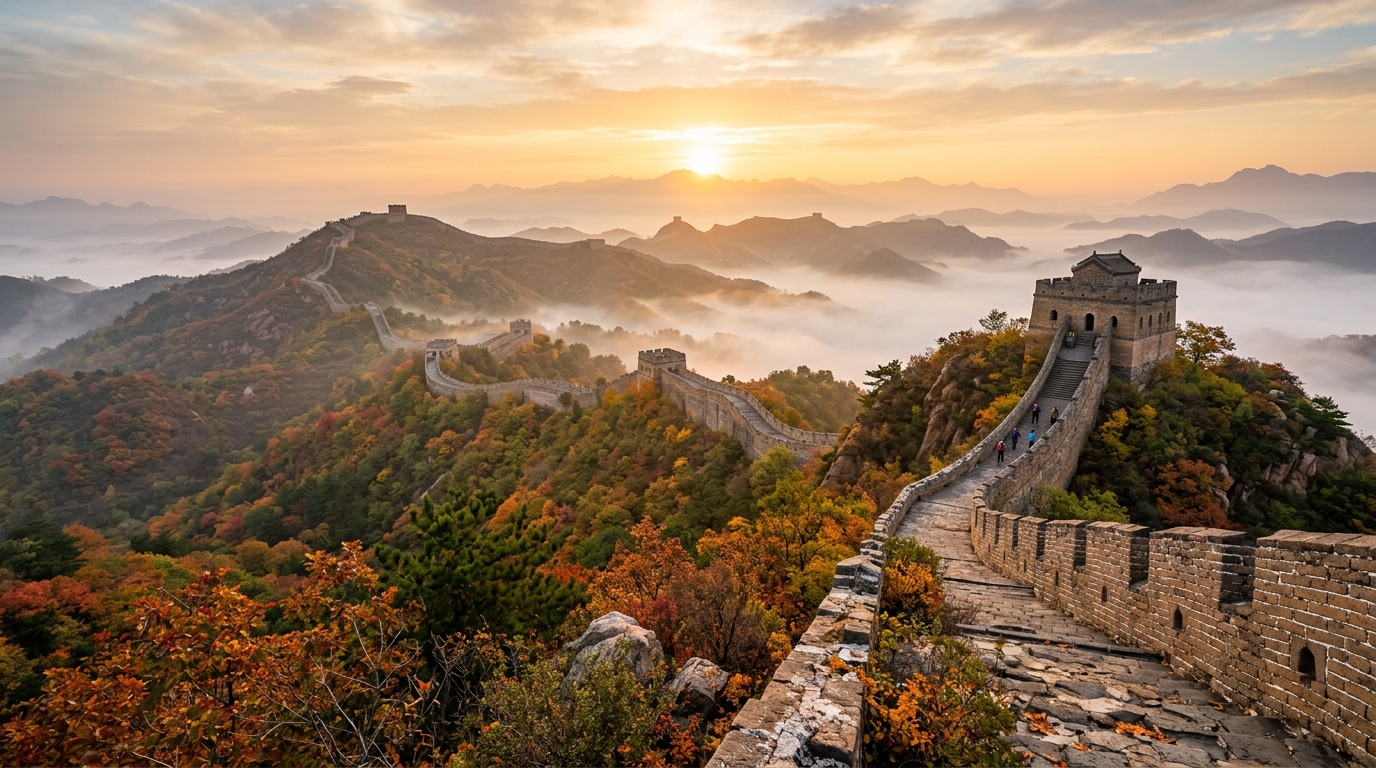

Did you know the Great Wall of China stretches for more than 13,000 miles (21,196 km), making it one of the most impressive structures ever built on Earth? With its rich history, dramatic watchtowers and breathtaking ridge-top views, it is no wonder the Great Wall ranks among the world’s most iconic landmarks. Whether you are planning your very first trip to Beijing or dreaming of returning to hike a wilder, quieter stretch, this Great Wall of China travel guide walks you through the ten most important things to know before you go — plus section-by-section recommendations, transport tips, local food favorites and a ready-to-use day itinerary. Lace up your shoes, fill your water bottle, and let’s walk the Wall together.
Quick Facts at a Glance
| Fact | Detail |
|---|---|
| Total length | Over 13,000 miles (21,196 km) including all branches |
| Built | From the 7th century BC; most visited sections from the Ming Dynasty (1368–1644) |
| Best seasons | Spring (April–May) and autumn (September–October) |
| Gateway city | Beijing (most major sections within 1–2.5 hours) |
| UNESCO status | World Heritage Site |
| Ideal time on the Wall | 3–5 hours per section |
1. The History of the Wall: An Ancient Marvel
The Great Wall of China is not a single wall but a vast network of fortifications built by different Chinese dynasties over more than 2,000 years. Early versions appeared as far back as the 7th century BC, when separate states raised earthen ramparts against one another and against northern raiders. Its main purpose was to protect the Chinese states from the nomadic tribes of the north, particularly the Mongols, and the sheer scale of the project — some sections taking decades or even centuries to complete — stands as a testament to the ingenuity and determination of ancient China.
The Wall as we know and photograph it today largely comes from the Ming Dynasty (1368–1644), which rebuilt earlier rammed-earth defenses in brick and stone, adding the elegant watchtowers, crenellated parapets and steep stairways that define the classic image of the Great Wall. When you run your hand along its warm bricks, you are touching centuries of engineering, fear, ambition and pride.
2. Beyond Defense: Watchtowers, Trade and Signals
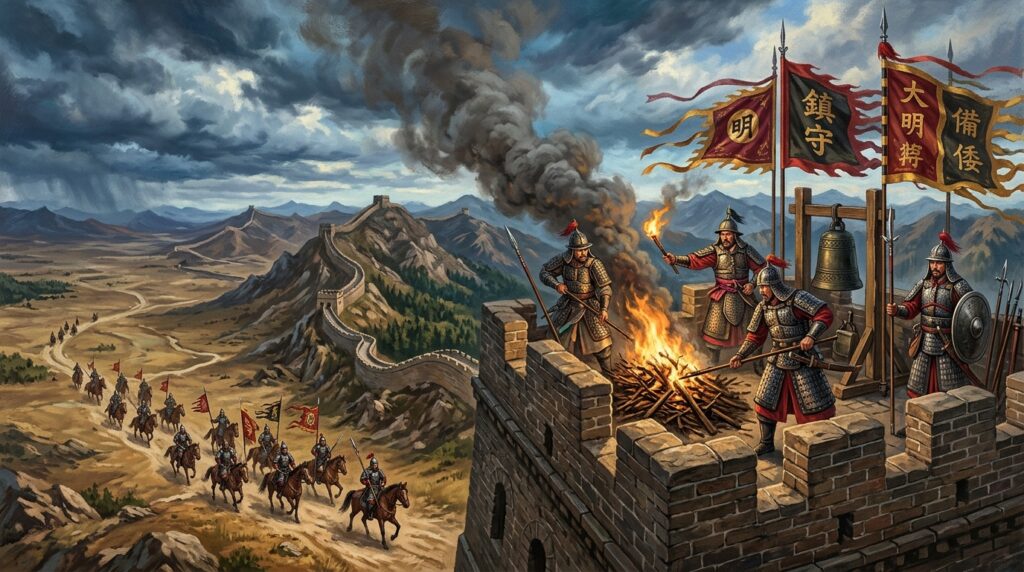
Though its primary function was defense, the Wall’s purpose extended far beyond stopping invaders. It served as a long-distance communication system: soldiers stationed in watchtowers sent smoke signals by day and fire by night, relaying warnings across hundreds of kilometers faster than any horse could ride. The Wall also acted as a protected trade corridor — caravans carrying silk, spices and jade moved along its guarded passes — and as a tool for controlling immigration and movement between China and Central Asia. In short, the Wall was a border, a highway, a telegraph line and a customs office all rolled into one, fostering cohesion and control across a vast empire.
3. A Wall of Many Sections: Choosing the Right One to Visit
Numerous sections of the Great Wall are open to visitors, and each offers something unique. Picking the right stretch is the single most important decision of your trip, so here is a friendly breakdown of the favorites around Beijing.
Badaling — The Iconic Classic
Roughly 70 km northwest of Beijing (60–90 minutes by road or about 30 minutes by high-speed train), Badaling is the most famous and best-preserved section. Restored to near-perfect condition with paved paths, sturdy staircases, cable cars and even a pulley lift, it is ideal for first-time visitors, families and travelers who want an easier walk with stunning views. The trade-off? Crowds. Arrive before 8 AM or after 3 PM to enjoy it at its best.
Mutianyu — The Family Favorite with a Toboggan Ride
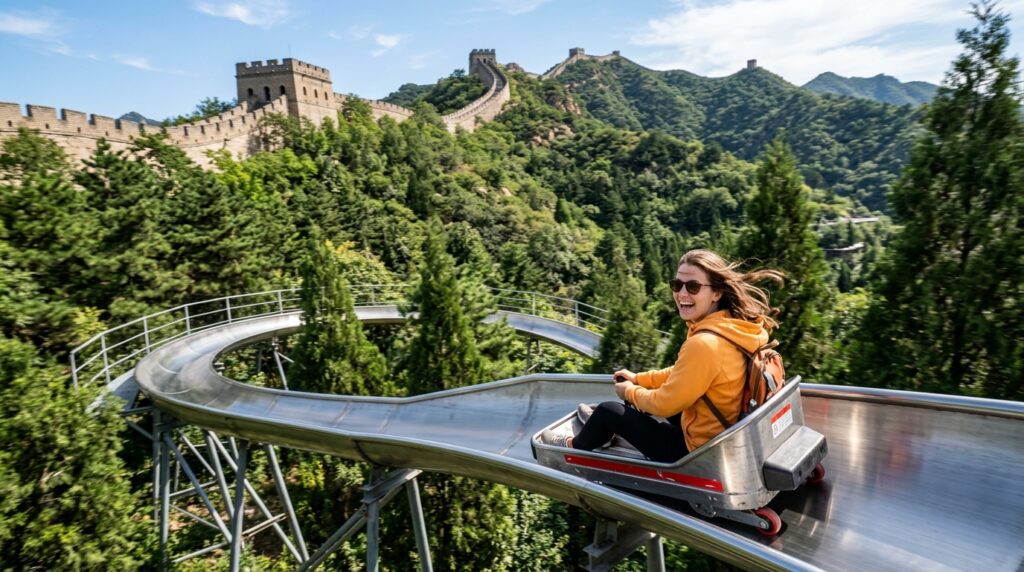
About 73 km from the capital (90 minutes by car), Mutianyu pairs beautifully restored walls and 22 photogenic watchtowers with gentler crowds. Its secret weapon: a stainless-steel toboggan slide that whizzes you back down the mountain — pure joy for kids and adults alike. Allow 3–4 hours including cable car rides.
Jinshanling — The Photographer’s Dream
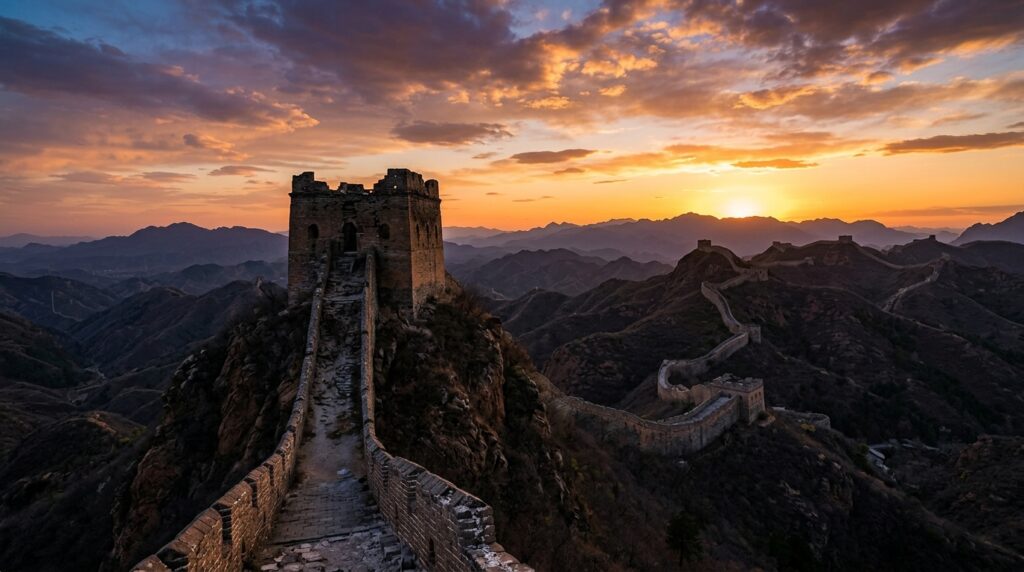
Around 130 km out (2–2.5 hours), Jinshanling is half-restored, half-wild, with dramatic ridgelines, ornate watchtowers and legendary sunsets. A 3–4 hour ridge hike connects toward Simatai. Bring a camera and stay late if you can.
Simatai & Gubeikou — Rugged, Raw and Romantic
Steep, narrow and only lightly restored, Simatai (paired with the lantern-lit canal town of Gubei Water Town) is the only section open for night viewing. Neighboring Gubeikou offers crumbling, atmospheric walls where you may hike for an hour without meeting another soul.
Jiankou — The Wild Challenge
The least restored and most adventurous, Jiankou’s jagged “Eagle Flies Upward” ridge is for fit, experienced hikers with a licensed local guide. No cable cars, no rails — just the Wall in its rawest form.
| Section | Distance from Beijing | Travel Time | Difficulty | Crowds | Best For |
|---|---|---|---|---|---|
| Badaling | ~70 km | 30–90 min | Easy | Heavy | First-timers, families |
| Mutianyu | ~73 km | ~90 min | Moderate | Medium | Families, toboggan fun |
| Jinshanling | ~130 km | 2–2.5 h | Moderate | Light | Photographers, hikers |
| Simatai | ~120 km | ~2 h | Challenging | Light | Night views, couples |
| Gubeikou / Jiankou | ~80–140 km | 2–2.5 h | Hard | Very light | Adventurers |
4. Monumental Scale: From Deserts to the Sea
The Great Wall is more than a singular structure — it is a monumental feat of engineering spanning more than 13,000 miles across northern China. Its longest stretch runs from Liaoning Province in the east, where the “Old Dragon’s Head” at Shanhaiguan dips into the Bohai Sea, all the way to the desert fortress of Jiayuguan in Gansu Province in the west. Along the way it crosses deserts, mountains, valleys and plains, built to follow the natural contours of the land — which added to its durability but made construction incredibly challenging. This diversity of landscapes is exactly why no two sections look alike, and why the Wall is so visually striking from every single viewpoint.
5. Restoration and Preservation: A Delicate Balance
While popular sections like Badaling are heavily restored — accessible and appealing, though less historically “raw” — areas like Jiankou, Gubeikou and Jinshanling’s wild end offer a rugged, crumbled view of the Wall’s original structure. There is a growing concern about preserving the Wall’s integrity, with experts calling for careful restoration practices to avoid over-commercialization, and with weather and foot traffic eroding unrestored bricks every year. As a visitor, you can help: never remove bricks, never carve names, stay on permitted paths and take every scrap of litter back down with you.
6. Prepare for a Physical Challenge
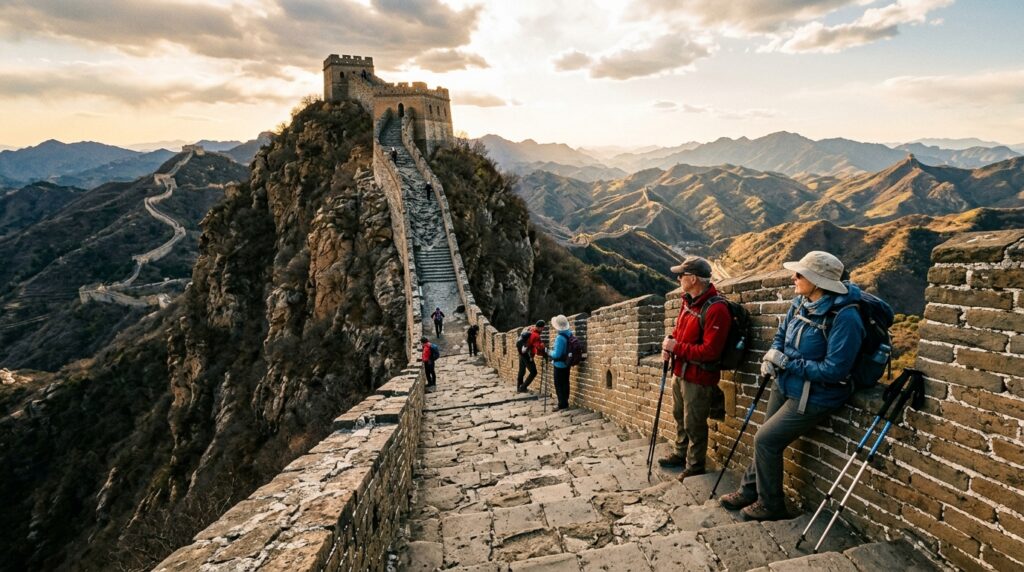
A visit to the Great Wall can be physically demanding. Although some sections offer cable cars and paved pathways, many parts require climbing steep, uneven steps and navigating sharp inclines — the stairs are notoriously irregular in height, making the hike a real test of stamina. Wear comfortable, grippy shoes, bring at least two liters of water per person, use trekking poles if your knees complain, and start early to beat the heat. For those who prefer a strenuous, adventurous experience, sections like Simatai or Jinshanling’s wild ridge reward your sweat with fewer crowds and a far more authentic encounter with the Wall.
7. The Best Time to Visit: Seasons Matter
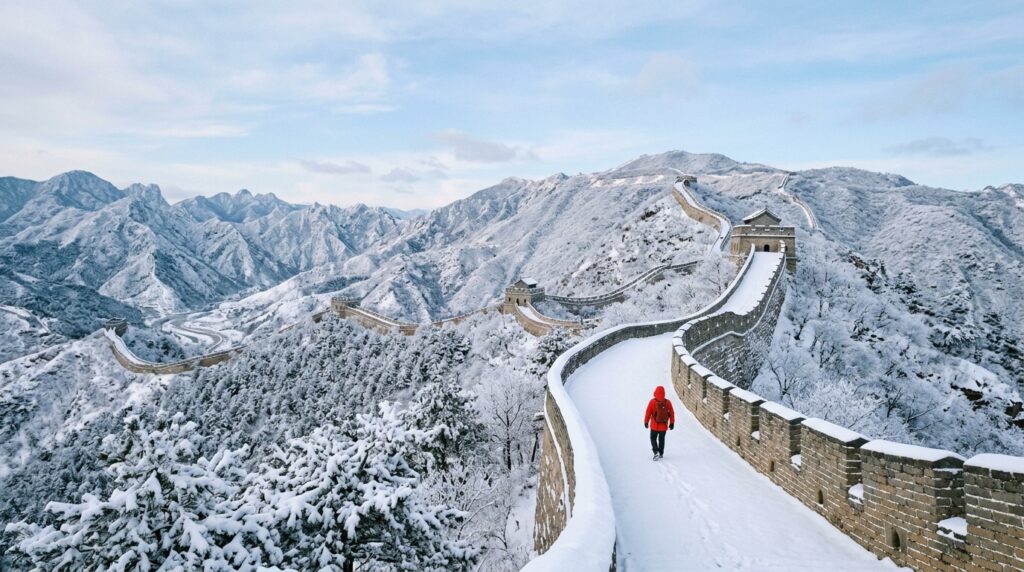
Timing is key when planning your Great Wall of China trip. The most ideal months are spring (April–May), when blossoms soften the hillsides, and autumn (September–October), when mild weather bathes the Wall’s picturesque surroundings in beautiful golden light. Summer (June–August) can be hot, humid, crowded and expensive — if you go, start at sunrise, carry sun protection and expect afternoon thunderstorms. Winter, while cold and often snowy, offers a unique, almost private experience with far fewer crowds; just be prepared for icy steps and harsh wind, especially at higher altitudes.
Seasonal packing tips: Spring and autumn call for light layers and a windbreaker; summer demands a hat, sunscreen and 2–3 liters of water; winter requires thermal layers, gloves and shoes with serious grip. And a friendly local tip: avoid China’s National Holiday week (early October), when domestic tourism peaks and the Wall feels like a festival crowd.
8. What to Expect: An Epic Journey
Walking the Great Wall is nothing short of awe-inspiring. As you stand atop the ancient stone bricks looking out over the sprawling landscape below, it is easy to see why this monument has captivated people for centuries. The Wall twists and turns along knife-edge ridges, its watchtowers perched like sentinels on the high points, and the sweeping views of the surrounding mountains create a truly magical atmosphere. Expect wind, expect echoes, expect moments of pure silence between watchtowers — and expect to understand the old Chinese saying: “He who has not climbed the Great Wall is not a true man.”
9. Respect the History: A Living Legacy
While visiting, remember that the Great Wall is not just a tourist attraction but a piece of China’s living history. It has withstood centuries of weather, conflict and time, and the stories behind its construction — including the legend of Meng Jiangnü, whose tears were said to have toppled a section after her husband died building it — are a vital part of China’s cultural heritage. Take time to reflect on the enormous human effort it took to build and maintain, respect signage and restricted areas, and support the rural communities around the Wall by eating, drinking tea and buying snacks locally. The Great Wall continues to stand as a symbol of China’s strength, perseverance and remarkable cultural identity.
10. The Perfect Great Wall Day Trip from Beijing
Here is a battle-tested one-day schedule using Mutianyu (swap in Badaling if you prefer the train):
- 7:00 AM – Grab a street breakfast: a jianbing crepe and warm soy milk.
- 7:45 AM – Depart Beijing by private car or tourist bus (about 90 minutes).
- 9:15 AM – Arrive, buy tickets, ride the shuttle to the base.
- 9:45 AM – Cable car up; walk east from Tower 14 toward Tower 20, the classic viewpoint (2–2.5 hours of walking with photo stops).
- 12:15 PM – Ride the toboggan down — yes, adults too!
- 12:45 PM – Farmhouse (nongjiale) lunch in the valley: grilled rainbow trout, dumplings and stir-fried mountain vegetables.
- 2:30 PM – Return drive to Beijing, or add a stop at the Ming Tombs on the way.
- 6:30 PM – Celebrate with a crispy Peking duck dinner in the city.
- 8:00 PM – Stroll the lantern-lit lanes of Qianmen or a nearby hutong to digest.
Transportation Tips: Getting to the Wall from Beijing
- Badaling: Take the high-speed train from Beijing North or Qinghe Station to Badaling Great Wall Station in about 30 minutes, or bus 877 from Deshengmen (70–90 minutes). Ignore touts offering “special” rides.
- Mutianyu: Easiest by tourist shuttle or private driver (about 90 minutes). Public option: bus 916 Express from Dongzhimen to Huairou, then a local bus or taxi to the village.
- Jinshanling / Simatai: 2–2.5 hours by car or organized day tour; weekend tourist buses run from the city in peak season.
- General advice: Book tickets online in advance where available, carry your passport (required for entry), and keep in mind that visa rules, train timetables and entry policies may change over time — always double-check before you travel.
Food Recommendations: Eat Like a Local
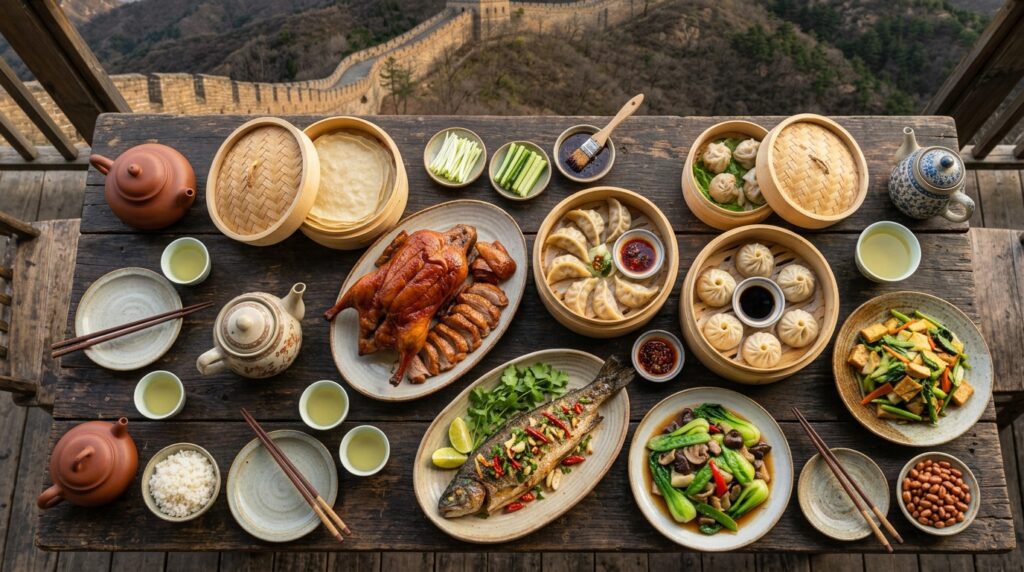
The Wall itself has only basic snack stalls, so the real flavors wait at its feet. Near Mutianyu, Huairou’s farmhouse restaurants are famous for charcoal-grilled rainbow trout, free-range chicken and hand-folded dumplings. Back in Beijing, reward your hike with Peking duck — crispy skin, thin pancakes, sweet bean sauce — at a roasted-duck house like Da Dong or the budget-loved Siji Minfu. Start mornings like a local with jianbing, youtiao (fried dough sticks) and doujiang (soy milk), and if you visit Simatai, sip tea in a Gubei Water Town teahouse with a sesame shaobing flatbread as the lanterns come on.
Cultural Highlights That Deepen the Visit
Learn to spot the difference between Ming brickwork and earlier rammed earth; watch how watchtowers are positioned in line-of-sight pairs for signal fires; visit the China Great Wall Museum at Badaling for free context before you climb; and if time allows, plan a future trip to Shanhaiguan’s “Old Dragon’s Head” where the Wall meets the sea, or to Jiayuguan, the fortress that guarded the Silk Road’s western gate. Each adds a new chapter to the story you walked today.
Frequently Asked Questions
How long is the Great Wall of China? All branches together measure 21,196 km (over 13,000 miles); the Ming-era wall most visitors walk is about 8,850 km.
How much time do I need? A half day covers Badaling or Mutianyu comfortably; allow a full day for Jinshanling or Simatai, or an overnight in Gubei Water Town for night views.
Which section is least crowded? Gubeikou and Jiankou are the quietest, followed by Jinshanling. Badaling is the busiest.
Can I visit with kids or older travelers? Absolutely — choose Mutianyu or Badaling, use the cable cars, and enjoy the toboggan at Mutianyu.
Is the Wall visible from space? A persistent myth — it is generally not visible to the naked eye from orbit, which makes seeing it up close all the more special.
Final Thoughts
From its 2,000-year history and secret life as a trade route and signal network to the joy of choosing between restored Badaling, toboggan-happy Mutianyu and wild Jinshanling, the Great Wall of China rewards every traveler who comes prepared. Pick the right season, bring good shoes and plenty of water, travel respectfully — and give yourself one unhurried moment on a watchtower ridge to simply look, breathe and remember. The Wall has stood for centuries; the memory of walking it will stand with you just as long.